


UnitedHealth Beats Q1 2026 and Raises Guidance - Is UNH Stock a Buy After Jumping 8%?



AI Podcast


UnitedHealth Group (UNH) reported Q1 2026 results exceeding expectations with EPS of $7.23 and a Medical Care Ratio of 83.9%. The company raised its full-year EPS guidance to over $18.25 and generated $8.9 billion in operating cash. While technically showing overbought conditions, a decisive close above the $357 resistance level could target $380-$407. Valuation remains attractive at 18-19 times forward earnings. Potential risks include rising medical costs or contract losses impacting Optum Health. The Q2 MCR will be key to confirming the sustainability of Q1 improvements.
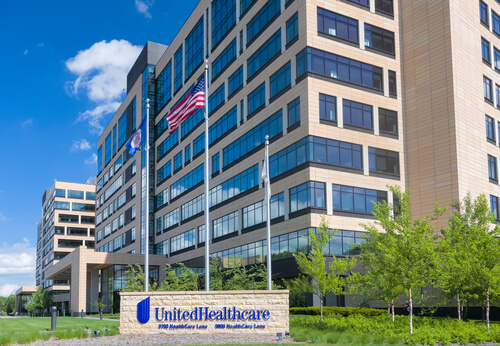
TradingKey - UNH beat Q1 EPS by 10% at $7.23, MCR improved to 83.9%, and guidance raised to >$18.25. Stock jumped 8%. Key breakout level $357, targets $380–$407. Buy or wait?
UnitedHealth Group (NYSE: UNH) saw shares shoot up by 7 to 9% on April 21 after the Q1 2026 results came out and they were a whole lot better than people were expecting. The company's adjusted Earnings Per Share came in at $7.23 - that's 10% better than the average prediction and a major win considering where things had been. And a Medical Care Ratio of 83.9% was way under the 85% that most people were thinking it would be
UNH Q1 2026 earnings — what the numbers actually say
So it looks like UnitedHealth Group's Q1 2026 results might signal a big shift in the way they're doing things. Instead of trying to grow as fast as possible they're now focused on getting their margins back in shape. Yes, revenue came in at $111.7 billion which is a decent 2% gain, but the real star of the show was that Earnings Per Share figure. It crushed expectations by 10% - you don't see that kind of beat very often. And that was thanks in large part to a Medical Care Ratio of 83.9%. That's a big deal because it shows they're getting better at choosing which patients to insure and how much to charge them. To do that they had to get a bit ruthless about cutting any Medicare or Medicaid memberships that wouldn't bring in a healthy profit.
Management seems pretty confident about the company's future, enough so that they've bumped up their full-year Earnings Per Share forecast. That suggests they think the things they're doing now - like being more selective about who they insure - are here to stay. Even though Optum Health is still dealing with some challenges they're now looking like contained problems rather than major roadblocks.
With $8.9 billion in operating cash coming in they're feeling pretty good about handing some of that back to shareholders. They're sticking to their plan to buy back at least $2 billion worth of stock by the end of the next quarter. All that said, progress on their AI-driven claims processing system is also looking pretty promising.
UNH technical analysis — $357 breakout level is the one to watch
UNH has been on a tear ever since it broke out from its base at $255, and now its testing a very important zone between $345 & $357, where a bearish trendline and a 200 day moving average are converging. The fact that the stock popped through the earnings hurdle with good volume and demand was certainly a bullish sign, but with RSI close to 80, rest assured it's over bought now.
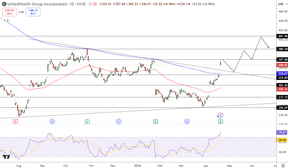
To break through the downtrend, Unh just needs a decisive close above $357 - and if that happens, look out for the $380 & $407 targets to be in the cross hairs. Of course, if the price gets rejected at this resistance level, it'll likely pull back to $328 before we think about the next leg up.
Traders need to keep a close eye on the charts for a high volume breakout above $357 - that'll be the cue to get long. If the price does get rejected at the resistance zone though, keep an eye out for a higher low in the $328-$335 range. That might be the better entry point. A stop loss below $328 is a good idea just in case the breakout fails.
Is UNH a buy at $350 — or has the easy money already been made?
The argument for UNH being a buy at $350 is that it's got a strangle hold on the market and a valuation that's pretty appealing. It's trading at around 18-19 times earnings going forward, which is below its historical average of 22-24 times earnings. On top of that, you've got recovering margins, a 2027 Medicare Advantage rate hike that's already been confirmed and some serious cash on hand - $8.9 billion to be precise - to back it up. All of which adds up to a pretty solid case for buybacks and growth through AI.
On the other hand, there's a bunch of reasons why UNH stock could be in for a tough time. If medical bills start to surge or if contract losses continue to be a problem for Optum Health, then the stock's got a lot of room for error. And things aren't made any easier by the fact that UNH is prioritising its profits over membership growth. That means top-line momentum is pretty limited, so investors are going to have to keep a close eye on the Q2 MCR - that'll really be the deciding factor as to whether Q1 was a one-off or the start of a trend.
Why did UNH stock jump after Q1 2026 earnings?
Well, it was a pretty strong set of numbers - the EPS was up by 8% and came in at $7.23, beating forecasts by about 10%. It was dominated by a pretty impressive medical care ratio of 83.9% and a raised forecast for the full year of $18.25. And then there was the $8.9 billion cash flow - that was a big deal, because it showed that UNH was past the worst of its margin worries from 2025.
What is the full-year 2026 guidance?
UNH has raised its adjusted EPS floor to $18.25 and it's still guiding for revenue to come in above $439 billion. That's because of some smart pricing and efficiencies through AI, plus the confirmed 2027 Medicare Advantage rate hike.
What is the stock price target?
If the stock can break through the $357 mark and stay there, then it could easily push on through to $380 and even $407. Fundamentally, UNH is still trading at a pretty attractive 18-19 times earnings - that's below its historical average. But it's worth keeping in mind that if UNH can't keep up the good work on medical care ratios, then that whole story could change.
Recommended Articles







Comments (0)
Click the $ button, enter the symbol, and select to link a stock, ETF, or other ticker.