


TSMC 2025 Q4 Earnings Coming Up — NT$2,000 Target Price: Dream or Reality?



AI Podcast


TSMC's upcoming Q4 2025 earnings report is crucial for investors assessing its future growth beyond its current valuation. The company is transitioning from an Apple-dependent model to an AI-driven one, with AI clients like Nvidia and Broadcom significantly increasing demand. Key areas of focus will be CoWoS advanced packaging capacity, the ramp-up and customer allocation of 2nm process technology, and the shift towards a more diversified, AI-centric customer base. These factors will determine TSMC's ability to maintain its growth trajectory and justify its high stock price.

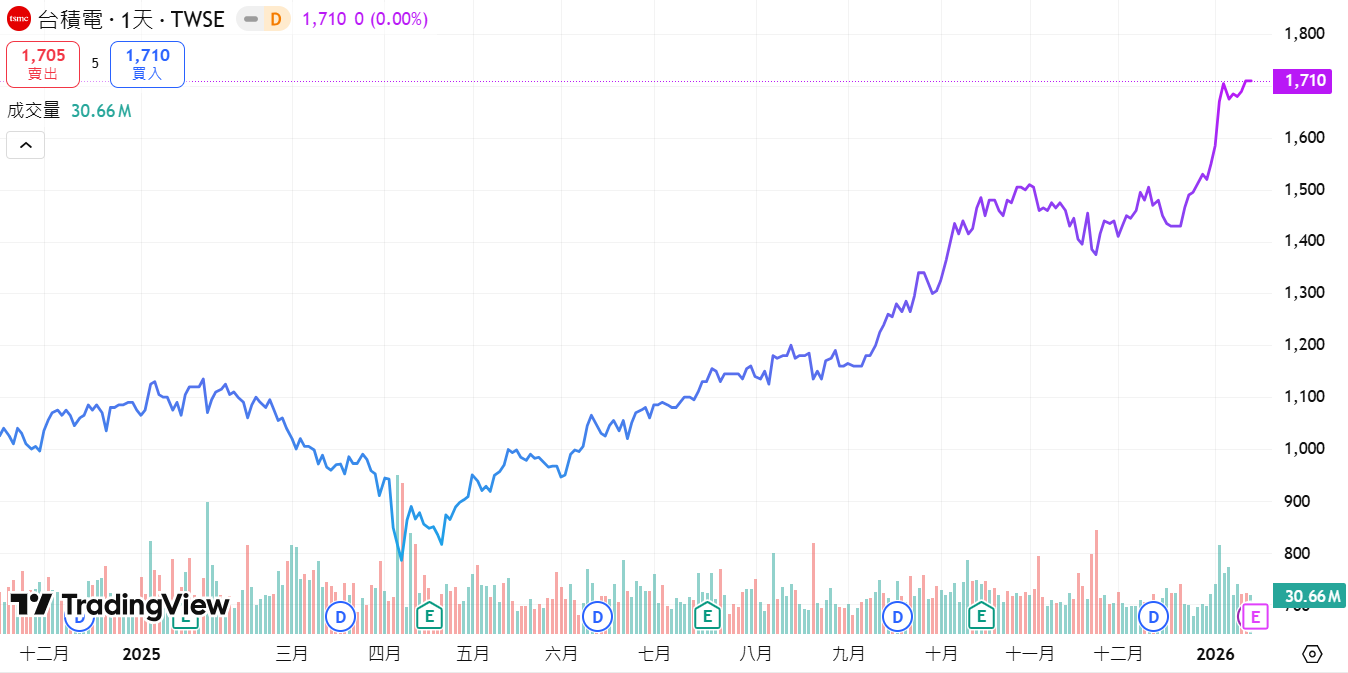
With TSMC’s share price already at this level, do earnings still matter? The Q4 2025 report to be released on January 15 is not just about how much profit the company delivers again, but, for many investors watching TSMC, about a more practical question: does this stock still have room to rise further?
Source: TradingView
Why is this earnings release particularly important? Because TSMC is undergoing the biggest identity shift of the past decade: it is transforming from a company that “feeds off Apple” to one that “feeds off AI.” This shift is not just an expectation hanging in the air, but a reality already written into orders and reflected in capacity planning. Apple is still the largest customer, but the growth rate and order scale of AI customers have already led the market to re-evaluate TSMC’s valuation logic: it is no longer a cyclical stock that fluctuates with iPhone sales, but a growth stock tied to the build-out of global AI infrastructure. This earnings report is the touchstone for how far and how long this transformation can go, and it will also affect whether the share price has a chance to reach the NT$2,000 target the market is calling for this year.
The market’s main focus for this earnings report actually boils down to three key questions:
First question: Is CoWoS packaging capacity enough for Nvidia and Broadcom to fight over?
Many people think TSMC’s core competitiveness is only that its process technology is more advanced than others, but right now the real bottleneck in the entire AI supply chain is actually the packaging stage.

Source: TSMC
Simply put, CoWoS (Chip-on-Wafer-on-Substrate) is the key technology that packages high-performance GPUs together with high-bandwidth memory (HBM). In the high-end AI GPU segment, TSMC’s CoWoS is almost the only solution that can achieve large-scale mass production and stable delivery. For Nvidia and Broadcom’s AI chips today, the key to on-time shipment is no longer whether the chips can be manufactured, but whether TSMC’s CoWoS packaging capacity can keep up. The pace of CoWoS capacity expansion determines the shipment rhythm of AI chips. TSMC’s 2026 monthly CoWoS capacity target has been raised from the market’s original estimate of about 100,000 wafers to about 127,000 wafers, an increase of more than 20%, equivalent to roughly 1.5 million wafers for the full year. Among these, Nvidia alone has booked about 800,000–850,000 wafers, taking more than half the capacity, while Broadcom has ordered about 240,000 wafers, mainly supplying major customers such as Meta and Google. This shows that the scale and pace of TSMC’s current CoWoS capacity expansion are largely tailored to the demand of this round of AI platform upgrades.
Why has CoWoS suddenly become so hot? A key change is that the delivery unit of AI chips has upgraded from a single chip to an entire rack of compute power. For example, in Nvidia’s latest Rubin platform, the flagship product Vera Rubin NVL72 is a full-rack AI supercomputer that needs to pack in 72 Rubin GPUs and 36 Vera CPUs, and all of these high-compute chips must be paired with large-capacity HBM and then bound together via advanced packaging such as CoWoS. As a result, this new generation of GPUs consumes CoWoS capacity by the rack from day one, multiplying the pressure on TSMC’s packaging lines.
Signals from the Taiwan supply chain also corroborate this: TSMC’s own advanced packaging lines have been running at full load for a long time, forcing it to outsource part of its CoWoS-related orders to OSATs such as ASE and SPIL. These companies have almost taken turns mentioning advanced packaging capacity expansion and equipment investments in their recent earnings calls, and their share prices have already priced in these expectations ahead of time. One practical reason capital often rushes first into the packaging names is that many CoWoS orders are locked in on annual or even multi-year terms, with high visibility and a clear realization schedule. In contrast, a new process node needs 12–18 months for design-in, verification and yield ramp from tape-out to volume, whereas once advanced packaging equipment is in place and capacity is turned on, the pull-through effect on revenue and shipments is faster, more direct, and easier to see in two to three quarters of earnings.
So, in this area, the Q4 earnings report really needs to be watched for three things:
First, whether management raises the 2026 monthly CoWoS capacity target again or gives a more explicit capacity range.
Second, beyond Nvidia, the latest developments in how 2026 CoWoS capacity is allocated to AI ASIC customers such as Broadcom, which will determine how strong the second growth engine beyond GPUs can be.
Third, how much of future capital expenditure is earmarked for advanced packaging. If the 2026 Capex plan announced this time shows a further increase in the share of spending related to advanced packaging, it would basically be an official stamp that CoWoS and the entire advanced packaging chain will remain TSMC’s key growth focus in the coming years.
Second question: 2nm is in volume production, but who gets the first batch?
The fact that 2nm has entered volume production is something the market has more or less digested already. What will really drive TSMC’s earnings leverage over the next two to three years are three more detailed questions: how the initial capacity is allocated among key customers such as Apple, Nvidia and Broadcom; whether the 2nm (N2) yield ramp can surpass expectations; and whether TSMC can use this opportunity to further raise prices at the high-end nodes.
In terms of ramp progress, N2 entered volume production on schedule in Q4 2025, with an initial monthly capacity of about 35,000 wafers. The market expects 2nm monthly capacity to reach around 140,000 wafers by the end of 2026, significantly above earlier conservative estimates of 100,000 wafers. Performance gains are also impressive: compared with N3E, N2 offers about 10%–15% higher speed at the same power, or about 25%–30% lower power at the same speed.
But no matter how strong the capacity is, it all depends on who can secure it. Reports suggest that Apple has already locked in more than half of the initial 2nm capacity in 2026, mainly for the A20 processor in the iPhone 18 and the next-generation M-series chips for Mac, which are seen as the most expensive mobile and PC processor platforms in history. Nvidia’s successors to Rubin and its other AI/HPC chips are also viewed as core potential 2nm customers, while Broadcom, AMD and others are likewise lining up for initial capacity.
There is a key pricing logic here: the market generally expects 2nm wafer pricing to be about 10%–20% higher than 3nm, but because yields in the early phase are still ramping, the positive contribution of 2nm to overall gross margin is not expected to be clearly reflected until the middle to latter part of 2026.
This also explains why institutions are particularly sensitive to TSMC’s Q4 and Q1 2026 gross margin guidance, and why three key messages from this earnings call will directly influence valuation:
First, yield ramp speed. If TSMC indicates that N2 yields have already reached above 70%, it would imply better-than-expected cost absorption efficiency and open up room for gross margin upside.
Second, customer mix. If Apple and Nvidia take most of the initial 2nm capacity, TSMC’s pricing power at this node would be extremely strong, because for these two customers, at the high end there is almost no alternative to TSMC, and their sensitivity to performance and supply stability is far higher than to price.
Third, 3nm capacity release. After 2nm enters volume production, more 3nm capacity could be shifted to customers such as Broadcom and AMD, further supporting overall revenue growth. One risk worth highlighting is that 2nm initial capacity is limited. If, during this earnings call, management’s outlook for 2026 N2 shipments and revenue contribution comes in significantly below the roughly 10%–20% share currently expected by the market, there could be short-term disappointment. But over a longer cycle, 2nm is still likely to become TSMC’s main profit engine in 2027–2028.
Third question: Customer mix reshuffle, from Apple dependence to multiple AI engines
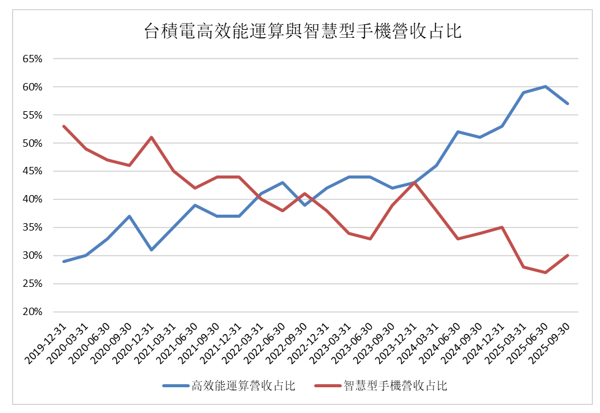
This may be the most easily overlooked yet most far-reaching aspect of the earnings report: TSMC is shifting from relying mainly on Apple and the smartphone cycle to relying more heavily on AI/HPC infrastructure demand. This is not just a change in the customer list, but a qualitative shift in revenue structure and business model, from the consumer electronics cycle to the AI compute infrastructure cycle.
Looking at the numbers, Apple has long been TSMC’s largest customer, accounting for just over 20% of revenue. In 2025–2026, Apple will remain the top customer, but its growth is maturing. Bernstein expects Nvidia’s share of TSMC’s revenue to surge from about 5%–10% in 2023 to just over 20% in 2025–2026, potentially matching Apple in scale. The share from Broadcom and other AI ASIC and networking chip makers is also rising, forming a multi-core structure built around Apple plus an AI customer group.
Source: TSMC financial reports
Take Nvidia as an example: cumulative orders for H200 and other AI chips in the China market are reported to exceed 2 million units, and the company is negotiating with TSMC to further expand capacity from 2026 onwards to meet delivery needs for these orders. Players such as xAI, which announced around US$20 billion in new funding in early 2026 mainly to build ultra-large-scale data centers and purchase Nvidia GPUs, are also driving up TSMC’s medium- to long-term order visibility in advanced process and advanced packaging along the same value chain.
More crucial is the difference in demand nature. Apple’s orders are highly seasonal, mainly tied to iPhone/Mac product cycles, with shipment peaks concentrated in the second half of the year, and TSMC quickly feels the pressure when iPhone sales miss expectations. Orders from Nvidia, Broadcom, AMD and others are more tied to cloud computing and AI infrastructure investments, involve continuous ordering throughout the year, carry higher ASPs and a greater willingness to pay premiums, and are therefore more sustainable and predictable.
This shift in customer structure will essentially strengthen the market’s pricing of TSMC’s AI super-cycle along three dimensions, all of which make this earnings report particularly worth watching:
First, improved revenue predictability. AI customers’ capex cycles run 3–5 years, unlike the seasonal swings in consumer electronics. If the earnings call reveals a significantly higher share of 2026 long-term contracts and prepayment orders in the overall order book, the valuation multiple could be nudged up another notch.
Second, structural improvement in gross margin. AI chip customers are not very price-sensitive because compute power is their competitiveness, and they are willing to share R&D costs. TSMC’s Q4 gross margin is expected at 59%–61%; if guidance or expectations are revised upward, the market will interpret this as further evidence of AI-driven pricing power in the earnings profile, with a degree of durability.
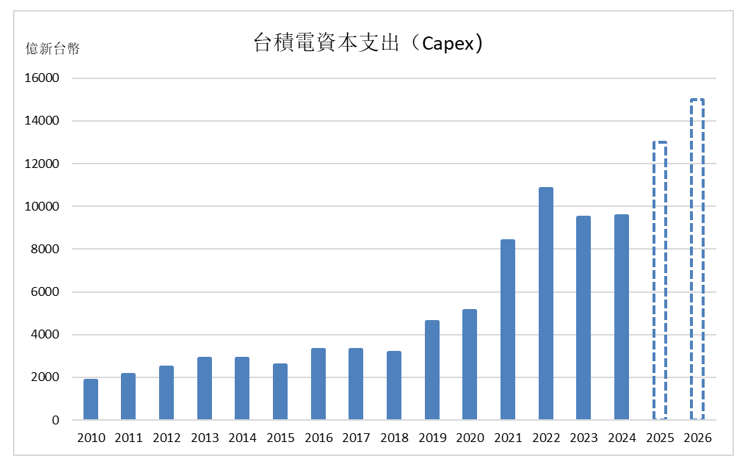
Third, a “rationality premium” on capital spending. On one hand, the market worries that TSMC’s cumulative capex of more than US$150 billion between 2026–2028 might be too aggressive; on the other hand, it is using this earnings report to verify whether this money is a bet on the cycle or underpinned by long-term AI take-or-pay contracts and a diversified customer base. If management’s visibility on orders and customer structure is enough to support the utilization and returns on this massive investment, ultra-high capex will instead be seen as deepening the moat and turning capacity into a new scarce asset, rather than simply burning cash to expand.
Data check: the pass line and surprise line for Q4 earnings
After all the logic, it still comes back to the numbers. The market’s consensus expectations for TSMC’s Q4 earnings are roughly as follows:
Market consensus expectations | Figure/range |
2025Q4 Revenue | NT$1.046 trillion (already announced, YoY +20.45%) |
2025Q4 Gross Margin | 59–61% |
2025Q4 Net Income | NT$430–470 billion |
2025Q4 EPS | NT$17–19 |
2026Q1 Revenue | NT$980–1,030 billion |
2026Q1 Gross Margin | 60–63% |
These figures can be regarded as the pass line for this earnings report. What will really move the share price are several key points that either beat or miss consensus:
Q1 revenue guidance: If Q1 guidance continues to fall around the 60%–63% range, that would be roughly in line with expectations. If it clearly exceeds 60%, it would be a positive surprise, suggesting that AI/HPC businesses are offsetting dilution from overseas fabs and new nodes. If it drops below 59%, it would be a miss and usually interpreted as at least one of yields, costs or pricing coming under pressure.
2026 Capex guidance: The market is currently looking for about US$45–50 billion (roughly NT$1.4–1.6 trillion). A higher spending plan would imply greater confidence in medium- to long-term AI/HPC demand and 2nm/advanced packaging capacity expansion; a figure clearly below this band would be seen as somewhat conservative on long-term demand.
Source: TSMC financial reports
3nm/2nm capacity and pricing: If disclosures this time indicate that advanced nodes were basically full in Q4 and Q1 guidance shows 3nm staying at high utilization while 2nm ramps as planned and maintains clear premium pricing, that would further confirm the sustainability of AI/HPC demand and profitability.
Conclusion: With TSMC already this high, is it still worth getting on board?
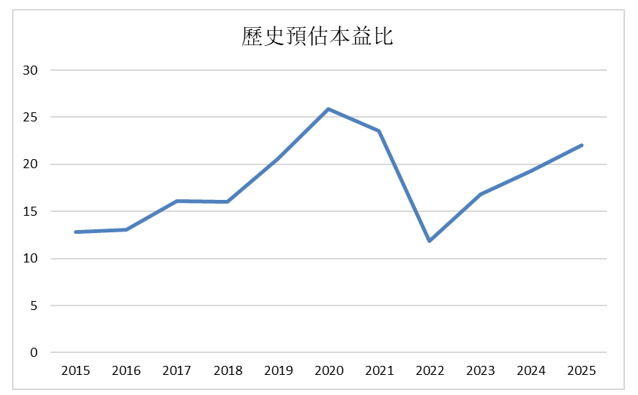
Even before this earnings report is out, the market has already set very high expectations: institutions broadly see TSMC’s revenue still growing 20%–25% in 2026, mainly driven by continued scaling of 3nm/2nm and data center AI orders. Although this is less eye-catching than the 30%-plus growth in 2024–2025, maintaining such growth after two years of strong expansion is already quite rare. Based on the current TSMC share price around NT$1,700 and the market’s 2026 EPS forecast of about NT$75–80, the forward P/E is around 22–24 times, which for a leader sitting at the very center of AI advanced nodes is not exactly a bargain basement price, but neither is it expensive. Many foreign institutions have 2026 target prices clustered around NT$2,000, implying nearly 20% upside from here; even at NT$2,000, the P/E would be only about 25–27 times, slightly above the historical midpoint but still far from bubble territory.
Source: StockAnalysis
Whether the share price can break above NT$2,000 ultimately depends on whether the market is willing to keep paying for this AI growth curve. Given the current fundamentals and valuation, TSMC still has room to push toward NT$2,000; the real question is the pace, which will require confirmation from subsequent earnings performance and the execution of its capital expenditure plans.
Recommended Articles









Comments (0)
Click the $ button, enter the symbol, and select to link a stock, ETF, or other ticker.