


Which Jobs Are Most Likely to Be Replaced by AI? Here Is Goldman Sachs’ Explanation



AI Podcast


Goldman Sachs suggests AI's impact on employment is a mixed dynamic. While AI's substitution effect may displace repetitive roles, particularly affecting younger workers and reducing near-term hiring, its creation effect is expected to generate new industries and AI-enhanced positions. Historical technological revolutions demonstrate job restructuring is inevitable. Although AI's efficiency gains may lower production costs, leading to increased demand and potentially offsetting job losses long-term, the net effect will depend on the balance between task automation and AI-assisted productivity, with roles requiring complex, on-site, or collaborative tasks being more resilient.
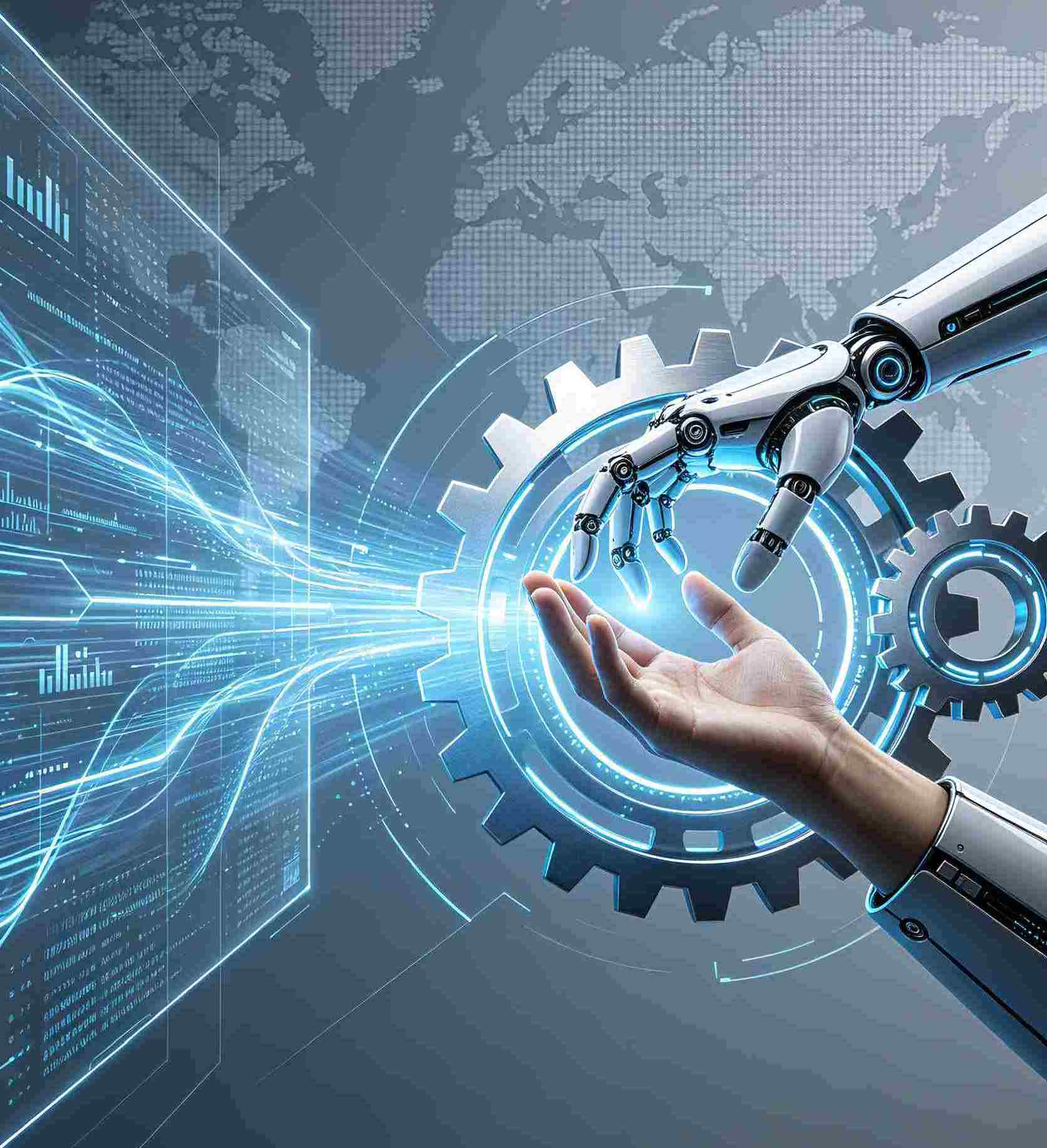
TradingKey - Artificial intelligence has developed rapidly in recent years, with deep learning and generative AI models, in particular, making extraordinary strides.
Historically, every major technological revolution has restructured employment and the labor market. During the First Industrial Revolution (1760–1840), humanity transitioned from relying on human, animal, and water power to coal and steam power, with new technologies significantly boosting productivity. During the Second Industrial Revolution (1870–1914), the world moved from the age of steam to the age of electricity; during this period, science and technology advanced rapidly, were quickly applied to industrial production, and drove transformations in mass production and corporate organizational structures.
These two revolutions fundamentally transformed production methods. Industrialized facilities and electricity production phased out traditional craftsmanship, leading to a significant upgrade in production efficiency and causing manual laborers to lose their jobs. Subsequently, the computer and information technology revolution that emerged in the 1950s further impacted modern lifestyles.
Currently, the rapid development of artificial intelligence affects the labor market primarily in two ways: the substitution effect, where AI replaces certain tasks, leading to decreased demand for related roles and displacing workers with specific skills; and the creation effect, where the adoption of AI generates new industries and production models, creating new job opportunities. According to the International Monetary Fund, AI could affect approximately 40% of global employment.
Looking at the patterns of past technological revolutions, the restructuring of employment brought about by AI has become an inevitable trend. In this regard, Goldman Sachs has released its latest perspectives on the impact of artificial intelligence on jobs.
Will artificial intelligence lead to job losses?
According to forecasts from the Goldman Sachs research team, over the past year, artificial intelligence has reduced U.S. monthly job additions by approximately 16,000 and increased the unemployment rate by 0.1 percentage points.
However, Goldman Sachs stated that the overall shock of AI to employment last year was not as severe as the figures indicate. Existing calculations fail to fully capture offsetting effects, including labor demand generated by data center construction, as well as new positions created by AI-driven productivity gains and income growth.

Goldman Sachs further noted that the negative impact of AI on employment is mainly concentrated among younger demographics lacking work experience, while it has had a positive promotional effect on jobs with AI-enhancement potential.
Which job roles are benefiting from artificial intelligence, and which are susceptible to disruption?
The institution noted that in sectors where AI can replace labor and companies pursue task automation, the pressure on employment is significant; however, in roles where AI assists humans, the overall impact remains unclear. The institution further explained that AI will improve worker productivity, thereby reducing the number of workers required for a fixed level of output. Yet, as unit production costs decrease, product demand will expand accordingly, potentially driving growth in employment numbers in the end.
This is precisely an embodiment of the Jevons paradox: an improvement in coal utilization efficiency actually drove up overall coal consumption. Efficiency optimization lowered actual usage costs, prompting more industries to choose coal as an energy source.
For a long time, the market has struggled to distinguish between industries where AI replaces workers and those where it enhances productivity. Indicators previously used by economists to measure the overlap between human and machine capabilities could not define the distinction between substitution and assistance. However, several recent studies have gradually clarified the difference between the two.

Many positions are affected by AI, but the role AI plays varies across different industries: in some, it replaces manual labor, while in others, it assists with work.
For instance, both customer service and interior design roles are facing AI-driven transformation, but because interior design work is more flexible and complex and requires an on-site presence, it cannot be fully replaced by machines. AI will only serve as a tool for designers to improve productivity.
Ranking the likelihood of occupational substitution in this manner, professionals such as telephone operators, insurance claims adjusters, and debt collectors face the highest risk of replacement. In contrast, positions such as educators, judges, and construction managers are better suited for collaborative work facilitated by AI.

Another corroborating phenomenon is that latest research, after distinguishing between the two types of roles, found that professions and companies susceptible to AI substitution have seen declines in operating costs and hiring demand; meanwhile, industries relying on AI to assist in efficiency gains have achieved productivity improvements and an increase in the number of job postings.
Summarizing the text, Goldman Sachs maintains a balanced perspective on AI’s impact on the labor market. On one hand, it believes AI will replace a large number of repetitive, standardized roles, impacting employment for young, inexperienced groups and suppressing recruitment demand in certain industries in the short term. On the other hand, AI possesses the positive value of empowerment and efficiency enhancement, capable of optimizing corporate production models and spawning new labor demand. In the long run, the expansion of demand brought about by efficiency improvements may offset the negative impacts of job substitution, eventually establishing a dynamic balance in the employment structure.
This content was translated using AI and reviewed for clarity. It is for informational purposes only.
Recommended Articles











Comments (0)
Click the $ button, enter the symbol, and select to link a stock, ETF, or other ticker.