


'Tax It If You Can't Buy It'? Trump’s Greenland Tariff Threats Reignite ‘Sell America’ Concerns



AI Podcast


U.S. President Trump's remarks on Greenland have reignited trade tensions, threatening tariffs on European allies, causing market volatility. This has led to concerns about global investors reallocating away from U.S. assets, with the U.S. dollar weakening and safe-haven currencies like the euro and Swiss franc appreciating. European investors hold substantial U.S. stocks and bonds, and some are already reducing dollar exposure due to policy uncertainty. While a large-scale sell-off is debated, investor demand for diversification is increasing. However, potential U.S. tariffs could also negatively impact European economies, particularly Germany and the UK.
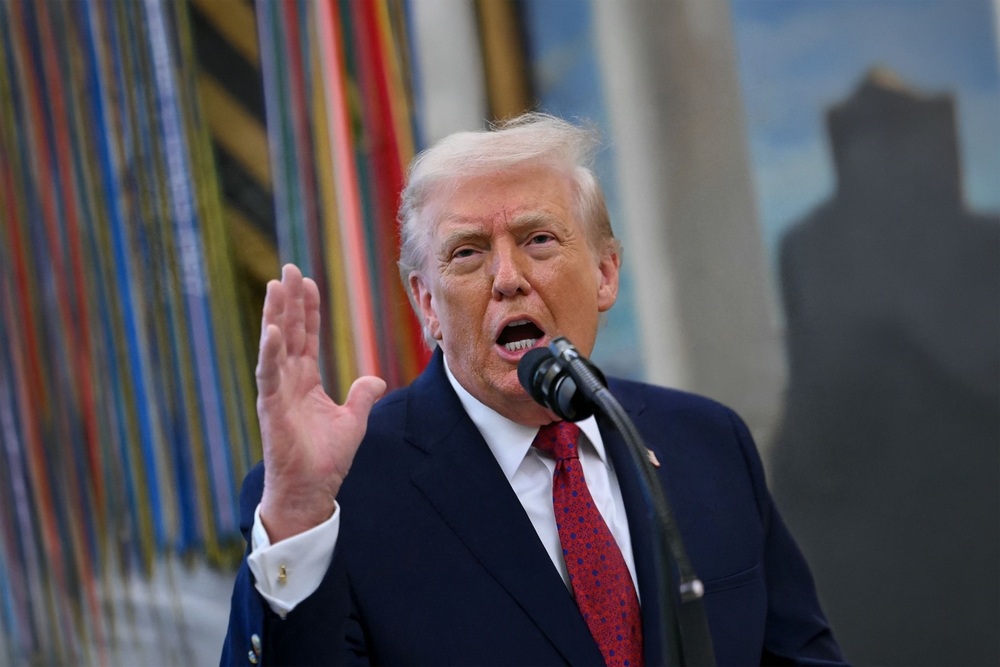
TradingKey - Recent remarks by U.S. President Trump regarding Greenland have once again sparked trade tensions, with threats to impose import tariffs on several European allies. This move quickly triggered market volatility and reignited discussions on whether global investors will reassess their allocation to U.S. assets.
This controversy stems from Trump's earlier push for a "Buy Greenland" plan. Reportedly, he threatened that if Denmark does not agree to sell Greenland to the U.S., the U.S. will impose a 10% tariff on goods from European countries including Germany, France, and the UK starting February 1, 2026, increasing to 25% on June 1.
On Monday, major European stock markets generally fell by more than 1% due to fears of a further escalation in potential trade conflicts, while U.S. index futures also retreated. The U.S. dollar weakened in response, with the euro rising against the greenback, and the Swiss franc, a prominent safe-haven asset, posting its largest single-day gain against the dollar in nearly a month.
The move “adds to concern that the US administration’s behaviour is detrimental to the privileges afforded to them by markets”, said Jason Borbora-Sheen, a portfolio manager at Ninety One.
Impact on the U.S. Dollar's Status
Altaf Kassam, head of European investment strategy at State Street Global Advisors, stated that Trump's latest remarks have once again undermined the credibility of U.S. fiscal policy and regulatory systems. If market conditions do not ease, the dollar is expected to face further downward pressure this year.
Indeed, since last year, the dollar has depreciated by a cumulative 10% against major global currencies, while hedging-related buying and position adjustments have led to capital flows into assets like the euro and Swiss franc.
Kevin Thozet, a member of the investment committee at Carmignac, pointed out that the French asset management firm has adjusted its U.S. dollar asset holdings in response to the recent series of U.S. policy changes, gradually reducing dollar exposure to hedge against potential risks.
"Persistent questioning of the rule of law in the U.S. means that even though U.S. fundamentals remain solid, the euro has appreciated against the dollar," Thozet said in an interview, suggesting that current market sentiment is shifting more toward safe-haven allocations in European assets.
Recalling last April, Trump announced broad tariffs on several trading partners and directed criticism at the Federal Reserve, raising questions about U.S. policy independence and institutional stability. Although the stock market rebounded in the short term, the overall performance of the dollar remained weak. Some institutional investors increased allocations to other currency assets to hedge against potential exchange rate risks, leading to a significant rise in hedging positions.
Will European Investors Sell Off U.S. Assets?
The U.S. capital market is massive and possesses the strongest liquidity globally—with the Treasury market alone exceeding $30 trillion in value—but this does not mean overseas capital cannot be withdrawn. Some analysts point out that the U.S. market is highly dependent on foreign investors, and if there is a shift in capital confidence, the impact cannot be ignored.
According to Deutsche Bank data, European countries currently hold a cumulative total of approximately $8 trillion in U.S. stocks and bonds, nearly double the total held by the rest of the world. This makes Europe one of the most important foreign creditors to the United States.
Some market observers have noted that signs of European investors cutting their holdings of U.S. dollar assets have already begun to emerge.
Francesco Sandrini, Head of Multi-Asset Strategies at Amundi, disclosed that during conversations with institutional clients in Denmark, he learned that these investors are selling U.S. Treasuries. He stated: "These types of allocation decisions are evolving into a complex reaction involving ideology and political stances."
Christian Schulz, chief economist at Allianz Global Investors, said “the euro could benefit if European investors repatriate capital from the US”, adding it could also hurt US Treasuries and “thus increase pressure on the US administration as well”.
Bond giant Pimco previously stated that due to concerns over the uncertainty of the U.S. government's policy path, the institution has entered a strategic phase of "multi-year de-dollarization and diversified allocation."
George Saravelos, Global Head of Foreign Exchange Research at Deutsche Bank, noted: "At a time when the geo-economic stability of the Western alliance is facing an existential threat, it is unclear why Europeans are so willing to play this role."
However, the market remains divided on whether a large-scale sell-off will actually occur. ING stated that the EU lacks the regulatory tools to force private institutions to sell U.S. dollar assets and can only use incentives to encourage more capital to flow back into euro-denominated assets.
Kit Juckes, head of FX strategy at Société Générale, believes: "The situation may need to escalate further before European public-sector investors compromise their investment performance for political purposes."
Meanwhile, although some U.S. indices have performed strongly thanks to AI concepts, their relative attractiveness in international markets has declined. Barclays noted that since the beginning of 2026, approximately 93% of national equity markets in the MSCI World Index have outperformed the United States.
The bank added: "This does not mean a disorderly withdrawal of capital from the U.S. market, but there is an increasingly strong demand from investors for portfolio diversification, and the risk balance is gradually tilting toward international assets."
Could Trade Disputes Backfire on "Europe Itself"?
However, it should be noted that even if Europe has the appeal to attract capital back, this dispute could also put pressure on the European economy itself.
According to Capital Economics, if the U.S. raises tariffs to 25%, the hardest-hit in terms of output would be Germany and the UK, with their GDPs potentially falling by 0.2% to 0.3%, respectively. The broader economic impact still depends on whether the EU takes retaliatory measures in the future.
A recent Reuters tally points out that, weighed down by trade tensions, German direct investment in the U.S. between February and November 2025 nearly halved compared to the same period the previous year.
"There is currently a degree of complacency in the market," said Oliver Blackbourn, multi-asset portfolio manager at Janus Henderson. "Most investors still believe the global economy is performing well, but this also means there are underlying vulnerabilities."
This content was translated using AI and reviewed for clarity. It is for informational purposes only.
Recommended Articles










Comments (0)
Click the $ button, enter the symbol, and select to link a stock, ETF, or other ticker.