


Global Inflation Risks May Heat Up Again, IMF Warns Energy Prices May Shock Global Economic Growth



AI Podcast


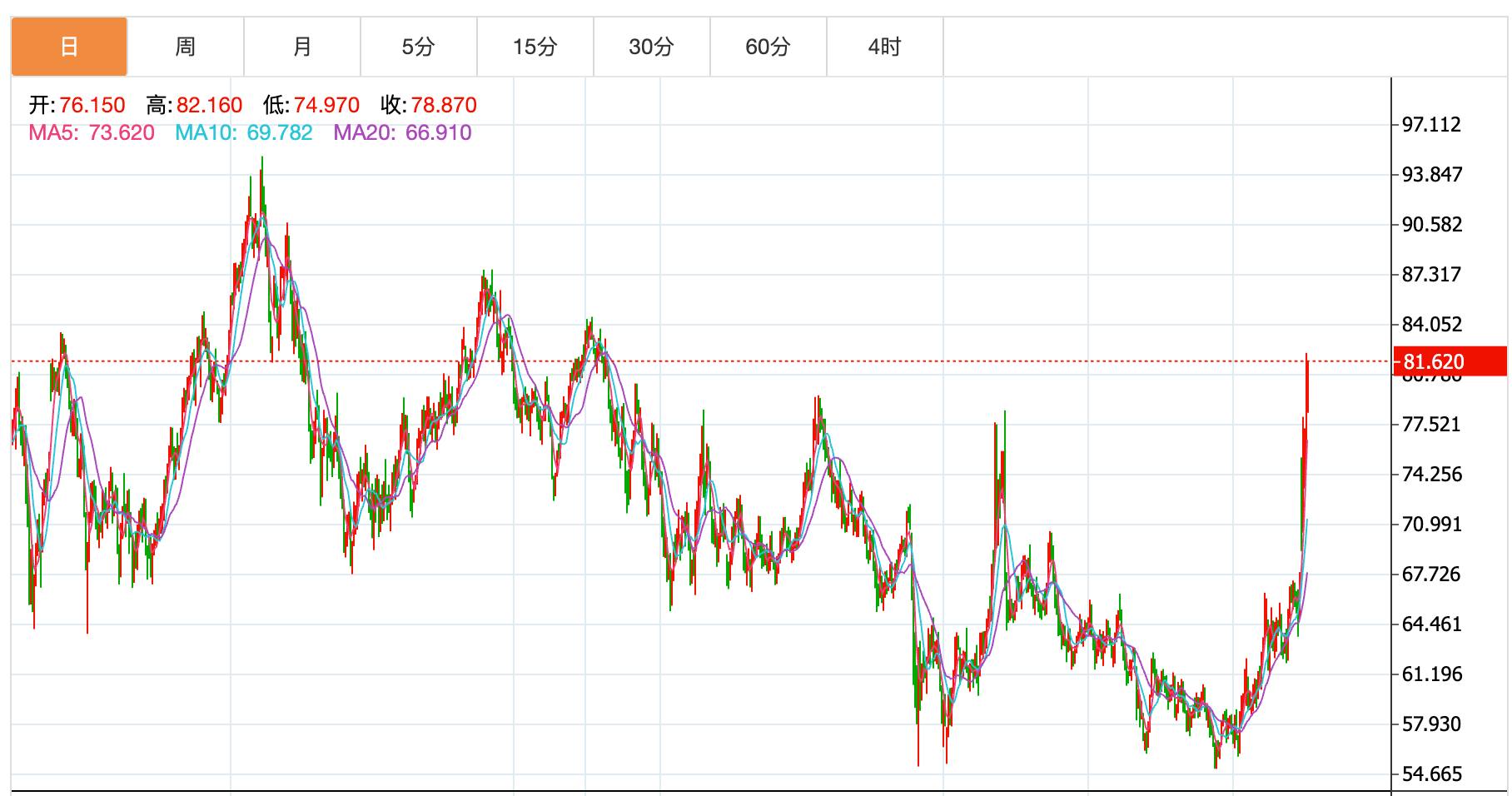
Geopolitical tensions in the Middle East have driven crude oil prices above $80 per barrel, posing risks to global inflation and economic growth. A sustained 10% rise in energy prices could increase global inflation by 40 basis points and reduce growth by 0.1% to 0.2%. This could complicate monetary policy for emerging market central banks, potentially leading to more hawkish stances and tighter global liquidity. Heightened geopolitical uncertainty and re-accelerating inflation may also prompt a shift towards safe-haven assets like gold and U.S. dollar assets, impacting valuations for riskier assets.

TradingKey - Driven by geopolitical tensions in the Middle East, global oil prices have seen a rapid ascent. Crude oil has hit $80 per barrel, and IMF Managing Director Kristalina Georgieva noted that a sustained 10% increase in energy prices over a year could lift global inflation by 40 basis points and trim economic growth by 0.1% to 0.2%.
Previously, ECB Governing Council member Joachim Nagel suggested that a conflict involving Iran could make inflation a more pressing concern than economic growth.
From a macroeconomic standpoint, rising energy prices typically impact the global economy through several transmission channels.
On one hand, higher crude oil and natural gas prices directly increase transportation, manufacturing, and electricity costs, which subsequently filter through to the Consumer Price Index (CPI).
Furthermore, elevated energy costs can squeeze corporate profit margins and erode household purchasing power, weighing on economic expansion. With global inflation not yet fully back within target ranges, a fresh energy shock could derail expectations for a gradual shift toward monetary easing.
In the coming two weeks, emerging market central banks will meet to discuss monetary policy. Markets have warned that escalating Middle East hostilities and rising oil prices could force these central banks toward more hawkish stances and more cautious policy paths, potentially tightening global liquidity once again.
In this macro environment, global risk appetite may also experience a period of transition.
If inflation expectations re-accelerate alongside heightened geopolitical uncertainty, capital may rotate back into traditional safe-haven assets, such as gold, U.S. dollar assets, and high-grade sovereign bonds.
Concurrently, the valuation frameworks for risk assets may undergo a reassessment, particularly for liquidity-sensitive tech stocks and emerging market assets.
This content was translated using AI and reviewed for clarity. It is for informational purposes only.
Recommended Articles








Comments (0)
Click the $ button, enter the symbol, and select to link a stock, ETF, or other ticker.