


Fed’s Goolsbee Warns AI Could Drive Interest Rates Higher, Risking Stagflation



AI Podcast


Chicago Fed President Austan Goolsbee posited that widespread expectations of AI-driven productivity growth could elevate interest rates, contrasting with Trump administration views. He argued that anticipated productivity gains leading to increased consumer spending and corporate investment could overheat the economy and necessitate Fed rate hikes, citing the late 1990s tech boom as precedent. Conversely, if AI fails to deliver expected productivity, it could result in stagflation. Other scholars, however, question the strength of the consumer spending-productivity link and note that AI investment is concentrated among few firms, suggesting the scenario Goolsbee fears may not yet be present.
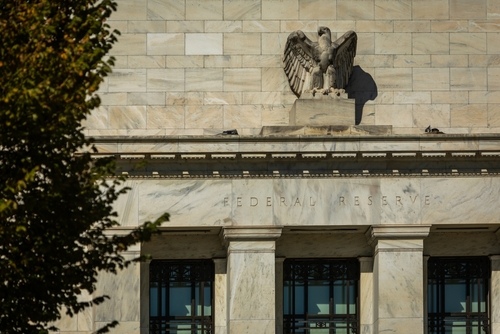
TradingKey - Last Friday, Chicago Fed President Austan Goolsbee publicly questioned the Trump administration's logic for interest rate cuts, arguing that widespread expectations for AI-driven productivity growth could, in fact, push rates higher. However, if this technological revolution proves disappointing, it could lead to even worse stagflation.
This stands in stark contrast to views previously expressed by the Trump administration and incoming Fed official Kevin Warsh. U.S. Treasury Secretary Scott Bessent believes the current AI wave mirrors the early stages of the productivity boom seen in the 1990s. Trump argues that AI-driven productivity gains will allow for economic expansion and wage growth while significantly lowering production costs, thereby avoiding inflationary pressure. Warsh contends that a future of eased price pressures will create more room for the Federal Reserve to cut rates.
However, Goolsbee’s remarks suggest that AI could lead the Fed down a path entirely opposite to what Trump and Warsh expect: as the public anticipates an additional 1% in annual productivity growth over the next decade, these widespread expectations could actually exacerbate the risk of an overheating economy, driving up real interest rates and forcing the Fed to pivot toward rate hikes.
How Productivity Growth Expectations Drive Interest Rates
Goolsbee noted in the interview that it is crucial whether productivity growth is unexpected or already anticipated. The key factor is whether people have altered their behavior in response to that productivity growth.
He believes that if people have already anticipated higher future income and a significant boost in future productivity, those expectations will be reflected in today's stock prices—much like what occurred in the late 1990s. When people expect higher future income, they begin spending today; when companies anticipate future returns, they start investing now. However, these factors exacerbate the risk of the economy overheating: household consumption drives up inflationary pressures, and corporate investment increases the demand for loans, which in turn pushes up the natural rate of interest, or the neutral rate, r*.
Citing the tech boom of the 1990s as an example, he pointed out that between 1999 and 2000, the Federal Reserve raised interest rates six consecutive times specifically to counter the inflationary pressures resulting from the front-loading of demand driven by expectations of higher productivity.
US Stagflation Risk: What Happens if the AI Productivity Dividend Fails
Goolsbee pointed out that if real growth rates fall far below expectations, the bursting of relevant stock bubbles, capital and capacity surpluses in current high-spending sectors, and the stagnation of growth amid high prices often lead to a recession.
He stated that while there is much talk about the contribution of data center investment to economic growth, the primary driver of U.S. economic stability and growth over the past two years has been broad consumer spending; the strong momentum of the American consumer is the key factor in sustaining high growth. Conversely, the data center market is not as large as people imagine.
While Goolsbee's concerns are not without merit, other scholars have pointed out flaws in his perspective. Waller stated that although consumer spending might increase due to expectations of higher future income, this correlation is often very weak in actual economic data. University of Chicago economist Luigi Zingales directly opposed this view; according to a New York Fed survey, more residents expect to lose their jobs to AI, which could push up savings rates rather than pulling consumption forward. To this, Goolsbee himself admitted that this dynamic could indeed point to a conclusion opposite to his own.
Regarding social spending, Steven Davis, a visiting scholar at the Atlanta Fed, cited a recent Atlanta Fed analysis noting that the average AI investment spending across firms is 14 times the median. This indicates that the investment boom is highly concentrated among a few companies rather than being broadly diffused, and the real economy has not broadly reaped the dividends of AI. This may mean that the scenario Goolsbee fears—where people widely expect productivity to be boosted by AI—does not currently exist.
This content was translated using AI and reviewed for clarity. It is for informational purposes only.
Recommended Articles





Comments (0)
Click the $ button, enter the symbol, and select to link a stock, ETF, or other ticker.