


Powell Urges ‘Staying Away From Politics,’ What Signals Did This Fed Pause Send?



AI Podcast


The Federal Reserve maintained the federal funds rate target at 3.50%-3.75%, pausing after three cuts. While the economy is expanding solidly and the labor market is stabilizing, inflation remains above target. Internal FOMC divisions persist, with two members dissenting. Fed Chair Powell emphasized defending the Fed's independence amid political challenges and legal scrutiny, signaling cautious observation of economic data before further rate adjustments. Market expectations point to a potential rate cut around June, but the timing remains data-dependent and subject to ongoing assessment.
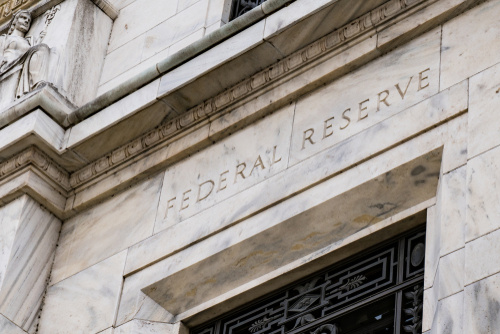
TradingKey - On Wednesday, January 28, 2026, local time, the Federal Reserve announced it would maintain the target range for the federal funds rate at 3.50%–3.75%, as expected by the market. This marks the first time the Fed has chosen to stand pat following three consecutive rate cuts since September 2025.
This pause in rate cuts was widely anticipated by the market. Prior to the announcement of the interest rate decision, the CME FedWatch Tool showed that traders' expectations for maintaining rates unchanged were as high as 97%.
In fact, behind this "pause" lies not only the Federal Reserve's cautious assessment of economic fundamentals but also the influence of intensifying political maneuvering.
Internal Divisions Persist Within the Fed
Although the general direction has been set, the decision to "stand pat" was not unanimous within the Federal Open Market Committee (FOMC).
Among the 12 voting members, two—Fed Governors Stephen Miran and Christopher Waller—cast dissenting votes, advocating for a further 25-basis-point rate cut. This marks the fifth consecutive meeting with dissenting opinions, signaling widening internal divisions.
Notably, this was Waller's first "dissenting vote," while Miran has opposed the majority in nearly every meeting since taking office last July.
Against this backdrop, data from the prediction market website Polymarket shows that the probability of Waller receiving the nomination for the next Fed Chair has risen slightly to around 13%.
Fed Optimistic About Economic Resilience
In its latest policy statement, the Federal Reserve offered a positive assessment of the U.S. economy's overall performance, noting that economic activity is expanding at a "solid" pace. This wording is an upgrade from previous statements, indicating growing confidence in current economic fundamentals.
Regarding the labor market, the statement noted that while job gains remain low, the unemployment rate has shown signs of stabilizing. Meanwhile, although inflation remains above the policy target, the overall trend is diverging: upward pressure on goods prices persists, while the growth in services prices has slowed slightly.
Notably, this statement removed the phrasing mentioned for three consecutive quarters that "employment risks are higher than inflation risks." This change is widely interpreted as the Fed's belief that the balance between its "dual mandate" of controlling inflation and maintaining employment is gradually being restored. Therefore, policymakers may be more cautious regarding future interest rates, choosing to observe market trends rather than acting prematurely.
Fed Chair Jerome Powell stated at the subsequent press conference that the U.S. economy has started 2026 on stable footing; although job growth remains modest, the labor market is stabilizing overall. He pointed out that while current inflation remains slightly above the target, it is primarily concentrated in the goods sector, largely driven by previous tariff policies.
"We expect that over the coming months, the prices of goods affected by tariffs will gradually stabilize, and overall inflation may then recede alongside them," Powell said.
The statement also mentioned that the outlook for the U.S. economy still faces significant uncertainties. The Fed will continue to monitor economic developments, evaluate the impact of new data on the overall outlook, and adjust policy as necessary to achieve its twin goals of maximum employment and price stability.
Powell Firmly Defends Fed Independence
Beyond the policy itself, the issue of Federal Reserve independence emerged as another major focus of this meeting.
Fed Chair Jerome Powell recently made a rare appearance at the U.S. Supreme Court to personally participate in oral arguments for the "Cook case." He considers this high-profile case to be potentially the most significant legal challenge in the Fed's 113-year history. At the meeting, he stated, "It would be difficult to explain to the public why I was absent if I did not attend in person." This move is seen as a staunch defense of the Fed's authority.
Powell has emphasized on multiple occasions that maintaining the Fed's independence is not only a guarantee of monetary policy stability but also a cornerstone of modern democracy. "Central bank independence is not meant to protect individuals, but to prevent political interference, thereby ensuring the separation of policy-making and executive powers."
He warned that if the Fed loses its independence, rebuilding public trust will be exceptionally difficult. He noted that developed nations generally adhere to the principle that central banks remain free from direct control by elected officials to prevent monetary policy from being used for electoral or political purposes.
Powell is nearing the end of his eight-year term, with only two policy meetings remaining. This power transition, which should have been smooth, has become particularly sensitive due to multiple uncertainties. Powell may face a choice regarding whether to remain as a Fed Governor, while the Supreme Court's ruling on the Cook case could potentially lead to the first instance of a Fed Governor being removed by a president.
It is reported that Trump has already proposed a successor to replace Powell. However, even if Powell steps down as Chair, he still has the opportunity to remain as a Governor for another two years, retaining voting rights on most matters outside of monetary policy and potentially becoming a "key swing vote."
Multiple intertwined events have made this Fed leadership transition a focus of intense market attention. Last week at the World Economic Forum in Davos, Trump also publicly addressed the complex situation surrounding the appointment of the next Fed Chair. Cook's status, the balance of power within the Fed, and the confirmation of the new Chair have all become key signals for the market to gauge policy direction.
Bernard Yaros, Chief U.S. Economist at Oxford Economics, wrote in a report: "The current turnover in Fed leadership is caught in a political and legal whirlpool, and the confirmation of a new Chair may face unprecedented resistance. I believe it will be difficult for Trump to smoothly install a group of officials who explicitly support aggressive rate cuts into the Fed."
According to the latest data analysis from prediction markets, Rick Rieder, Chief Investment Officer of Global Fixed Income at BlackRock, is currently considered the leading candidate to succeed Powell as Fed Chair.
Timing for Resumption of Rate Cuts Remains Uncertain
In its latest policy statement, the Federal Reserve provided no clear guidance on the future path of interest rate adjustments. The statement emphasized that regarding the timing and magnitude of any further adjustments to the federal funds rate range, the FOMC will closely monitor incoming economic data, evolving macroeconomic conditions, and potential risks, adjusting its policy stance as necessary.
While a majority of members supported pausing rate cuts during this meeting, internal opinions remained divided. Fed Chair Powell stated after the meeting that following three consecutive cuts, most officials preferred to wait and assess the effects of previous policies, though some members advocated for continued cuts. Powell noted that current interest rates are nearing the "neutral range," meaning they neither overly stimulate nor significantly restrain the economy. He added, "Based on current data, we cannot conclude that policy is in a highly restrictive state."
There is widespread public interest in when the Fed will restart the rate-cutting process. In response, Powell stated that rate adjustments will be made on a meeting-by-meeting basis, with judgments formed step-by-step and no predetermined path. He said, "We will make decisions based on economic trends. If no new high tariffs are introduced, their impact on goods prices will gradually fade, which would also allow for more flexibility in monetary policy."
Boris Schlossberg, macro strategist at BK Asset Management, noted that while U.S. inflation remains above the Fed's 2% target, labor market weakness forced the Fed to restart monetary easing last year. However, there have been recent signs of the job market stabilizing. Although companies are in a conservative "no hiring, no firing" mode, given the inherent volatility of inflation data, the Fed still has time to further clarify price trends.
According to pricing in interest rate futures markets, investors generally expect the Fed to maintain current rates through the first quarter of this year, with the timing for the first cut pushed back from previous spring forecasts to around June. After 2027, the Fed may pause the rate-cutting cycle once again.
Nick Timiraos, the veteran Fed reporter for The Wall Street Journal, pointed out that the Federal Reserve has now entered a new "policy observation period." Following three "controversial rate cuts," the FOMC has turned cautious and has no immediate intention of restarting an easing rhythm. Changes in the statement's wording were extremely limited; while it retained boilerplate language about continuing to assess the economic situation and being prepared to take further action, it released no clear signal of imminent movement.
This content was translated using AI and reviewed for clarity. It is for informational purposes only.
Recommended Articles











Comments (0)
Click the $ button, enter the symbol, and select to link a stock, ETF, or other ticker.