


Hassett as Potential Fed Chair: Why He Could Be the Best Choice for U.S. Stocks and the Dollar



AI Podcast


Kevin Hassett is the leading candidate for Federal Reserve chair, favored for his White House loyalty and market credibility, with prediction markets showing an 86% probability. His potential appointment suggests an accelerated pace of Fed rate cuts, which could boost U.S. equities and potentially lead to dollar weakness. However, Hassett's commitment to Fed independence may temper rapid currency depreciation, suggesting an orderly decline. While markets anticipate a dovish policy, his traditional economic background and the Fed's collective decision-making process might limit radical shifts.
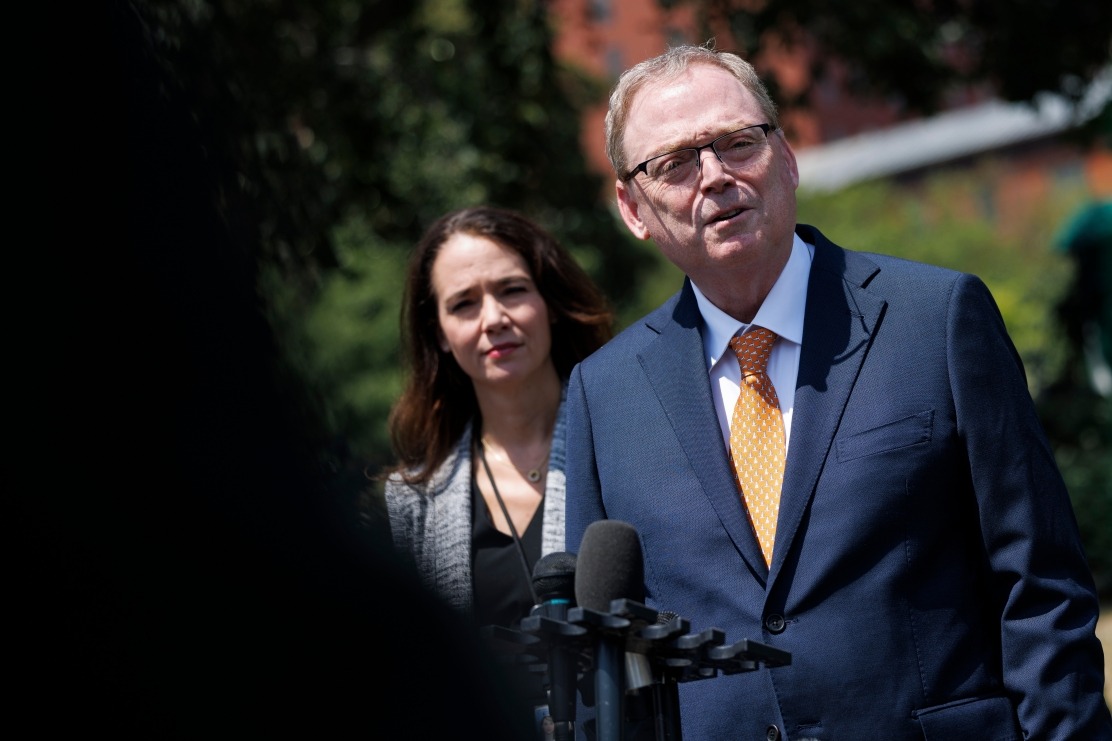
TradingKey - Kevin Hassett, the current White House National Economic Council Director, is reportedly the clear frontrunner among approximately 10 candidates for the next Federal Reserve chair. His loyalty and market credibility are seen as key strengths, with his status as a close ally leading markets to anticipate an accelerated pace of Fed rate cuts. While his deep economic background may prevent the Fed from transforming into an "ultra-loose club," this could be the optimal arrangement for both U.S. equities and the dollar.
With six months remaining until Fed Chair Jerome Powell's term expires in May 2026, the final selection for the next Fed chair appears to be taking shape. On Tuesday, December 2, U.S. President Trump stated that he would announce his pick for the new Fed chair early next year, strongly hinting that Hassett is his standout candidate.
According to prediction market data from Polymarket, traders are now betting Hassett's probability of succeeding Powell has surged to 86%, while the chances for other popular candidates—including Warsh, Waller, Rieder, and Bowman—remain in single digits. Just one week prior, Hassett and Waller both had roughly 30% odds of being named the next chair.
Nick Timiraos, a reporter for The Wall Street Journal, observed that Hassett's close ties to the White House, coupled with his Ph.D. in economics and prior experience working at the Fed, enable him to meet the President's two primary selection criteria: loyalty and market credibility.
Sean Spicer, who served as White House Press Secretary during Trump's first term, commented, "I can’t imagine him appointing someone he doesn’t have a strong personal relationship with to succeed Jerome Powell."
Dovish Outlook Continues to Fuel U.S. Stock Gains
Based on both Trump's trust and Hassett's past comments, a more accommodative monetary policy from the Federal Reserve appears clearly predictable if Hassett ultimately takes the helm of the world's most important central bank.
Trump's dissatisfaction with Powell over recent months primarily stems from Powell's hesitancy on rate cuts. Furthermore, Hassett stated last month that he desired immediate rate cuts.
Theoretically, lower borrowing costs would boost the performance of the U.S. stock market, particularly for interest-rate-sensitive sectors.
Jason Tang, Senior Economist at TradingKey, believes that if Hassett becomes the next Fed chair and follows through on his commitments, the U.S. benchmark interest rate will fall into the 2.5% to 3% range a year from now. Preemptive rate cuts, he adds, will continue to provide upside momentum for U.S. equities against a backdrop of resilient economic conditions.
Tang quoted Hassett as saying that the U.S. economy is in a supply-side-driven expansion cycle, where rate cuts can stimulate economic growth without significantly increasing inflationary pressures.
Fed Independence Stance "Just Right" for the Dollar
While most Fed chair candidates are open to further rate cuts, which would similarly boost U.S. stocks, Hassett's stance on Fed independencecould prove to be a delicate balancing act for the dollar.
A weaker dollar is the most likely outcome of escalating expectations for Fed rate cuts. Analysts at OCBC Bank anticipate 2026 to be a year of dollar weakness, citing the inauguration of a new Fed chair, already concerning U.S. fiscal conditions, high but soon-to-decline nominal interest rates, seasonal dollar weakening patterns, and narrower interest rate differentials.
A weaker dollar may indeed be a dominant market theme in 2026. However, Hassett's commitment to upholding Fed independence could help prevent the rapid depreciation seen during the "Sell America" wave earlier this year, suggesting a more limited and orderly depreciation is probable.
In September, Hassett expressed support for a slow and steady Fed rate-cutting strategy, emphasizing that the Fed's decisions must be entirely independent of political influence, including pressure from President Trump.
Economists are concerned that an outsider nominated as prospective Fed chair, whose monetary policy stance deviates from the prevailing consensus, might struggle to unite FOMC participants to achieve the accommodative outcomes Trump desires.
The Fed's monetary policy decisions are made collectively by 12 participating officials, and the Fed chair does not possess distinct privileges in rate decisions.
Sally Greig, Head of Global Bonds at Baillie Gifford, noted that even with Hassett at the helm, the idea of Trump "owning" the Fed is overblown. Greig added that Hassett would find it difficult to push the entire committee toward a more dovish stance as Trump might wish; furthermore, Hassett himself might not be as dovish as anticipated.
Tom Graff, Chief Investment Officer at Facet, also remarked that Hassett, who might not uphold independence as strongly as previous Fed chairs or candidate Waller, could pose risks to the dollar and suggest a steepening of the Treasury yield curve. However, Graff believes Hassett's traditional economics background mitigates such possibilities.
Hassett is a quintessential establishment conservative economist; when he was nominated as chairman of the White House Council of Economic Advisers in 2017, he received support from former Fed Chairs Alan Greenspan and Ben Bernanke.
This content was translated using AI and reviewed for clarity. It is for informational purposes only.
Recommended Articles









Comments (0)
Click the $ button, enter the symbol, and select to link a stock, ETF, or other ticker.