


International Oil Prices Fall for Third Day: WTI Plunges 4% Below $80 Mark as Mideast Tensions Ease



AI Podcast


On July 28, Eastern Time, international crude oil prices entered a correction phase, with Brent and WTI declining over 5% and 4% respectively. This downturn follows easing geopolitical tensions as indirect US-Iran negotiations, facilitated by regional mediators, aim to formalize a ceasefire. Markets are pricing in a reduced risk premium, bolstered by reports that the US prefers economic pressure over military escalation. However, significant uncertainties persist regarding nuclear policy and proxy conflicts, while official Iranian channels deny ongoing talks. Future progress hinges on upcoming high-level diplomatic meetings, which remain primary variables for global energy and risk asset volatility.

Tradingkey - On July 28, Eastern Time, international crude oil prices fell further, marking the official entry of oil prices into a correction phase. Brent crude ( UKOIL) saw its decline widen to over 5%, while WTI crude ( USOIL) fell over 4%, reflecting the market pricing in the prospect of eased Middle East supply risks.
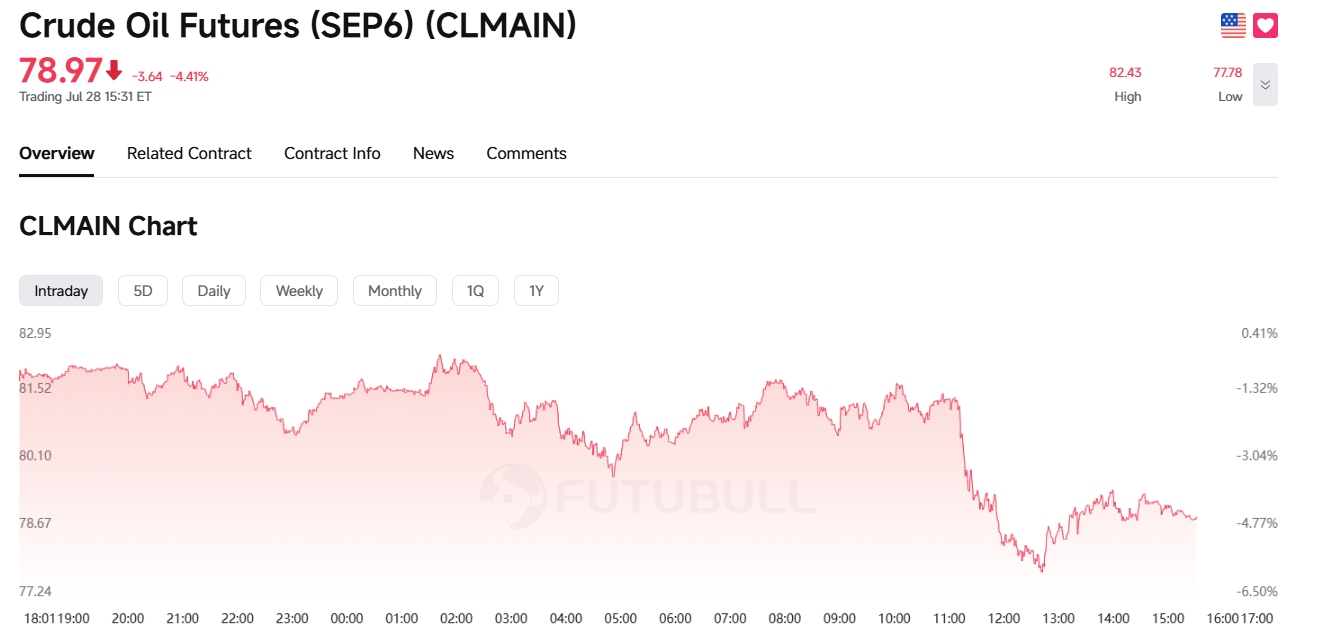
Source: FutuBull
This round of oil price declines was mainly driven by signals of easing tensions in the Middle East. As the meeting between US President Trump and Israeli Prime Prime Minister Netanyahu approaches, Israeli media, citing multiple sources, reported that mediators involved in the facilitation, such as Qatar and Oman, believe that the US and Iran are close to resuming diplomatic contacts and nearing a breakthrough, with hopes of restarting the memorandum of understanding signed in June this year and later shelved due to escalating conflicts, namely the preliminary ceasefire framework. The aforementioned mediators are still waiting for Trump to make a final decision after his meeting with Netanyahu.
According to US media reports, the US and Iran are conducting indirect consultations through mediators led by Oman, Qatar, and Pakistan, working to convert the current pause in mutual attacks between the US and Iran into a lasting new ceasefire agreement.
Recently, the two sides have maintained low-profile contacts through channels such as Oman and Qatar. The US hopes to further institutionalize the limited ceasefire that followed previous military actions and revive nuclear talks; meanwhile, Iran is seeking more practical concessions on issues such as sanctions and energy exports. Market expectations have risen for both sides to manage the conflict through diplomatic means once again, causing the geopolitical risk premium in crude oil prices to decline rapidly.
The shift in US policy direction has also further eased concerns over crude oil supply disruptions. US media on Tuesday, citing multiple US officials, reported that an increasing number of officials within the Trump administration believe that continuously strengthening financial sanctions, energy blockades, and economic isolation against Iran could have a greater long-term effect than airstrikes on Iranian nuclear facilities. The White House currently assesses that the Iranian economy is under immense pressure, and further restricting its oil exports, financial system, and international trade channels would be more likely to force Tehran back to the negotiation table without the need to launch large-scale military strikes again. This is also one of the key reasons why the US has recently maintained military deterrence but has not immediately resumed large-scale airstrikes.
However, significant uncertainties remain in the current situation, and obstacles still stand in the way of a formal agreement. Israel remains cautious, with sources stating that a formal agreement is still hindered by issues such as Iran's nuclear program, follow-up sanction arrangements, and regional proxy militias. Meanwhile, Iran has repeatedly denied claims regarding the negotiations. Iranian Foreign Ministry spokesperson Baghaei denied US-Iran talks on Monday, and Iran reiterated its stance on Tuesday, stating it had not sought dialogue with the US over the past 16 to 17 days.
Looking ahead, the upcoming meeting between Trump and Netanyahu, along with the mediators' efforts to revive the June ceasefire framework, will be key variables affecting the Middle East situation and global asset prices in the coming weeks.
If the US-Iran negotiations make further breakthroughs, the geopolitical risk premium is expected to continue to recede, and international oil prices may face further pressure; conversely, if negotiations hit another setback and tensions in the Middle East escalate again, the energy market and global risk assets could quickly reverse.
This content was translated using AI and reviewed for clarity. It is for informational purposes only.
Recommended Articles











Comments (0)
Click the $ button, enter the symbol, and select to link a stock, ETF, or other ticker.