


US Eyes Venezuela Oil Revival, But Big Oil Sees 'Major Hurdles' Ahead



AI Podcast


U.S. oil majors are hesitant to invest in Venezuela's oil infrastructure, despite President Trump's $1 billion announcement, due to the immense costs, technical challenges of heavy crude, and lingering political risks from past nationalizations. Rebuilding the sector could cost hundreds of billions over a decade, far exceeding the proposed investment, especially with current low oil prices and structural oversupply. Oil companies prioritize political stability and favorable operational terms before committing capital, creating a conflict between political will and commercial interests that may prolong the struggle. Success would grant the U.S. energy hegemony, while failure leaves OPEC+ controlling prices.
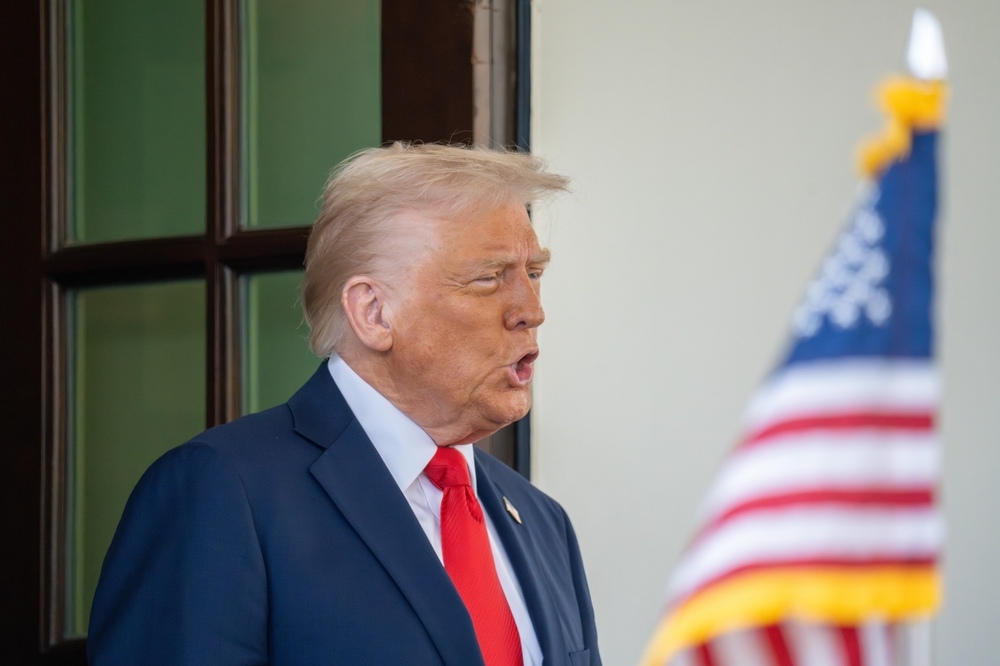
TradingKey - Following the U.S. military strike and 'takeover' of Venezuela, U.S. President Trump announced that major American oil companies would invest one billion dollars in Venezuela to rebuild the country's oil infrastructure. However, oil majors appear to have collectively gone silent, adopting a wait-and-see approach, with none confirming Trump's massive investment plan.
A ConocoPhillips spokesperson responded, stating that the company is closely monitoring developments in Venezuela and their potential impact on global energy supply and stability. It is currently too early to speculate on potential future commercial activities or investments.
This is not merely a struggle between Trump and the oil majors, but also a contest between political will and commercial interests. This struggle, which began at the start of 2026, is likely to determine the direction of the oil market this year. However, who will ultimately prevail? Will political ambition outweigh the costs companies would incur to re-enter Venezuela? These questions remain unanswered.
World’s Largest Reserves, Minimal Interest: Why US Majors Are Shying Away
According to data from the U.S. Energy Information Administration (EIA), Venezuela possesses the world's largest proven oil reserves. However, its current daily production is only about 1 million barrels, less than 1% of global output. In contrast, the United States, currently the largest oil producer, has a daily output of approximately 20.1 million barrels.
Clayton Seigle, a senior fellow at the Center for Strategic and International Studies (CSIS), stated that Venezuelan crude oil is very difficult to refine, being extremely viscous and requiring special processing to be refined into products like gasoline and diesel. Furthermore, the Trump administration continues to implement 'quarantine' measures on Venezuelan oil exports as part of its pressure strategy aimed at fostering a more 'pro-U.S.' regime. Consequently, oil exports from Venezuela are naturally reduced.
Venezuela's low crude oil production is also linked to its historical issues. In 2007, the late Venezuelan President Hugo Chávez initiated nationalization reforms of oil companies, demanding that international oil companies relinquish operational control. Most international oil companies were compelled to withdraw from the country, with only Chevron ultimately remaining through negotiations.
A series of problems, including corruption, resulting from Venezuela's nationalized operations, ultimately led to the widespread paralysis of the country's crude oil infrastructure. This, combined with intensifying U.S. sanctions, has caused Venezuela's crude oil production capacity to decline to its current extremely low levels.
For oil majors such as ExxonMobil and ConocoPhillips, rebuilding Venezuela's crude oil industry presents immense difficulty and requires substantial capital investment. Analysts predict that for the country to reach an output of approximately 2.5 million barrels per day, even without a comprehensive overhaul of its oil infrastructure, it could take 10 years, with an annual expenditure of between $10 billion and $20 billion. This is significantly higher than Trump's announced $1 billion plan.
Research by Hart Energy indicates that if the renovation aims to include large-scale upstream development and maintain rapid production growth, then the cost for overhauling and expanding the country's oil infrastructure could be as high as $180 billion to $200 billion.
Furthermore, from the perspective of the global crude oil market, oil prices are currently around $60, a five-year low, and have been continuously declining recently in 2025. Analysts predict that crude oil in 2026 will also face structural oversupply.
From a commercial perspective, in a scenario where crude oil prices lack upward momentum, rashly expanding crude oil production capacity is not rational. Beyond economic considerations, for oil majors, the lessons from Venezuela's political risks are still fresh.
According to foreign media reports, previous nationalization upheaval in Venezuela led to billions of dollars in losses for U.S. oil giants. A team of strategists led by Michael Haigh, head of global commodity research at Société Générale, stated that U.S. oil companies would only consider substantial investment after the country's political regime stabilizes.
Under Venezuelan law, oil exploration and other activities in the country must be conducted by the state or joint ventures. Foreign companies have limited equity stakes, do not possess operational control, and face high tax rates.
Trump vs. Big Oil: A High-Stakes Contest for Energy Hegemony
In short, U.S. oil majors are reluctant to 'enter the fray' and incur hefty costs for extremely low investment returns. However, under the pressure of Trump's political leverage, whether their resistance can endure remains uncertain. Unless both sides can successfully negotiate, the end of this struggle is likely a long way off.
Of course, if the Trump administration ultimately offers sufficient subsidies or guarantees to help oil majors overcome their commercial concerns, or if oil prices skyrocket overnight, making hundreds of billions of dollars in oil infrastructure investment suddenly 'cost-effective,' oil majors might reconsider their stance.
If oil majors ultimately proceed into Venezuela, the U.S. would establish absolute energy hegemony over the Western Hemisphere. In the foreseeable future, Russia and Middle Eastern countries would see their market share in the oil sector further compressed, while global oil prices would be under long-term pressure due to significantly increased supply expectations.
However, if Trump's plan to rebuild Venezuela's oil infrastructure falls through, the U.S. would once again miss out on readily available heavy oil resources. Although the U.S. is the world's largest crude oil exporter, it primarily produces light crude oil. Heavy oil is predominantly produced by Russia, Venezuela, Canada, and some Middle Eastern countries.
While there is an overall surplus in crude oil supply, heavy oil is in short supply. This is also one of Trump's strategic objectives for moving into Venezuela. Venezuela's heavy oil resources could naturally help the U.S. solidify its position as the world's energy hegemon, but if this fails, OPEC+ will continue to control crude oil pricing power, while domestic diesel and asphalt prices (products of heavy oil) in the U.S. will remain persistently high, thereby continuing to fuel inflationary pressures in the United States.
This content was translated using AI and reviewed for clarity. It is for informational purposes only.
Recommended Articles






Comments (0)
Click the $ button, enter the symbol, and select to link a stock, ETF, or other ticker.