


Oil Price Rise Pressures Gold; Fed Policy Meeting May Be Near-Term Price Catalyst?



AI Podcast


Gold prices declined as geopolitical tensions between the U.S. and Iran and hawkish Federal Reserve expectations intensified market caution. Despite rising oil prices, gold failed to act as a safe haven, weakening due to higher inflation expectations, rising Treasury yields, and a stronger dollar, increasing the opportunity cost of holding the non-yielding asset. Analysts anticipate elevated Brent crude prices will continue pressuring gold, with a potential reversal contingent on falling oil prices or Fed rate cuts. Central bank demand and economic uncertainty may provide support, with a median 2026 gold price forecast of $4,916 per ounce.
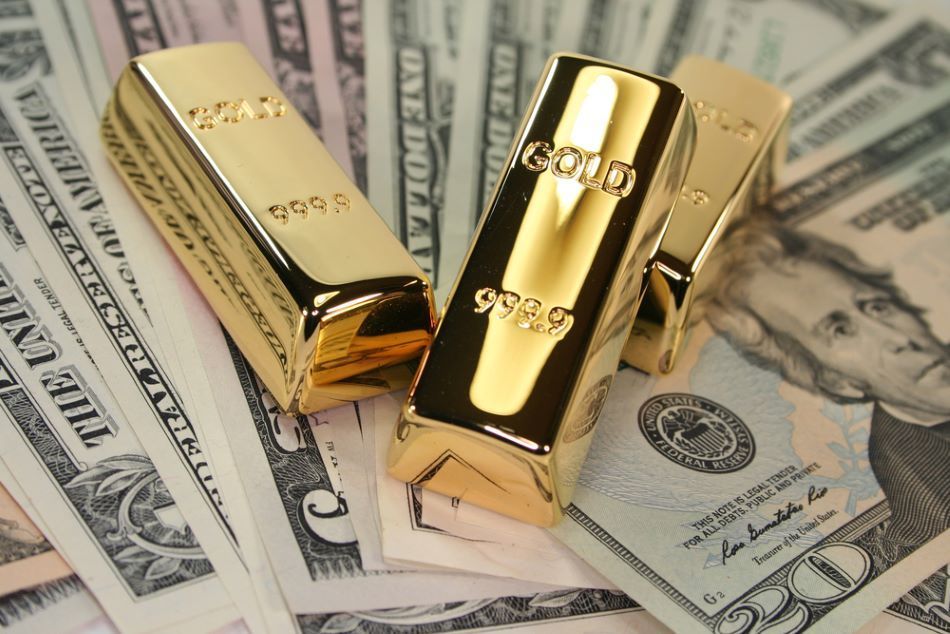
TradingKey - On Monday, April 27, spot gold closed at $4,681.9, down nearly 0.6%. June New York gold futures finished at $4,693.7 per ounce, falling about 1%. As of press time, spot gold edged 0.18% lower to $4,672.2 during Asian trading.

[Source: TradingView]
In latest news, tensions between the U.S. and Iran remain high. According to the Wall Street Journal, U.S. officials revealed that President Trump and his national security team are reserved and skeptical regarding a new deal proposed by Iran. The proposal requires Iran to guarantee normal navigation in the Strait of Hormuz in exchange for suspending nuclear-related discussions. On Monday morning local time, Trump discussed the proposal with his aides. Sources indicated that while Trump did not directly reject the proposal, he is skeptical of Iran's sincerity and whether it can satisfy core U.S. demands.
On the other hand, the Federal Reserve is about to hold the final policy meeting of Jerome Powell's current term, with the market expecting hawkish signals.
Recurring geopolitical conflicts and the impending "new transformation" at the Federal Reserve have intensified market caution, leaving international gold prices under continued pressure.
Why do rising oil prices weigh on gold prices?
Since the conflict between the U.S. and Iran, spot gold prices have gradually retreated from their previous highs, hitting a recent low of $4,098.75 per ounce on March 23.
It is evident that the dominant market logic has shifted; gold price trends are completely contrary to traditional safe-haven logic. Despite escalating geopolitical tensions, gold has failed to strengthen on safe-haven demand, instead weakening amidst volatility and continuing to trend downward.
To understand the reasons behind this price action, one should focus on the gold price transmission chain.
First, the geopolitical conflict between the U.S. and Iran led to tightening crude oil supplies and rising risks to shipping routes, causing the two major crude oil futures to rise in response. The surge in oil prices also drove up transportation, production, and energy costs, thereby pushing inflation higher. Consequently, inflation expectations fluctuated, and the view that interest rates would remain higher for longer quickly returned to the market, impacting gold prices through this market adjustment.
Subsequently, the repricing of inflation expectations pushed U.S. Treasury yields higher, while the U.S. Dollar Index strengthened in tandem. The combination of these two factors created a dual bearish pressure on gold prices: as a non-yielding asset, the opportunity cost of holding gold rises with higher interest rates, and a stronger dollar dampens overseas demand, further intensifying downward pressure.
Simply put, crude oil is dominating the current market landscape. As long as oil prices remain firm, inflation expectations will stay elevated, supporting Treasury yields and keeping the dollar strong. Under this scenario, the conditions for buying gold remain unfavorable.
Only once oil prices collapse or the Federal Reserve resumes interest rate cuts will gold's weak position quickly reverse.
What to watch next?
In the short term, geopolitical conflicts remain intense. Furthermore, due to the lag in the transmission of conflict to the oil trade, there is imminent pressure for onshore destocking. Consequently, at this juncture, regardless of the geopolitical trajectory, the Brent crude price pivot for 2Q26 is likely to remain elevated.
Gold prices may remain under pressure until the next key variables emerge—namely, the upcoming Federal Reserve policy meeting and central bank gold demand.
According to the latest Reuters poll, despite risks such as surging inflation and hawkish policy expectations triggered by the Middle East conflict, robust central bank demand and economic uncertainty are expected to offset these effects. Once tensions subside, gold's overall rally is likely to resume.
A survey of 31 analysts and traders conducted over the past three weeks shows a median gold price forecast for 2026 of $4,916 per ounce, the highest annual forecast since Reuters began the poll in 2012. This latest projection is higher than the $4,746.50 estimated three months ago. In contrast, a similar survey a year ago showed the average 2026 forecast was only $3,000.
This content was translated using AI and reviewed for clarity. It is for informational purposes only.
Recommended Articles










Comments (0)
Click the $ button, enter the symbol, and select to link a stock, ETF, or other ticker.