Pharmaceuticals
 TradingKey Investment ResearchUpdated:2026-10-03
Risk Warning: The information on this page is based on publicly available data from the securities market or historical data of investment products. The dimensions of the indicators have limitations and do not represent the future performance of the products. This information is for investors' reference only and does not constitute investment advice. Any actions taken based on this information are at your own risk.
Historical Return
Current Holdings







How We Select Pharmaceuticals Stocks

The core value of the pharmaceutical industry is shifting from traditional scale expansion to deeper scientific innovation. This pharmaceutical investment strategy avoids large, established drugmakers that rely heavily on their mature drug patents for predictable cash flows. Instead, it focuses on investing in biotech firms at the forefront of clinical research and those possessing disruptive technology platforms. Returns are generated from the release of pivotal clinical data, breakthroughs in regulatory approvals, and the explosive revaluation that accompanies the launch of major new drugs.
1. Scalability of Technology Platforms
We target companies that have more than one single-product offerings and possess advanced technology platforms capable of continuously producing new drug candidates. These platforms should demonstrate applicability across multiple disease classes, enabling the company to construct a diversified Research and Development (R&D) pipeline from a single core technology. This approach looks to significantly reduce the risk of individual project failure while significantly elevating the overall valuation of the R&D pipeline.
2. Catalysts in Key Clinical Stages
Value realization in the pharmaceutical sector frequently occurs in discontinuous leaps. We prioritize companies approaching critical clinical milestones—those nearing major data readouts or regulatory decisions. By rigorously evaluating the scientific strength of earlier-stage data, we aim to establish positions ahead of these pivotal events, capturing the sharp valuation premiums driven by positive clinical outcomes and the resulting shift in market expectations.
3. Unmet Medical Needs
This strategy targets diseases which have yet to have effective therapies available or where existing treatments have serious limitations.
FAQs
Which pharmaceutical company stocks are more likely to lead the weight loss (GLP-1) market in 2026?
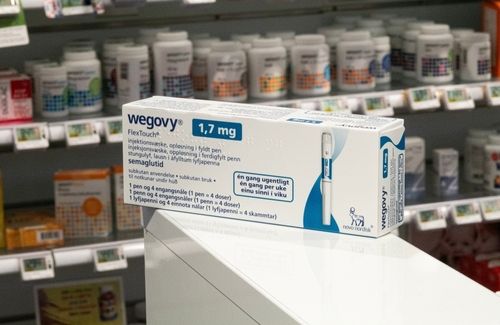
By 2026, Eli Lilly and Novo Nordisk remain the undisputed leaders of the global GLP-1 market, each commanding a dominant share through tirzepatide and semaglutide, respectively.
The major inflection point for 2026 is the emergence of the "oral era": Novo Nordisk's oral semaglutide formulation has achieved full commercial rollout earlier in the year, while Eli Lilly's oral small-molecule candidate orforglipron is advancing toward key regulatory decisions or market entry. Meanwhile, emerging biotech players such as Viking Therapeutics are emerging as serious challengers to the incumbents, with their dual- or multi-target candidate drugs demonstrating strong performance in Phase III trials.
Why are giants like Eli Lilly and Novo Nordisk not included in this pharmaceuticals investment strategy?
Although these two companies dominate the weight-loss space, this strategy is deliberately designed to look explore opportunities outside of mature businesses. Eli Lilly and Novo Nordisk have evolved into mega-cap entities with market capitalizations approaching or exceeding one trillion dollars, and their valuations already fully reflect the bullish market expectations for GLP-1 therapies.
Valuation saturation: Price movements of these giants are now more heavily influenced by macroeconomic conditions and government pricing policies (such as the negotiated drug prices for 2026 under the Trump administration) than by individual scientific breakthroughs.
Patent cliff risk: Core patents for Novo Nordisk are beginning to face expiration pressures in certain markets. This strategy seeks non-linear, multi-fold value appreciation and therefore favors mid-cap R&D-focused companies that have not yet been fully priced in by the market and remain on the verge of major clinical inflection points.
What factors can affect the stock price fluctuations of pharmaceutical stocks?
In the 2026 environment, pharmaceutical stock performance is driven by three primary factors:
Clinical trial results (data catalysts): For R&D-oriented companies, the unblinding of data in pivotal clinical stages—particularly Phase II or III—serves as a make-or-break event that can cause the stock price to double or halve.
Regulatory and access policies: The U.S. government's implementation of the "Most Favored Nation" (MFN) pricing model and ongoing Medicare drug price negotiations in 2026 have significant implications for profit margins. A company's ability to secure formulary inclusion or leverage new direct-to-consumer (DTC) sales channels is often the decisive factor in commercial success or failure.
Patent protection and M&A activity: Facing the looming "patent cliff," major pharmaceutical companies exhibit strong M&A appetite in 2026. When small- and mid-cap biotech firms are identified by large players as critical pipeline assets, their share prices frequently receive substantial uplifts from acquisition premiums.


.jpg)