


South Korea launches its first rocket led entirely by a private company in the country



South Korea achieved a new milestone in its space ambitions when the Nuri rocket lifted off at 1:13 a.m. local time from the Naro Space Center early Thursday morning, making it the first rocket launch led entirely by a private company in the country.
The successful mission saw the launch of an Earth observation satellite and 12 cubesats. It also speaks to the shift in South Korea’s approach to space exploration, with defense contractor Hanwha Aerospace assuming full control of launch operations after securing exclusive rights to Nuri technology for around 24 billion won.
The company, which previously served as the main engine developer for earlier Nuri iterations, now manages the entire production and launch process.
South Korea races to catch up in Asia
Asian nations have been active in their space programs in recent times due to national prestige and practical considerations such as security, telecommunications, and space exploration, among others.
Countries like China and India have been active with their space programs, with the former aiming to become a world space power by the mid-2040s. India’s spacecraft, the Chandrayaan-3, soft-landed on the moon in 2023, in what was commended as a cost-effective expedition.
Japan continues to leverage decades of technological expertise through its aerospace exploration agency, JAXA.
North Korea, which historically is not a friendly nation to its southern neighbor, claimed in 2023 to have successfully placed a spy satellite into orbit, highlighting what’s at stake for South Korea.
Seoul has set its sights on capturing 10% of the global space economy by 2045. Last year, the government established the Korea AeroSpace Administration to coordinate these efforts.
The Nuri mission forms part of a 2.6 trillion won program that will fund six launches through 2027.
However, the country’s ambitions have been hampered by setbacks with the Korean Positioning System, designed to replicate American GPS capabilities, being delayed to September 2029 due to design flaws.
The fourth Nuri launch slipped by almost a year from its original December 2024 schedule.
The private sector as catalyst
Kim Jeong Soo, a professor at Pukyong National University’s space propulsion laboratory, says that government-led programs are inherently inefficient and time-consuming. “You have to bring companies to speed up the process and make it profitable as soon as possible so that they’ll invest more,” he said.
Hanwha Aerospace intends to build a complete value chain spanning launch vehicles, satellite production, and data services.
The government is also working on other partnerships, one of which is with defense systems supplier LIG Nex1 on the positioning system. It is also exploring collaboration with LG Corp., which reportedly plans to launch its own cubesat in 2028.
Byunghwan Son, an associate professor in the global affairs program at George Mason University, said, “The launch symbolizes the credibility of Korea’s broader industrial-policy agenda.”
Moving sophisticated capabilities from government laboratories into the hands of national champions positions the country to compete with advanced economies, where private firms already dominate commercial space markets.
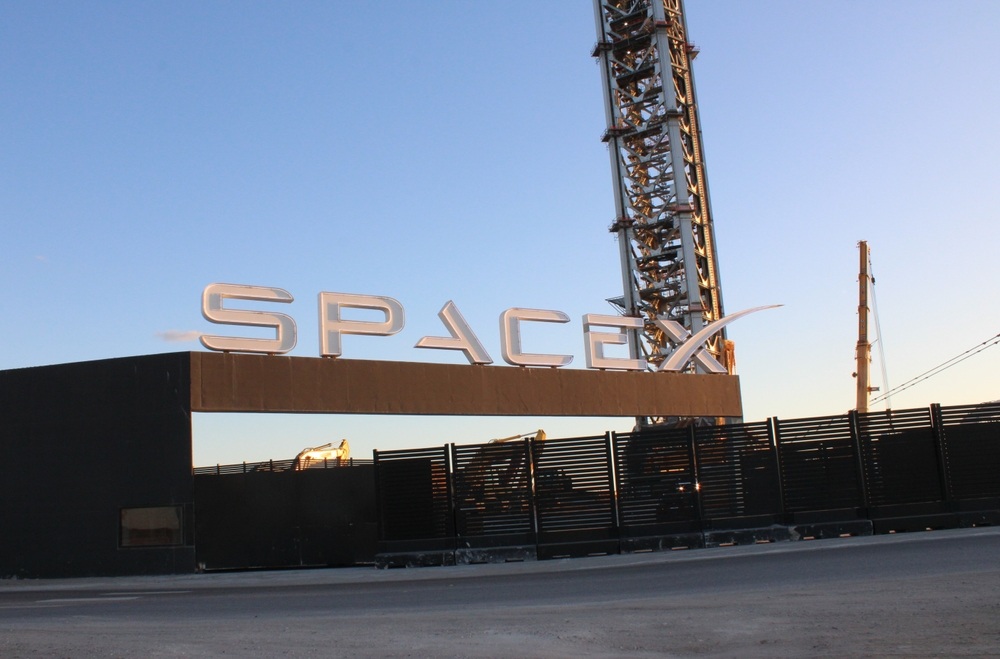
This transition of rocket launches from complete state control to private companies follows the model that has pushed the United States to the forefront of commercial spaceflight, with SpaceX leading the way.
South Korea’s government is betting that a similar handoff to the private sector can speed up progress and attract the capital needed to compete globally.
If you're reading this, you’re already ahead. Stay there with our newsletter.
บทความแนะนำ






ความคิดเห็น (0)
คลิกปุ่ม $ ป้อนสัญลักษณ์ และเลือกเพื่อเชื่อมโยงหุ้น, กองทุน ETF หรือสัญลักษณ์หลักทรัพย์อื่น ๆ