BREAKINGVIEWS-Andrea Orcel may become odd hero of M&A abstinence

By Neil Unmack
LONDON, Feb 9 (Reuters Breakingviews) - Andrea Orcel is limbering up to be an unlikely symbol of M&A abstinence. The UniCredit CRDI.MI chief executive is a veteran dealmaker, and made the early running in what could turn into a wider European bank deal frenzy. But self-help options suggest he may not need to.
Lenders normally reward shareholders via big share buybacks. But returns from these have shriveled as valuations have risen, making CEOs more likely to think of buying rivals. Only last week Santander SAN.MC splurged $12 billion on U.S. lender Webster Financial WBS.N.
Orcel should have been leading the charge. In 2024 he went hostile for 38 billion euro Commerzbank CBKG.DE, and also bid for domestic rival Banco BPM BAMI.MI. Both deals were resisted by governments in Germany and Italy. And now they look harder: Commerzbank is no longer cheap, and Credit Agricole CAGR.PA has secured a near blocking stake in the Italian group.
UniCredit has also been linked to insurer Assicurazioni Generali GASI.MI, and Banca Monte dei Paschi di Siena BMPS.MI. Yet at 55 billion euros the former is highly valued. The latter would bring with it powerful shareholders, and possibly even more tangles with an Italian government that is a co-investor. Perhaps the most logical deal is one with 25-billion-euro BPER Banca EMII.MI, yet that would mean winning over a core shareholder, Unipol UNPI.MI. Hence bolt-on M&A, like the near 30% stake acquired in Greek lender Alpha Bank, looks more likely.
In the meantime, Orcel has plenty to keep busy with. He is targeting a more than 23% return on tangible equity by 2028, up from 19% in 2025. That won’t be easy: he needs to cut costs by 1 percent per year down to 9.2 billion euros, whereas analysts before Monday’s announcement were expecting them to be over 400 million euros higher than that in 2028. And he will need to keep growing net revenue by 5% a year, while keeping provisions at the current low level of 15 basis points to 20 basis points.
Yet Orcel is still in investors’ good books. He plans to return 30 billion euros to shareholders over the next three years. And, with a common equity Tier 1 ratio of nearly 15%, he is comfortably above his minimum levels and even those of peer Intesa Sanpaolo ISP.MI.
Even getting closer to those targets could boost UniCredit’s stock, which Orcel is continuing to buy back. It is currently valued at 1.8 times forward tangible book value, as per LSEG data, whereas a 23% return would justify a multiple comfortably over 2 times book value. And if the M&A window were to open – perhaps if Commerzbank’s earnings or its valuation stumble – he can always charge back into the fray.
Follow @Unmack1 on X.
CONTEXT NEWS
UniCredit on February 9 said it would raise its return on tangible equity to 23% in 2028, up from 19% in 2025.
The bank led by Andrea Orcel forecast net revenue to reach 27.5 billion euros in 2028, up from 23.9 billion euros in 2025. It also expects costs to fall to 9.2 billion euros, down from 9.4 billion euros last year.
UniCredit shares rose nearly 6%, to 78.37 euros per share as of 10:17 GMT.
UniCredit has outpaced European bank stocks in recent years 
Related Articles
National Debt Bomb Ignited? Musk Warns U.S. Will Be 1000% Bankrupt Without AI
TradingKey - Tesla (TSLA) CEO Elon Musk recently issued another warning regarding the rapidly ballooning U.S. national debt. He stated clearly that without artificial intelligence and robotics, the United States will inevitably head toward fiscal bankruptcy.
Tesla Stock Outlook: Competing With Rivian, Robotaxi Potential, and 2026 Prospects
There is much conversation about the prospect of investing in Tesla (TSLA) as we move closer to 2026. The volatility of its share price in 2025 is leading many investors to consider if they should purchase shares of Tesla given the alternatives available in terms of electric vehicles (Rivian, etc.).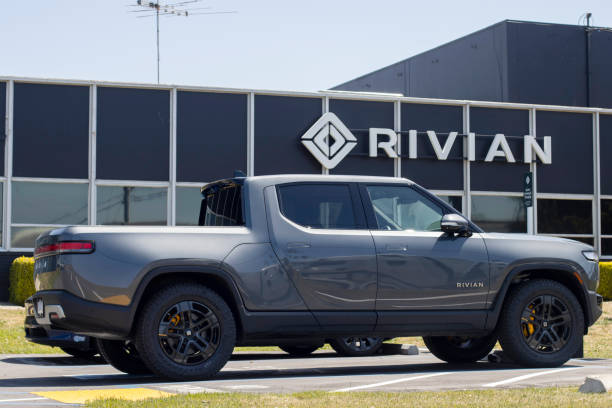
A Crash After a Surge: Why Silver Lost 40% in a Week?
TradingKey - Spot silver (XAGUSD) prices continue to decline. Silver plunged 20% on Thursday, breaking below $71 per ounce, with the sell-off intensifying on Friday as prices fell further below $64. Compared to the all-time high set on January 29, silver prices have retraced more than 40%, wiping out nearly all gains accumulated over the previous month.
Is Bitcoin’s Four-Year Cycle Dead in 2026?
Is the Bitcoin 4-year cycle dead? After 2025 broke historical records with a red post-halving year, institutional analysts explore if the Bitcoin price has decoupled from the halving countdown. Analyze the impact of spot ETFs, global liquidity, and the roadmap to the 2028 halving in this 2026 market