The Stock Market Flashes a Bullish Signal Seen Only 17 Times Since 1990. Big Gains Usually Follow in the Next Year.



Key Points
The CBOE Volatility Index, commonly known as the VIX, uses options prices to measure the anticipated 30-day volatility in the S&P 500.
The VIX declined more than 50% during the 20-week period that ended on August 22, something it has only done 17 times since 1990.
The S&P 500 has achieved an average one-year return of 22% following incidents when the CBOE Volatility Index fell at least 50% in 20 weeks.
The S&P 500 (SNPINDEX: ^GSPC) displayed unusually high volatility earlier this year when President Donald Trump began imposing tariffs. The index dropped more than 10% in two trading days in April, its fourth-worst two-day drop in history, then rebounded sharply when the president paused the most severe duties for 90 days.
As the S&P 500 whipsawed, the CBOE Volatility Index (VOLATILITYINDICES: ^VIX) increased 143% in four trading days, the third-largest four-day spike in history, and topped 50 in April for the first time in five years. That was a bullish signal for the stock market because the S&P 500 has posted an average one-year return of 35% after incidents when the CBOE Volatility Index closed above 50.
Where to invest $1,000 right now? Our analyst team just revealed what they believe are the 10 best stocks to buy right now. Learn More »
However, the U.S. stock market recently flashed another bullish signal. The CBOE Volatility Index fell more than 50% over a 20-week period for only the 17th time since 1990. Such a sharp reduction in volatility has usually lead to monster returns in the next year. Here's what investors should know.
Image source: Getty Images.
The CBOE Volatility Index just notched its sharpest 20-week decline in history
The CBOE Volatility Index, often called the VIX, is a crowdsourced measurement of market uncertainty based on S&P 500 options contracts. Specifically, it measures the implied 30-day volatility embedded in options prices and expresses it as a non-directional, annualized number. For instance, if the VIX reads 20, that indicates an expected 20% movement (up or down) in the S&P 500 in the next year.
The CBOE Volatility Index rocketed to 45.3 on Friday, April 4, two days after President Trump announced his "Liberation Day" tariffs from the Rose Garden at the White House. Investors were particularly stunned by the severity of the reciprocal tariffs above the 10% baseline, which were meant to balance trade deficits the president saw as detrimental to national security.
Thereafter, the CBOE Volatility Index plunged 69% to 14.2 on Friday, Aug. 22, marking the largest 20-week decline since its creation in 1990. It was only the 17th incident where the VIX fell more than 50% during a 20-week period, according to Charlie Bilello at Creative Planning.
The U.S. stock market has typically delivered incredible returns following such events. Listed below is the S&P 500's average return over different time periods following incidents when the CBOE Volatility Index declined at least 50% in 20 weeks.
- 6 months: 10%
- 1 year: 22%
- 2 years: 37%
Past performance is never a guarantee of future results, but investors can use the statistics above to make an educated guess about the future. The S&P 500 closed at 6,467 on Aug. 22, 2025 and essentially trades at the same level today. In other words, history says the index will advance 22% to 7,890 by Aug. 22, 2026.
The S&P 500 may not perform as well as history suggests
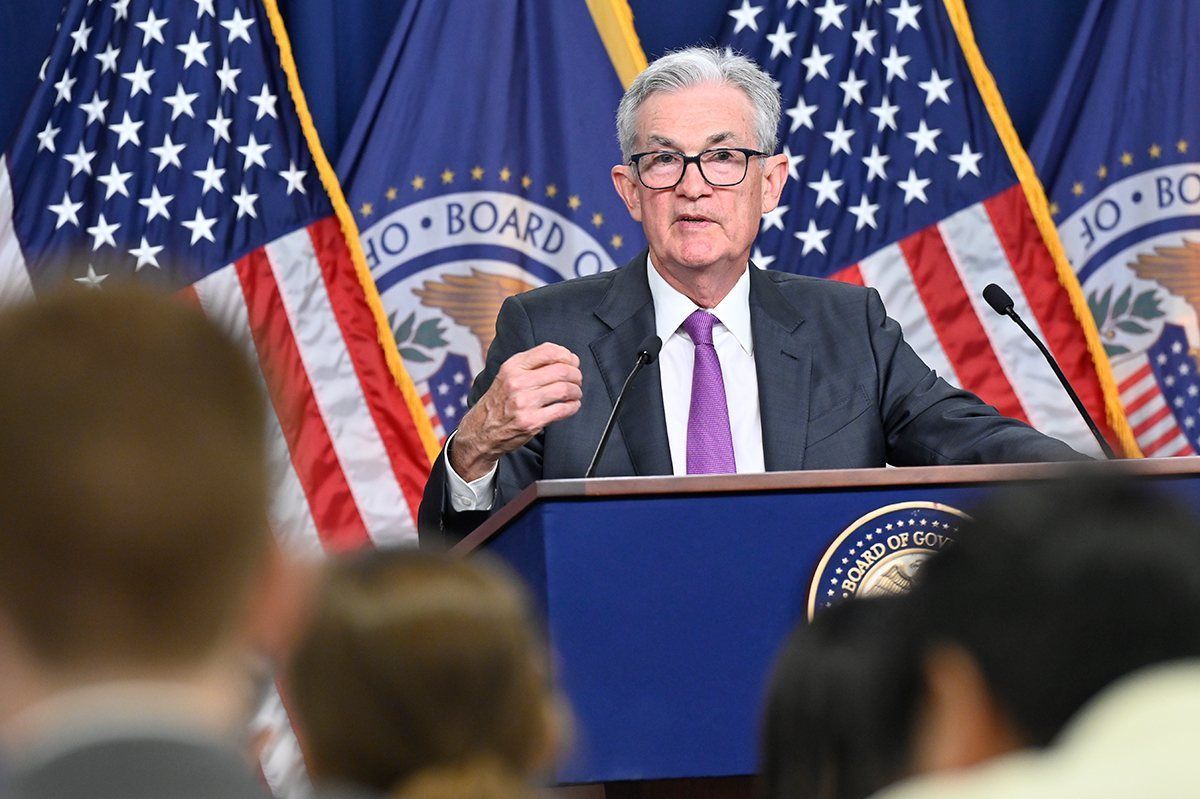
President Trump has given investors several reasons to worry about the stock market. His tariffs have raised the average tax rate on U.S. imports to its highest level since 1933. Trump fired the Bureau of Labor Statistics Commissioner without cause after a dismal jobs report, claiming, without evidence, that the report was rigged. And he has repeatedly attacked the Federal Reserve Chairman in an effort to gain more control over monetary policy.
Beyond those headwinds, the S&P 500 also has a valuation problem. The index trades at 22.4 times forward earnings, a premium to the five-year average of 19.9 and the 10-year average of 18.5. In the past, the S&P 500 has declined about 6% during the year following forward price-to-earnings measurements above 22. That calls into question whether the stock market is actually headed higher in the near term.
In summary, while sharp decreases in volatility have historically correlated with monster returns in the S&P 500, investors also have reason to be cautious in the current market environment. President Trump's trade war and his efforts to control independent agencies, coupled with elevated valuations, are headwinds that could easily drag the stock market lower.
Should you invest $1,000 in S&P 500 Index right now?
Before you buy stock in S&P 500 Index, consider this:
The Motley Fool Stock Advisor analyst team just identified what they believe are the 10 best stocks for investors to buy now… and S&P 500 Index wasn’t one of them. The 10 stocks that made the cut could produce monster returns in the coming years.
Consider when Netflix made this list on December 17, 2004... if you invested $1,000 at the time of our recommendation, you’d have $661,268!* Or when Nvidia made this list on April 15, 2005... if you invested $1,000 at the time of our recommendation, you’d have $1,045,818!*
Now, it’s worth noting Stock Advisor’s total average return is 1,047% — a market-crushing outperformance compared to 184% for the S&P 500. Don’t miss out on the latest top 10 list, available when you join Stock Advisor.
*Stock Advisor returns as of August 25, 2025
Trevor Jennewine has no position in any of the stocks mentioned. The Motley Fool has no position in any of the stocks mentioned. The Motley Fool has a disclosure policy.
Recommended Articles