GLOBAL MARKETS-US stocks follow European shares higher, Treasury yields dip as investors eye tariff talks



By Stephen Culp
NEW YORK, June 4 (Reuters) - Wall Street moved higher and U.S. Treasury yields dipped on Wednesday as investors monitored movement in trade negotiations and looked ahead to Friday's critical employment report.
All three share indexes were modestly higher in early trading, following the example of their European counterparts, while the dollar dipped and gold was essentially unchanged.
"As the market continues to move higher, I think investors are simply saying look, the trend is your friend, and just like white water rafting they will let the market take them where it wants to go," said Sam Stovall, chief investment strategist of CFRA Research in New York.
"The markets are going through some sideways movement until we get into July because then we'll have a better read on what kind of an impact tariffs have had on Q2 economic growth and earnings, and give a better idea as to what might happen for the remainder of this year."
Trade talks between the United States and Europe are progressing, according to Europe's top negotiator, who added that the doubling of U.S. metals tariffs, which kicked in on Wednesday, are not helping negotiations. Meanwhile China's curbs on critical mineral exports have caused distress among global automakers, who warn shortages threaten to halt global supply chains.
Although U.S. President Donald Trump and Chinese President Xi Jinping are likely to speak soon, in a social media post Trump called Xi tough and "extremely hard to make a deal with," suggesting a swift resolution of trade differences between the world's two largest economies could prove elusive.
"Tariff threats are keeping interest rates elevated, and investors have reason to worry about the global economy slowing down," Stovall said.
On the economic front, payrolls processor ADP reported the U.S. private sector added 37,000 jobs last month, or 69.2% fewer than analysts expect the Labor Department's more comprehensive employment report to show on Friday. Additionally, survey data showed the U.S. services sector slipped into contraction last month, while prices paid - an inflation predictor - hit the highest level since November 2022.
The Dow Jones Industrial Average .DJI rose 47.33 points, or 0.12%, to 42,568.56, the S&P 500 .SPX rose 11.49 points, or 0.19%, to 5,981.86 and the Nasdaq Composite .IXIC rose 36.59 points, or 0.19%, to 19,436.37.
European stocks advanced and Germany's benchmark index hit a record high after Berlin approved a corporate tax relief package, even as survey data showed euro zone business activity stalling and Germany's services sector posted its sharpest contraction in more than two years.
MSCI's gauge of stocks across the globe .MIWD00000PUS rose 0.49%, the pan-European STOXX 600 .STOXX index was up 0.56%, while Europe's broad FTSEurofirst 300 index .FTEU3 rose 0.54%.
Emerging market stocks .MSCIEF rose 1.36%, while MSCI's broadest index of Asia-Pacific shares outside Japan .MIAPJ0000PUS closed 1.31% higher, while Japan's Nikkei .N225 rose 0.80%, to 37,747.45.
The dollar wobbled amid trade talks and mixed economic data.
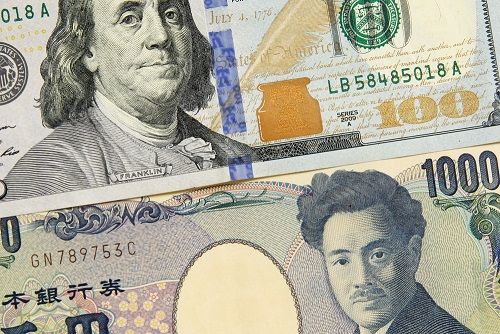
The index =USD, which measures its performance against a basket of currencies including the yen and the euro, fell 0.41% to 98.76, with the euro EUR= up 0.52% at $1.1429.
Against the Japanese yen JPY=, the dollar weakened 0.67% to143.03.
Longer-dated U.S. Treasury yields were lower as investors watched for signs of tariff talks progress and looked ahead to payrolls data.
The yield on benchmark U.S. 10-year notes US10YT=RR fell 8.3 basis points to 4.377%, from 4.46% late on Tuesday.
The 30-year bond US30YT=RR yield fell 8.1 basis points to 4.9019%.
The 2-year note US2YT=RR yield, which typically moves in step with interest rate expectations for the Federal Reserve, fell 6.8 basis points to 3.889%.
Crude prices wavered, and were last slightly higher as supply concerns arising from Canada's wildfires were counterbalanced by OPEC+ output increases.
U.S. crude CLc1 rose 0.03% to $63.43 a barrel and Brent LCOc1 fell to $65.47 per barrel, down 0.24% on the day.
Gold prices gained ground against the soft dollar as investors bided their time for trade deals and employment data.
Spot gold XAU= rose 0.85% to $3,380.37 an ounce. U.S. gold futures GCc1 rose 0.4% to $3,363.50 an ounce.
G10 currency moves against the US dollar https://reut.rs/4dIDTbI
ISM services PMI 
Recommended Articles