EMERGING MARKETS-Most Latam stocks, currencies tick up with focus on tariff developments



By Shashwat Chauhan
March 25 (Reuters) - Most Latin American currencies and stocks rose on Tuesday, though there was caution as investors looked out for more developments on the tariff front, with Brazilian assets taking an early lead.
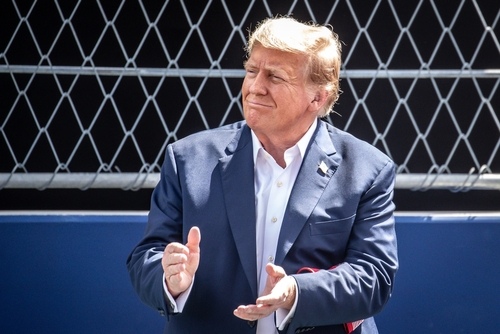
U.S. President Donald Trump said on Monday automobile tariffs were coming soon even as he indicated that not all of his threatened levies would be imposed on April 2 and some countries may get breaks.
Bloomberg and the Wall Street Journal had reported earlier on Monday that the administration was narrowing its approach to the broad batch of levies Trump has been saying for weeks would be imposed on April 2, and could delay sector-specific tariffs.
Amid the global dollar weakness, Brazil's real BRL= jumped 1.4% against the dollar, set for its first single-day gain in four.
Minutes from the Brazilian central bank's last policy meeting - where it hiked rates by 100 bps - showed that given heightened uncertainty, it chose to signal the direction of only its next move, emphasizing that, due to monetary policy lags, it was appropriate to indicate a smaller interest rate hike.
"In our assessment, the Copom is still far from having won the battle against inflation," Goldman Sachs analysts said in a note.
"As such, it should not put too much weight on the domestic growth dynamics and global uncertainty."
Data released on March 12 showed inflation in Latin America's biggest economy inflation exceeded 5% for the first time in over a year in February, remaining well above the central bank's target of 3%, plus or minus 1.5 percentage points.
Chile's peso CLP= also appreciated 1.1%, while the Colombian peso COP= advanced 0.8%, though in low volumes.
Mexico's peso MXN= - which has seen immense volatility lately amid the tariff back-and-forth- weakened 0.1% in lead-up to a local interest rate decision on March 27, with expectations for the Bank of Mexico to cut its main lending rate by 50-basis-points.
Most Latin American currencies have gained ground against the greenback in 2025, as the case of U.S. exceptionalism weakened amid the tariff uncertainty, while fears of an impending economic slowdown also spurred some dollar weakness.
Hungary's forint HUF= and Brazil's real stand as the best performing emerging market currencies against the dollar so far this year, while Turkey's lira TRYTOM=D3 and the Indonesian rupiah IDR= are the worst ones.
On Tuesday, the National Bank of Hungary left its base rate steady at the European Union's joint-highest level of 6.5% at new Governor Mihaly Varga's first policy meeting, amid a surge in inflation driven by food and services prices.
Stocks too have had an upbeat year so far, with MSCI's index for Latin American stocks .MILA00000PUS up more than 15%, likely benefiting from a global move away from U.S. equities.
On Tuesday, Brazil's Bovespa .BVSP led gains amongst the local bourses, advancing 1.3% with financial and energy shares boosting the index.
Shares of Brazilian truck rental company Vamos VAMO3.SA jumped about 14% after the company posted a consolidated net profit of 213.2 million reais ($372.54 million) in the fourth quarter, up 17.6% from a year earlier.
Key Latin American stock indexes and currencies:
Equities | Latest | Daily % change |
MSCI Emerging Markets .MSCIEF | 1131.05 | -0.44 |
MSCI LatAm .MILA00000PUS | 2141.74 | 1.43 |
Brazil Bovespa .BVSP | 133051.83 | 1.32 |
Mexico IPC .MXX | 53182.09 | 0.96 |
Chile IPSA .SPIPSA | 7611.94 | -0.27 |
Colombia COLCAP .COLCAP | 1619.16 | 0.64 |
Currencies | Latest | Daily % change |
Brazil real BRL= | 5.6867 | 1.35 |
Mexico peso MXN= | 20.0442 | -0.1 |
Chile peso CLP= | 916.52 | 1.13 |
Colombia peso COP= | 4107.16 | 0.76 |
Peru sol PEN= | 3.6404 | 0.11 |
Argentina peso (interbank) ARS=RASL | 1070.5 | -0.16 |
Argentina peso (parallel) ARSB= | 1255 | 1.99 |
Recommended Articles