Ireland, Finland, others warn against relaxing EU merger rules

By Julia Payne and Foo Yun Chee
BRUSSELS, Feb 23 (Reuters) - Finland, Ireland, the Czech Republic and two Baltic countries have warned against loosening EU merger rules in response to calls by some companies for easier regulatory scrutiny of their deals in order to better compete with non-EU rivals.
The European Commission, which acts as the bloc's competition enforcer, is now revamping merger rules dating from 2004 and aims to publish proposals for feedback in April. The aim is to encourage pan-European mergers, sources have told Reuters.
The five countries, including Estonia and Latvia, wrote in a note seen by Reuters that Europe does not need to relax EU merger rules to create European champions because the existing rules already allow for these where the economic evidence supports it.
"Size in itself should not be the primary objective" of mergers, they said in the document that is to be discussed at a meeting of EU ministers on Feb. 26, calling to pursue "undertakings that succeed through efficiency, innovation and fair competition instead of exemptions or special treatment".
They refuted arguments, especially from European telecoms operators, that bigger companies would spur more investments, instead supporting regulators who note little evidence of such an effect.
"The empirical link between higher concentration and stronger investment incentives in telecom markets is at best inconclusive and should be analysed on case-by-case basis," the countries said.
They said claims that larger operators would have secure supply chains could backfire by making Europe too dependent on a small number of suppliers and thus less resilient.
"If strengthening resilience and secure supply chains is considered to require additional regulatory measures, these should be pursued through sectoral or industrial policy instruments rather than through changes to competition legislation," they added.
Related Articles
International Copper Prices Rise for 7 Straight Months; Will Bull Market Continue in 2026?
TradingKey - As the "king of industrial metals," every fluctuation in international copper prices impacts the nerves of global investors. In early 2026, international copper prices continued to rise, extending the upward trend from 2025 and reaching a new high above $14,500, marking seven consecutive months of gains. Meanwhile, London Metal Exchange (LME) copper prices have climbed from $7,800 per tonne in July 2025 to over $9,000 per tonne today.
How Bitcoin Miners Are Scaling Revenue Through AI Data Center Integration
Discover how Bitcoin miners like Core Scientific and IREN are scaling revenue by pivoting to AI data centers. Explore 2026 hashprice trends, ASIC-to-GPU retrofitting, and the "hashrate-to-HPC" revolution.
Stock Market Crash 2026: What Fed Signals and Economic Data Mean for Investors
TradingKey - The possibility of a stock market crash occurring in 2026 is becoming increasingly likely as investor sentiment continues to decline.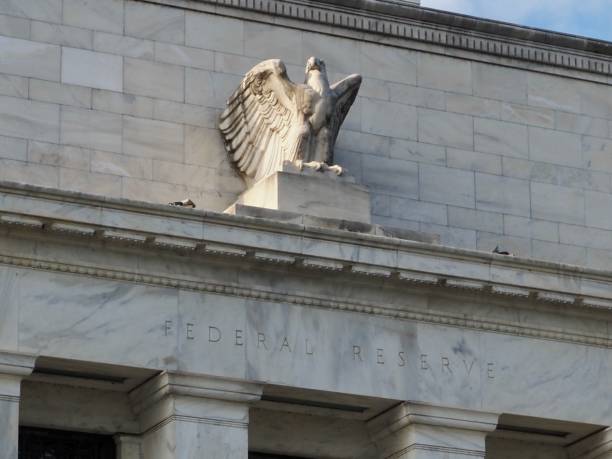
New Fed Chair Warsh Takes Office: Major Shift in Monetary Policy? US Dollar Short-Term Rebound, 2026 Investment Strategy Analysis
TradingKey - At the start of 2026, global financial markets witnessed a major leadership change as U.S. President Trump officially nominated Kevin Warsh as the next Federal Reserve Chair. Pending Senate confirmation, he will succeed Jerome Powell this May to lead the world’s most influential central bank.