Judge tells US National Park Service to reinstall Philadelphia slavery exhibit

By Chris Prentice and Kanishka Singh
NEW YORK/ WASHINGTON, Feb 16 (Reuters) - A U.S. federal judge in Pennsylvania ordered the National Park Service on Monday to reinstall a slavery exhibit at a Philadelphia historic site, pending the outcome of litigation after the city sued the government over its removal.
The exhibit was dismantled and removed last month in response to President Donald Trump's claims, rejected by civil rights groups, of an "anti-American ideology" at historical and cultural institutions.
"The government claims it alone has the power to erase, alter, remove and hide historical accounts on taxpayer and local government-funded monuments within its control," U.S. District Judge Cynthia Rufe wrote in her opinion.
"Its claims in this regard echo Big Brother's domain in Orwell's '1984,'" Rufe added, referring to the dystopian novel by George Orwell.
The National Park Service and Philadelphia did not respond to requests for comment.
Pennsylvania Governor Josh Shapiro, who backed the lawsuit, welcomed Monday's order.
"Here in Pennsylvania, we learn from our history - even when it's painful," he said on X. "We don't erase it. Donald Trump may want to whitewash our shared history - but we will not let him win."
In its suit, Philadelphia accused the federal Interior Department, which oversees the National Park Service, and top officials of breaking the law.
The judge granted the city's request for a temporary block and ordered the National Park Service to restore the exhibit pending the outcome of litigation.
"As if the Ministry of Truth in George Orwell's 1984 now existed, with its motto 'Ignorance is Strength,' this court is now asked to determine whether the federal government has the power it claims - to dissemble and disassemble historical truths when it has some domain over historical facts," Rufe said in the 40-page opinion.
"It does not."
The exhibit was at the President's House Site in Independence National Historical Park, where the first U.S. president, George Washington, lived when the Pennsylvania city was the nation's capital.
The President's House described the history of slavery and Washington's ownership of enslaved people.
Trump has targeted U.S. institutions, from museums to monuments to national parks, to remove what he calls "anti-American" ideology.
His declarations and executive orders have led to the dismantling of slavery exhibits, the restoration of Confederate statues and other moves that civil rights advocates say could reverse decades of social progress and undermine the acknowledgment of critical phases of U.S. history.
Related Articles
The Magnificent Seven: What They Are, How They Performed in 2025, and Which Will Be the Best in 2026?
TradingKey - The Magnificent Seven refers to the seven best tech stocks in 2023. These are Apple (AAPL), Microsoft (MSFT), Alphabet (GOOG) (GOOGL), Amazon (AMZN), Nvidia (NVDA), Meta Platforms (META), and Tesla (TSLA). These technology titans are developing products related to Artificial Intelligenc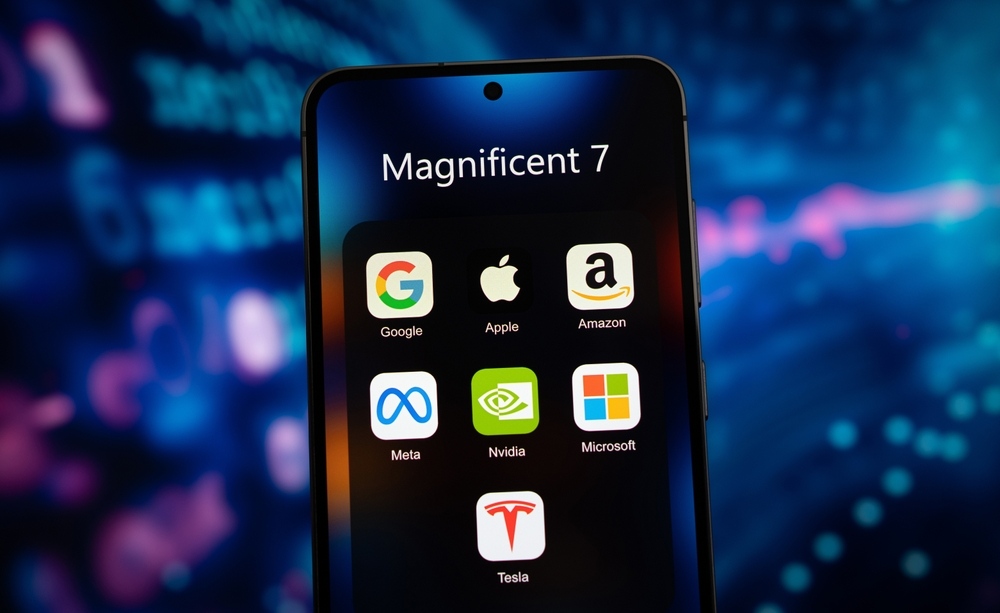
Bitcoin Price Prediction 2029-2035: Institutional Accumulation and the U.S. Treasury’s Strategic Reserve Pivot
Explore the 2026 Bitcoin landscape: From the U.S. Strategic Reserve and Michael Saylor’s $75B war chest to Cathie Wood’s 2030 forecast. Is BTC the new Digital Gold?
Is SaaS Dead? The Truth Behind the Software Meltdown, the Missing Floor, and the Peak That’s Not Coming Back
TradingKey - A trillion dollars just vanished from software stocks—this piece breaks down who AI is really killing, who quietly benefits, and why cheap SaaS may be the biggest value trap of this cycle.