


Crypto Stocks Drop Pre-Market as Coinbase, Strategy Fall Over 4% Ahead of Key CLARITY Act Vote



AI Podcast


On September 15, U.S. crypto stocks and Bitcoin declined in pre-market trading as markets awaited a Senate procedural vote on the CLARITY Act. Requiring 60 votes to advance, the bill aims to define regulatory boundaries and asset classifications for the digital asset market. A newly revised draft incorporates numerous Democratic amendments to bridge partisan gaps. While successful advancement could reduce long-standing regulatory uncertainty, controversies persist regarding consumer protection, conflicts of interest, and potential deposit competition for the banking sector. Investor focus centers entirely on whether the legislation will secure sufficient bipartisan support to proceed.

TradingKey - On September 15, U.S. crypto stocks broadly declined in pre-market trading, with Coinbase (COIN) and Strategy (MSTR) falling over 4%, Bit Digital (BTBT), Riot Platforms (RIOT), MARA Holdings (MARA) dropping over 2%, Hut 8 (HUT) and CleanSpark (CLSK) falling over 1%. Meanwhile, Bitcoin dropped about 1.67% over the past 24 hours to slip below $76,700, as the market awaits a U.S. Senate procedural vote on the CLARITY Act.
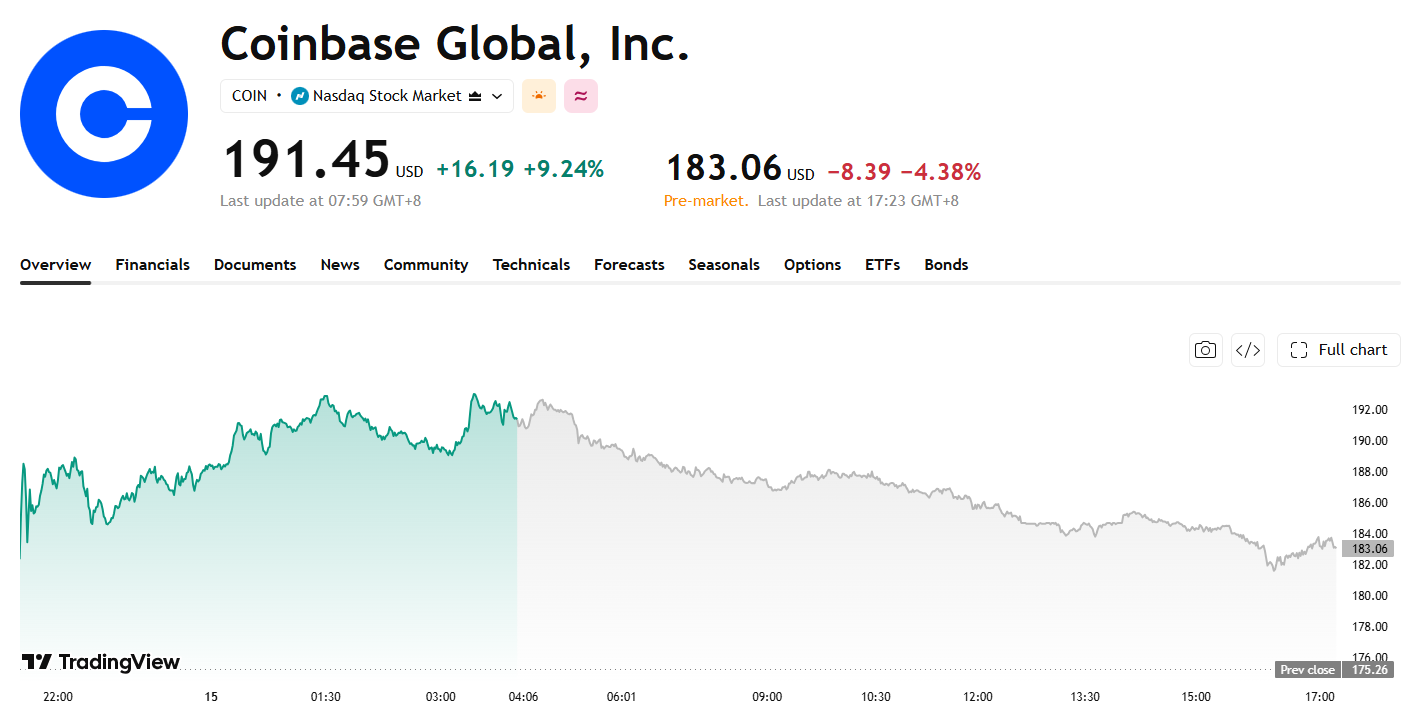
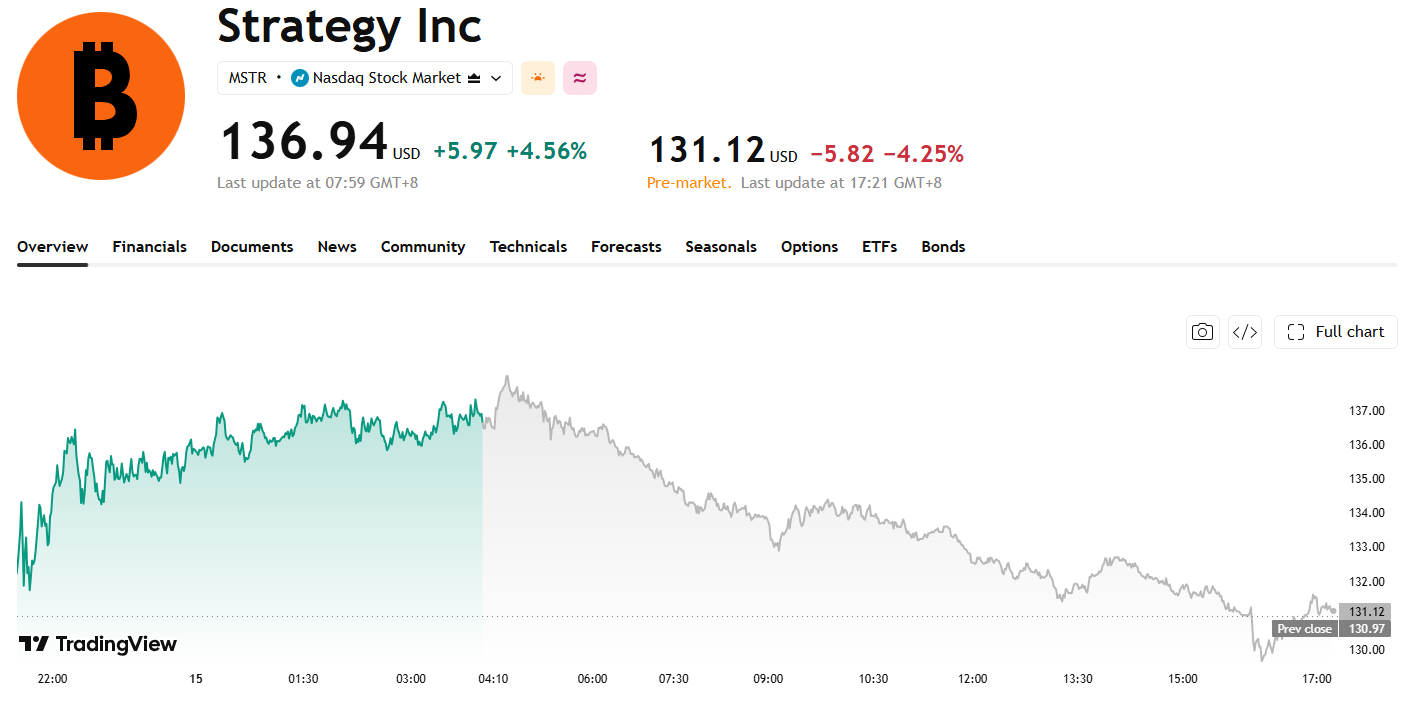
Source: TradingView
The U.S. Senate plans to vote on the bill at 14:15 local time on September 15. The motion requires at least 60 votes in favor to proceed to formal consideration.
On the eve of the vote, Senate Republicans released a further revised version of the bill's text in an effort to address key differences previously raised by Democrats. According to reports, the new draft incorporates 126 amendments proposed by Democrats and includes most ethics-related provisions accepted by the Trump team.
The core goal of the CLARITY Act is to further clarify regulatory boundaries for the U.S. digital asset market, including the legal classification of different types of crypto assets and the division of responsibilities among federal regulators. For the crypto industry, if the bill advances smoothly, it is expected to reduce long-standing regulatory uncertainty and establish clearer operational rules for exchanges, digital asset companies, and related financial institutions.
However, controversies surrounding the bill have not fully subsided.
Some Democratic lawmakers previously argued that the new version remains deficient in areas such as conflicts of interest, consumer protection, and financial stability. Meanwhile, the banking sector expressed concern that certain stablecoin rules could intensify competition between digital assets and traditional bank deposits.
As the procedural vote approaches, the market's primary focus remains on whether Republicans can secure enough Democratic support to clear the 60-vote threshold.
This content was translated using AI and reviewed for clarity. It is for informational purposes only.
Recommended Articles












Comments (0)
Click the $ button, enter the symbol, and select to link a stock, ETF, or other ticker.