


Best AI Stocks After Nvidia Earnings: NVDA, AMD, Broadcom, Marvell or Arm?



AI Podcast


Nvidia’s strong earnings report highlights robust, ongoing growth in AI infrastructure spending, driving demand across chips, CPUs, and networking. Nvidia remains the industry standard, supported by massive scale and high visibility. Among competitors, AMD offers the clearest challenger upside with strong GPU and CPU growth, while Broadcom dominates custom silicon and networking. Marvell provides speculative upside with significant future monetization tied to Google, and Arm delivers differentiated CPU architecture exposure. Key risks include customer concentration, execution challenges, valuation, and potential slowdowns in hyperscaler capital expenditures.

TradingKey - Nvidia's release of earnings on Aug. 26 sparked the beginning of a new trade. On Thursday, the stock jumped by 8.7%, closing at $227.98, after positive fiscal second quarter reports by Nvidia showed $96.2 billion in total revenue, with $89.0 billion from its Data Center segment, and with management expecting Q3 revenue to come in at $108 billion. The positive read-through to Nvidia extends beyond the chip segment; the demand for chips is also driving demand for CPUs, networking equipment, custom chips, and connectivity infrastructure. With the listed beneficiaries of AI spending now clear, investors are not asking if AI spending is growing, but which companies do investors believe will benefit the most from that spending.
Nvidia Still Sets the Standard for AI Infrastructure
With another exceptionally strong quarter showing year-over-year growth for total revenue of 106% and growth for Data Center revenue of 117%, and GAAP and non-GAAP gross margins holding at 75%, Nvidia is the best overall AI infrastructure company. Management has now changed expectations and expects revenue for next year’s fiscal to grow by 70%.
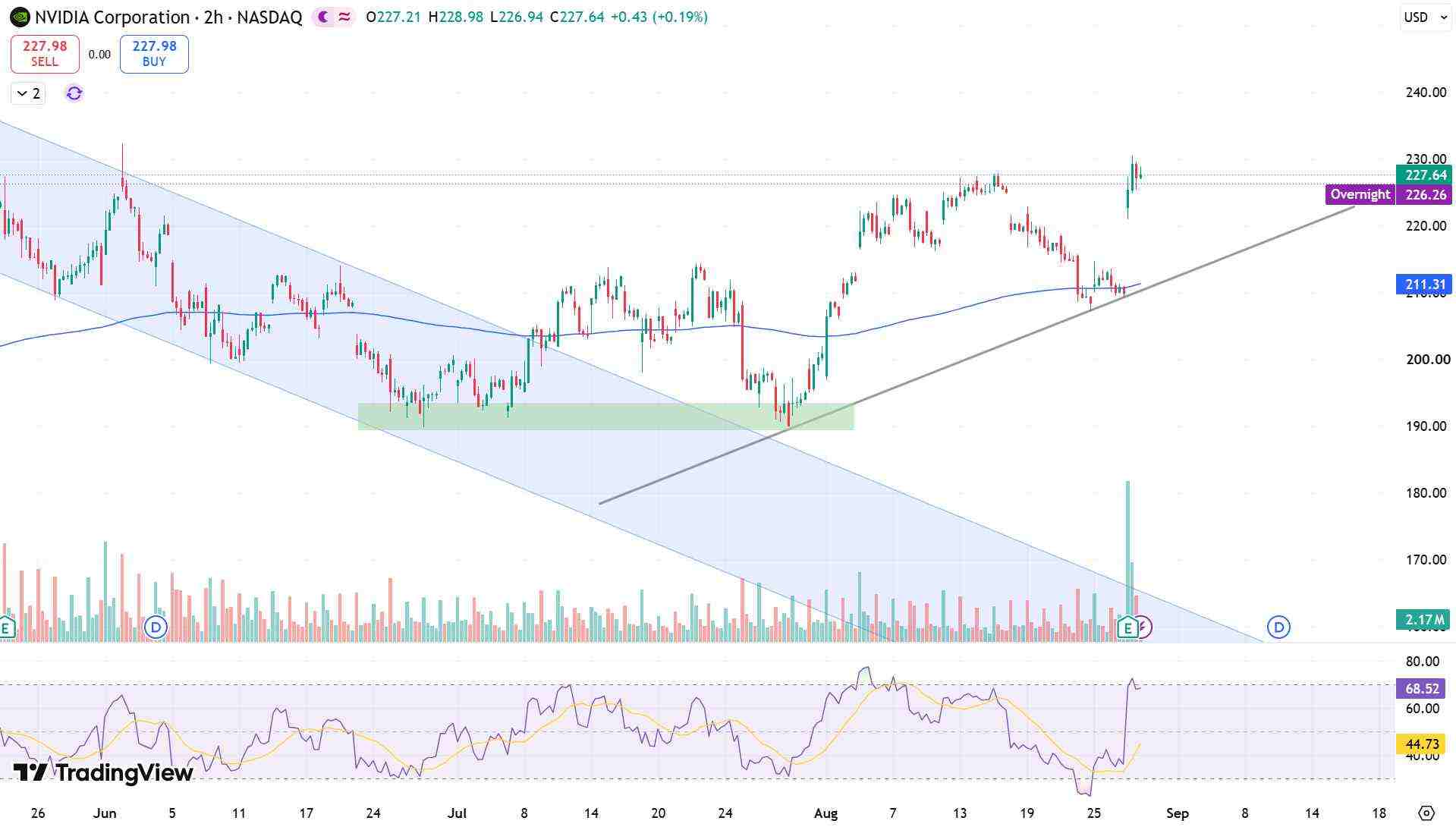
Nvidia Price Chart - Source: Tradingview
The company’s strong position is further solidified with the production of Vera Rubin and growing demand for Blackwell. Nvidia’s AI factory continues to grow, increasing the business's ability to capture more of the dollars associated with each deployment.
Some concerns are driven by the stock price assigned to years of potentially aggressive AI spending, but the company’s mix of factors: scale, software, margins, and visibility, make Nvidia the best position to benefit in this market.
AMD Offers the Clearest Challenger Upside
As a listed participant in both accelerator and server CPU markets, AMD is the most credible challenger. Revenue for Q2 grew by 50 percent to $11.54 billion, with Data Center revenue more than doubling to $6.72 billion. Management projects Q3 revenue at $13 billion and has set a 56 percent non-GAAP gross margin.
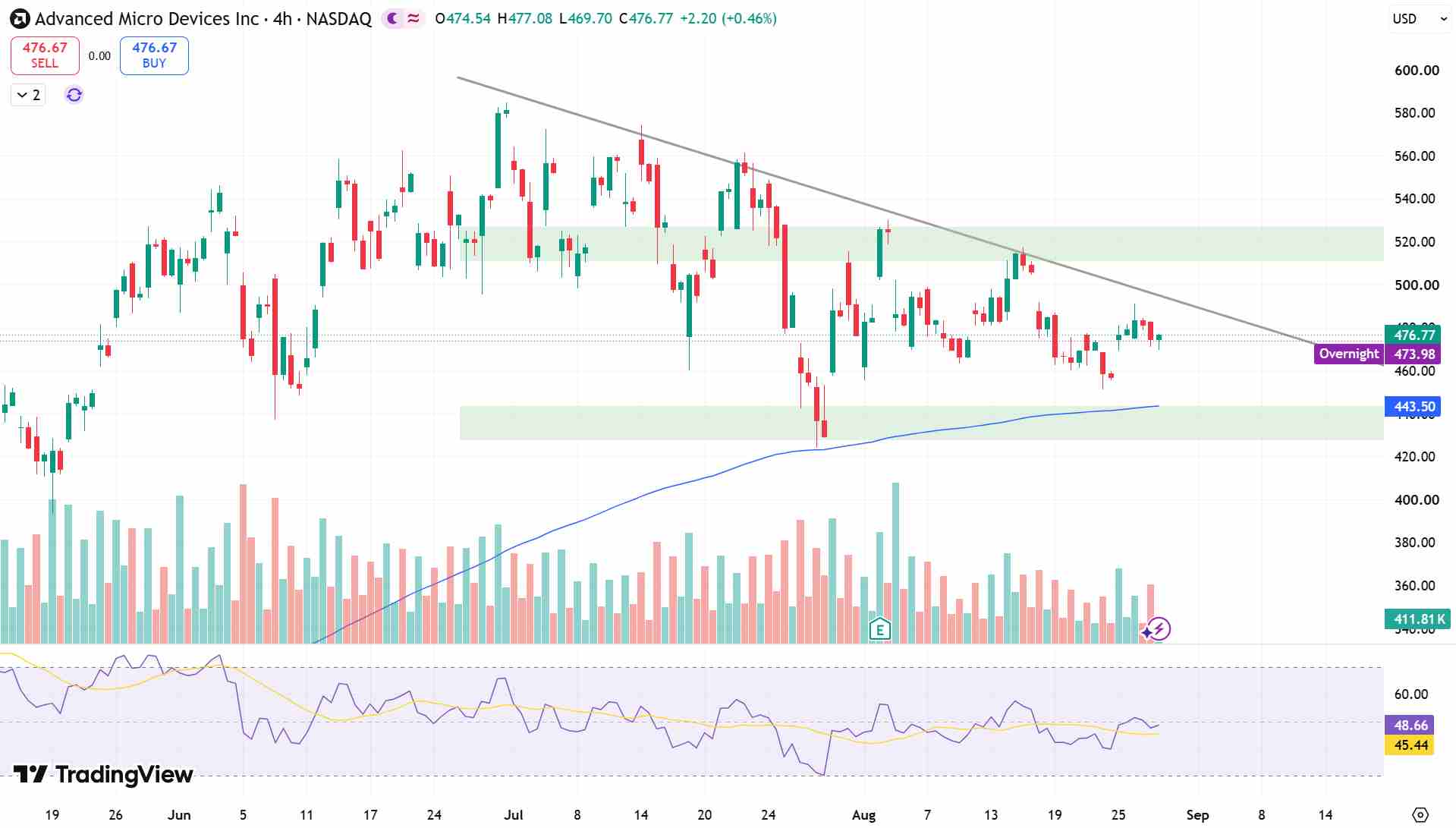
AMD Price Chart - Source: Tradingview
AMD has multiple levers to benefit from spending on AI. With Instinct GPUs, EPYC CPUs and the Helios rack-scale platform, AMD has multiple levers to benefit from spending on AI. AMD would not need to displace Nvidia in order to create a significant amount of upside. A minor increase in accelerator share would impact AMD's revenue significantly.
The primary concern is execution. CUDA is Nvidia's largest competitive advantage, while AMD is still improving ROCm and has to execute on building complex rack-scale systems without margins eroding.
Broadcom Is the Strongest Custom-Silicon and Networking Play
Broadcom's fiscal Q2 AI semiconductor revenue grew 143% year-over-year to reach $10.8 billion versus the company's expectation. Broadcom projects $16 billion for its Q3 AI semiconductor revenue, which will represent over 200% year-over-year growth.
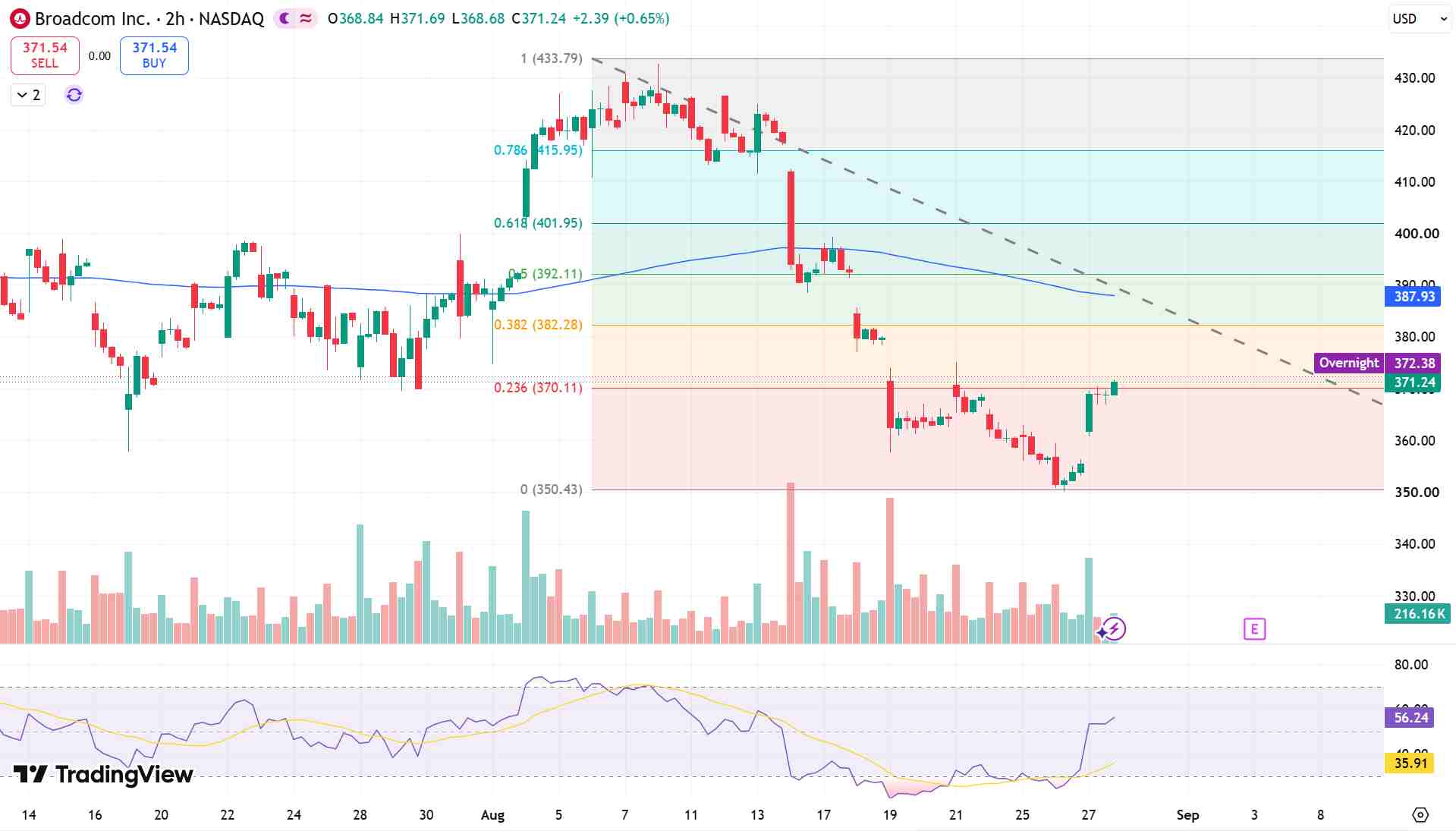
Broadcom Price Chart - Source: Tradingview
AI custom silicon diversification in the data center is the key to Broadcom's dominance. Broadcom continues to expand its Ethernet networking and custom AI accelerator business, and AI accelerators even offset reductions in customers' reliance on merchant GPUs. AVGO is thus, a solid opportunity to invest in hyperscalers' custom silicon, with a clean avoided single processor architecture bet.
The fiscal Q3 earnings report scheduled for September 2 will be an important catalyst for Broadcom, but customer concentration remains a chief risk. With Broadcom's AI revenue trajectory looking more positive than the post-earnings market reaction, the market seems to be missing the positive forward AI revenue indication in Broadcom's Q2 fiscal report
Marvell Has Strong Growth, but Google Timing Adds Risk
Marvell reported fiscal Q2 record revenue in the amount of $2.739 billion representing a 37% increase over the prior year, with Data Center revenue growing 46% to $2.17 billion. The company guided to $3.15 billion for Q3 revenue, and increased their fiscal 2027 and fiscal 2028 revenue expectations to approximately $12 billion and $18 billion.
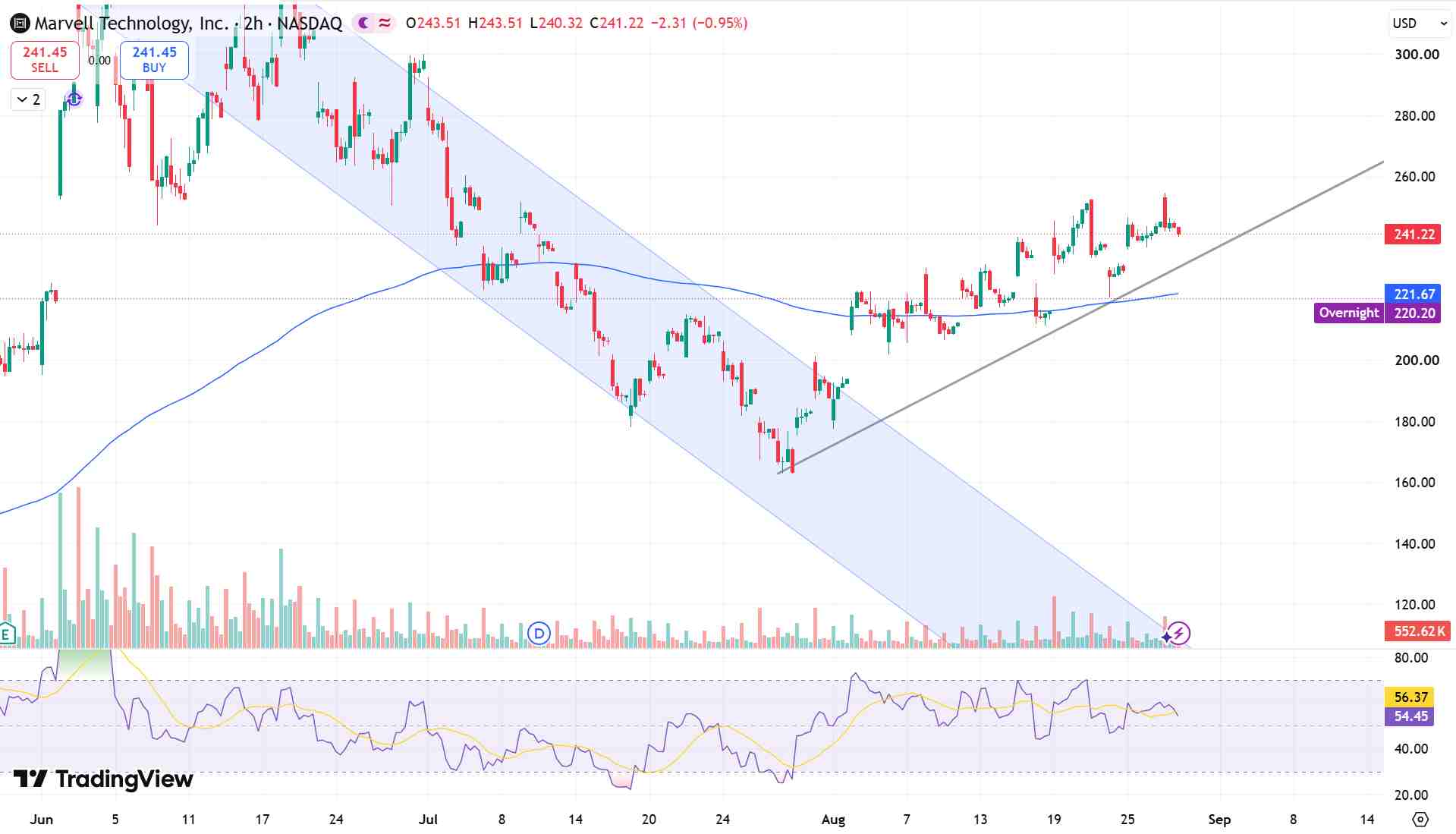
Marvell Price Chart - Source: Tradingview
Custom silicon, switching, optical interconnects and memory connectivity exposure remain strong, but execution and timing risk have increased over Nvidia, AMD and Broadcom. The Google partnership is viewed as the most significant new potential opportunity. However, the investing community focused on the approximate timing, and management noted that the most significant financial contributions are likely to occur in fiscal 2029. For this reason, shares of MRVL sold off post earnings despite positive revenue guidance for the future.
Arm Is the Differentiated CPU and IP Bet
Arm gives new opportunities for AI infrastructure. Fiscal Q1 revenue was $1.29 billion with 22% growth year on year. More than doubling data center royalty revenue. There are more than $2 billion of customer demand for Arm’s AGI CPU over fiscal years 2027 and 2028.
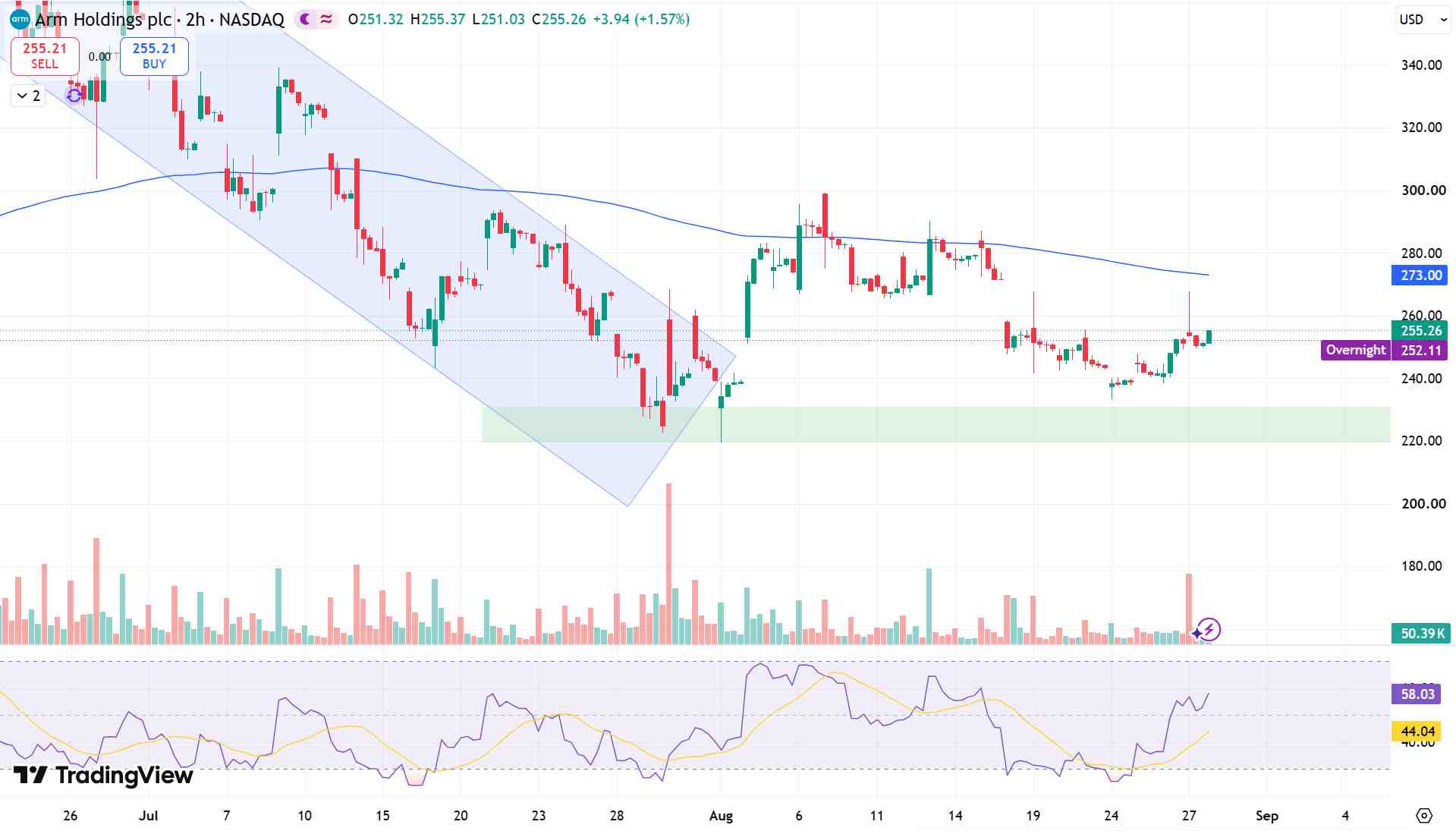
Arm Price Chart - Source: Tradingview
The way Arm’s offerings integrate into AI will be interesting to follow. Whether for inference or training, new AI as agents means CPUs need to be able to control not only accelerators, but storage, networking, and services.
This could be Arm’s biggest challenge yet as a company. The risk of fighting in the channel as a full silicon provider will be a challenge in addition to the high market valuation of Arm leaving little room for execution misses.
AI Stock Scorecard
· Nvidia: Best overall AI infrastructure exposure, excels in scale, software moat, and earnings visibility.
· AMD: Best challenger, highest direct share-gain opportunity across AI GPUs and Server CPUs.
· Broadcom: Best custom-silicon and networking exposure, September 2 earnings will be a probe as to this thesis.
· Arm: Best differentiated CPU/IP exposure, strong data-center royalty growth, and valuation.
· Marvell: For the speculative upside, strongest AI demand, but Google monetization is weighted towards future years.
Which AI Stock Looks Best After Nvidia Earnings?
For quality and visibility, Nvidia is still the best option. AMD has the best challenger opportunity. For custom silicon networking, Broadcom is the best option. For a new differentiated exposure to the CPU layer, Arm is the best option. For a speculative upside, Marvell has it. Their custom-chip program may pay off, but there are future years of Google monetization.
What Should Investors Watch Next?
The next major catalyst for Broadcom will be their release of September 2 earnings. After that, investors should be looking for the Vera Rubin supply, AMD Helios deployments, Marvell's custom-chip goals, and if Arm’s AGI CPUs will convert. The overall biggest concern for investors will be the slowing of hyperscaler capex or if AI infra investments will not be profitable.
Bottom Line
Nvidia's report makes the case that AI infrastructure spending is still growing. NVDA continues to have the strongest stock, AMD is the best share gain option besides NVDA, and Broadcom is the best way to add exposure to custom silicon and networking. Arm offers differentiated CPU architecture exposure, while Marvell offers custom silicon and connectivity exposure. There is more timing risk with Marvell than Arm. For the weekend watchlist, NVDA goes first, followed by AMD, AVGO, Arm, and Marvell for investors who like more risk.
Recommended Articles










Comments (0)
Click the $ button, enter the symbol, and select to link a stock, ETF, or other ticker.