


Tesla Q2 Earnings Preview: Record Deliveries Fail to Hide Profit Pressure, Can Musk Rely on AI and Autonomous Driving to Unlock New Growth Space?



AI Podcast


Tesla is scheduled to release its second-quarter earnings on July 22, Eastern Time. While record deliveries of 480,126 vehicles suggest demand recovery, investors are increasingly prioritizing automotive gross margins—expected to remain near 18%—over sheer volume growth. Following a 13% year-to-date share price decline, market sentiment remains divided. Bulls view Tesla as an AI-driven platform centered on FSD, Robotaxi, and Optimus, whereas skeptics highlight risks from intensified industry competition, subsidy phase-outs, and uncertain commercialization timelines for advanced technologies. Future valuation hinges on the company’s ability to stabilize profitability while progressing on its robotics and autonomous driving strategies.
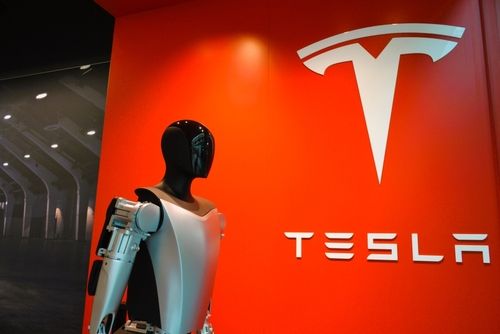
TradingKey - Tesla ( TSLA) will release its second-quarter financial results after the U.S. market close on July 22, Eastern Time. As one of the most closely watched technology and automotive companies this year, this earnings report will not only test the recovery of Tesla's automotive business but also serve as an important window for investors to reassess its AI, autonomous driving, and robotics strategies.
Over the past few quarters, Tesla has been undergoing a critical transition from rapid growth to a mature stage. The company's second-quarter deliveries rebounded significantly, with market demand showing signs of improvement. Meanwhile, intensified competition in the electric vehicle industry, the ongoing price war, and an aging product cycle have put pressure on the company's profit margins.
Q2 Revenue Expected to Grow
According to consensus market expectations, Tesla's second-quarter revenue is expected to be approximately $26.14 billion, up about 16% year-over-year; adjusted net income is projected to reach $1.79 billion, up about 28% year-over-year; and adjusted earnings per share are expected to be around $0.33, roughly flat year-over-year.
On the surface, Tesla's second-quarter performance is still expected to show growth. However, the market's reaction to the earnings report may not depend solely on whether revenue and profit beat expectations, but rather on the company's outlook for future growth trends.
Tesla's stock price has fallen by more than 13% year-to-date, reflecting investors' concerns over slowing EV demand, intensifying competition, and the company's declining profitability.
Record Deliveries, But Vehicle Gross Margin Becomes Core Metric
Tesla previously announced that its global deliveries for the second quarter reached 480,126 vehicles, up approximately 25% year-over-year, marking its best-ever performance for the same period and significantly exceeding the market's prior expectation of approximately 400,000 vehicles.
However, the market is also concerned about whether this growth is sustainable. As some countries gradually reduce new energy subsidies, EV demand could face renewed pressure. Markets such as Norway have previously seen sales drop significantly following subsidy phase-outs, indicating that policy factors still play a significant role in the European new energy market.
Meanwhile, the US market still faces certain pressures. With adjustments to EV tax incentives, combined with legacy automakers and Chinese new energy brands continuously launching more price-competitive models, the difficulty for Tesla to maintain its market share in the future is increasing.
Notably, Tesla's stock price actually fell sharply after the delivery data was released, indicating that the market's focus is shifting.
In the past, sales growth was a key factor supporting Tesla's valuation, whereas now, investors are more concerned about whether these sales can translate into higher profits.
Over the past two years, to stimulate demand growth, Tesla has implemented price cuts multiple times, including adjusting vehicle prices and introducing promotional financing plans. While these strategies helped the company stabilize sales volume, they also squeezed the profitability of its automotive business.
Although falling battery costs, improved production efficiency, and supply chain optimization have provided some cushion, the market still hopes to see signs of improvement in Tesla's profit margins.
Currently, Wall Street expects Tesla's automotive gross margin to remain around 18%. If the gross margin can stabilize or even rebound, the market will view it as the company emerging from the impact of the price war; however, if profit margins continue to decline, it may indicate that volume growth is increasingly dependent on price cuts.
AI, FSD and Robotaxi Become Valuation Key
As growth in the automotive industry slows, Musk has repeatedly emphasized in recent years that Tesla's future core value is not just manufacturing cars, but rather artificial intelligence, autonomous driving, and robotics platforms.
As Tesla transitions into a technology company, its AI business is becoming the core support of its valuation. Investors will closely monitor the progress of FSD, Robotaxi, and the Optimus humanoid robot.
Regarding autonomous driving, the Netherlands has become the first EU country to approve Tesla's Supervised FSD, followed by four other nations including Lithuania and Estonia. However, core markets such as Germany and France are still awaiting unified approval, meaning a pan-European rollout could be delayed until 2027. Phase 1 of the Cortex 2 supercomputing cluster is already online, with a total computing capacity equivalent to 130,000 H100 chips. Investors expect the 500-megawatt Phase 2 target to be met by mid-year, which will initiate large-scale training for Optimus.
The Optimus humanoid robot has become the top priority for investors, with shareholders voting it as the most anticipated topic for the earnings call. Tesla has demonstrated the robot's applications in factory transport and assembly, but the production ramp-up and commercialization timeline remain unclear.
Musk has previously stated multiple times that Robotaxi will become an important driver of Tesla's future growth. If the business can achieve scale, it could alter the market's framework for valuing Tesla.
In addition, expectations of a potential merger between Tesla and SpaceX have also become a hot topic, with the market believing this would further enhance the synergies between their AI and space technologies.
Wall Street Divide on Tesla Widens
Wall Street remains clearly divided on Tesla's future trajectory.
Bullish institutions believe that Tesla's long-term value has shifted from automotive manufacturing to an AI platform. Morgan Stanley ( MS) and UBS ( UBS) and other institutions believe that FSD, Robotaxi, and Optimus will be important drivers of future valuation growth.
Specifically, Morgan Stanley emphasized that Tesla's greatest future growth potential does not come from traditional automotive sales, but rather from autonomous driving and robotics commercialization; UBS also believes that the company's layout in the AI field could trigger a long-term valuation rerating.
However, cautious observers believe that Tesla's current valuation has already priced in a significant amount of future expectations, while its actual business still faces pressure.
JPMorgan ( JPM) is concerned that changes in U.S. new energy subsidies and weak automotive demand could affect sales performance; Barclays ( BCS) believes that after earlier one-off positive factors fade, the company's margins could still remain under pressure.
HSBC, meanwhile, maintains a relatively pessimistic view, believing that in the absence of low-priced models, Tesla's medium-term sales growth potential is limited, while the commercialization of Robotaxis still faces challenges such as technology, regulation, and consumer acceptance.
This content was translated using AI and reviewed for clarity. It is for informational purposes only.
Recommended Articles








Comments (0)
Click the $ button, enter the symbol, and select to link a stock, ETF, or other ticker.