


SpaceX Plummets 7% on First Day of Nasdaq Inclusion. "Bubble Prophet" Warns of 90% Crash Risk



AI Podcast


SpaceX recently joined the Nasdaq 100 but saw its shares plummet 6.98% to $149.47, highlighting investor volatility. While major brokerages maintain bullish targets based on Starlink and Starship prospects, value investor Jeremy Grantham warns of a historic bubble, citing unrealistic valuations, unproven space goals, and exaggerated AI productivity gains. He identifies SpaceX as an iconic symbol of a broader U.S. equity bubble, noting the Buffett Indicator has reached a record 235% of GDP. Despite mandatory passive fund inflows from its index inclusion, skepticism persists regarding the company's long-term growth logic and current market pricing.
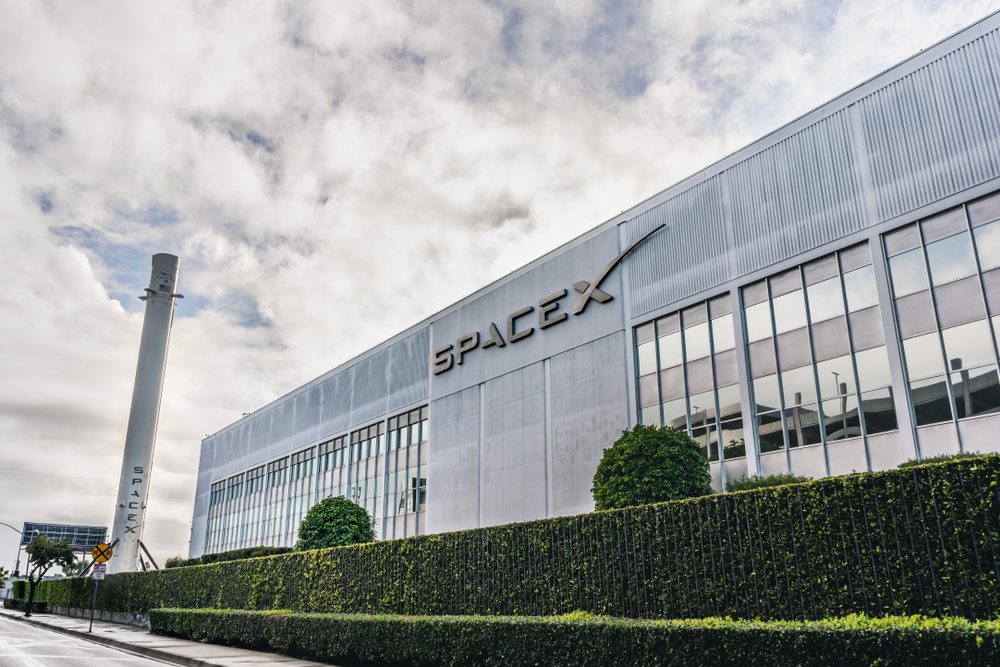
TradingKey - On Tuesday, SpaceX ( SPCX) officially joined the Nasdaq 100 Index, becoming one of the fastest newly listed stocks to be included in the index's history.
However, the market reaction was a far cry from Wall Street's optimistic expectations, with SpaceX shares plummeting 6.98% on high volume that day to close at $149.47, marking its lowest closing price since listing.
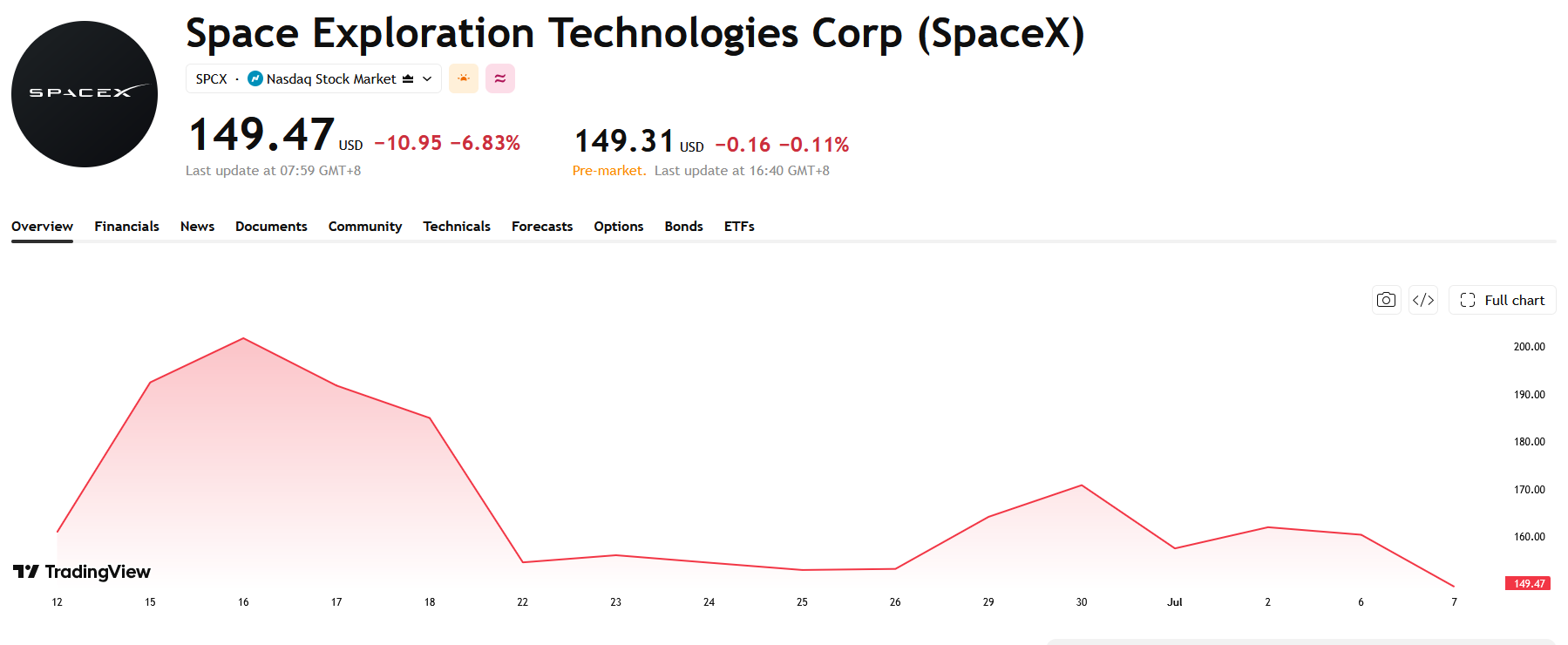
Source: TradingView
This decline not only far exceeded the Nasdaq's 0.87% drop on the same day, but also sent its stock price back to its opening level on its June 12 IPO debut, with the market divergence fully on display during this short three-week market cap roller coaster.
At this critical moment of SpaceX's inclusion in the Nasdaq, legendary investor Jeremy Grantham, known as the "bubble prophet," issued a heavyweight warning. The 83-year-old value investing master and co-founder of GMO declared in an interview that there is a 90% probability SpaceX's stock price will suffer a historic crash in the future.
He stated, "If the current $2 trillion market capitalization is reasonable, then we are living in a very strange world," viewing SpaceX as an iconic company of the current US stock AI bubble and suggesting that future historians might look back on its listing as "one of the most iconic market tops in history."
Three Major Skepticisms: Valuations, Space Programs, and AI Prospects All Face Challenges
Grantham's bearish stance is not without merit; the investing veteran, who successfully predicted the 2000 dot-com bubble, the 2008 financial crisis, and the 2020 US stock market crash, has questioned SpaceX's growth logic from three core dimensions.
First is the issue of valuation reasonableness. Despite SpaceX expecting a loss of nearly $6 billion in 2025, its market value still ranks seventh globally, even surpassing traditional energy giant ExxonMobil.
Grantham believes that the $28.5 trillion addressable market claimed by the company in its S-1 prospectus is overly exaggerated, and the projection that 90% of it will come from AI business is particularly unfounded, given that its AI products are merely "third-rate" compared to Anthropic and OpenAI.
Second is the feasibility of its space exploration goals. The asteroid mining, orbital data centers, and Mars colonization plans proposed by SpaceX are, in Grantham's view, completely detached from reality.
He cited the perspectives of "serious physicists" who believe these goals are "completely unimaginable" and resemble plots of science fiction rather than business plans.
Finally, the expectations for AI-driven productivity gains have been overly exaggerated. He pointed out that the widely expected annual productivity growth of 10% to 20% in the market has no scientific basis, yet this is precisely a major support for SpaceX's valuation. Grantham bluntly stated: "Some people claim that AI can increase productivity by 10% or even 20% a year; they have absolutely no idea what they are talking about."
Investment banks remain bullish
Despite Grantham's continuous warnings, mainstream Wall Street institutions remain collectively bullish on SpaceX. Morgan Stanley ( MS) has set a price target of $300, while Raymond James has given an even more aggressive target of $800. More than a dozen brokerages, including Goldman Sachs ( GS ), and JPMorgan Chase ( JPM ), have issued "Buy" ratings.
Analysts generally believe that the fully reusable Starship rocket and the Starlink satellite internet business will serve as future growth engines. Starship's annual launches are projected to reach thousands of times by 2031, with JPMorgan Chase estimating around 5,000 launches and Wells Fargo estimating 4,600.
Its inclusion in the Nasdaq 100 has also brought substantial benefits to SpaceX. According to LSEG data, its weight in the index is approximately 1.34%. JPMorgan Chase estimates this will bring in about $4.3 billion in passive fund inflows, as $587 billion in funds tracking the index will be forced to allocate capital to its stock.
However, market concerns over the high valuations in the AI sector are heating up. Mark Hackett, Chief Market Strategist at Nationwide, pointed out that valuation bubbles are widespread among AI concept stocks, and these concerns could persist into the earnings season. Currently, only the independent investment research firm CFRA has issued a "Sell" rating with a price target of $115, while a few institutions hold a neutral view.
US Stock Market Bubble Alarm
Grantham's warning is not limited to SpaceX; he also pointed out that the current U.S. stock market has reached historic valuation peaks, with the Buffett Indicator (total market capitalization to GDP) exceeding 235%, far surpassing its peak during the dot-com bubble in 2000.
He stated, "This is the most expensive stock market in U.S. history," and although it is impossible to accurately predict when the bubble will burst, the market is already close to its top.
As early as March 2024, the value investing guru had warned that the long-term investment outlook for the U.S. stock market was among the worst in history. Although U.S. stocks continued to rise afterward, he maintained that the market will eventually return to rationality.
This content was translated using AI and reviewed for clarity. It is for informational purposes only.
Recommended Articles







Comments (0)
Click the $ button, enter the symbol, and select to link a stock, ETF, or other ticker.