


Musk’s SpaceX Splurges $60 Billion to Acquire Cursor, Completing the xAI Ecosystem; Can It Break Through the Duopoly Era of Anthropic and OpenAI?



AI Podcast


SpaceX will acquire AI code editor Cursor for $60 billion in a stock-swap merger, pending regulatory approval. This strategic move aims to integrate Cursor’s developer ecosystem, proprietary coding data, and enterprise-grade interface into Elon Musk’s AI infrastructure. By leveraging xAI’s Colossus computing power and the Grok model, Cursor intends to transition from third-party model reliance to a vertically integrated solution. This acquisition bolsters Musk’s position against competitors like OpenAI and Anthropic, signaling a significant shift toward agentic coding as the primary gateway for enterprise AI deployment and demonstrating the immense valuation potential of the AI application layer.
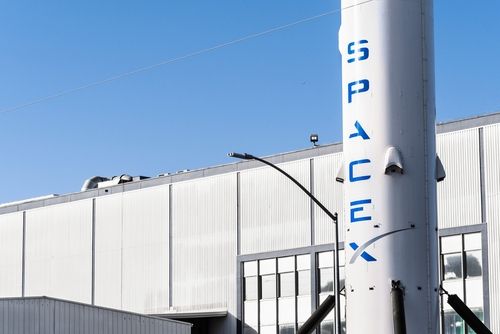
TradingKey - SpaceX, the space exploration technology company owned by US tech tycoon Elon Musk, announced that it will acquire Anysphere, the parent company of AI code editor Cursor, for $60 billion. This transaction marks another major move by SpaceX in the artificial intelligence sector and will further consolidate the leading position of Musk's enterprises in the tech industry.
The transaction will be conducted in the form of a stock-swap merger and is currently pending regulatory approval, with completion expected in the next quarter. Upon completion of the transaction, Cursor will become a wholly-owned subsidiary of SpaceX, maintaining independent operations while receiving support from SpaceX in areas such as technology R&D, resource allocation, and market expansion.
Cursor: From MIT Dropout to Billionaire Startup Legend
The story of Cursor began in 2022, when four MIT computer science and mathematics students with an average age under 25 founded Anysphere in San Francisco. Starting with Microsoft's open-source editor VS Code, they deeply re-engineered the AI-assisted programming experience, allowing developers to state requirements in natural language and execute multi-step tasks such as cross-file code modifications and terminal command execution.
Initially, Cursor did not have its own proprietary models, instead flexibly leveraging models from major AI companies like OpenAI, Anthropic, and Google. With its differentiated experience in "repo-level codebase understanding," it successfully grabbed market share from Microsoft's GitHub Copilot.
In October 2023, the OpenAI Startup Fund led an $8 million seed round, after which the company's valuation skyrocketed. Its Series A valuation hit $400 million in November 2024, surged to $2.5 billion four months later, and reached $29.3 billion by its Series D funding round in November 2025.
By 2026, Cursor's paying users exceeded 1 million, with more than half of the Fortune 500 companies becoming its clients. Its annualized recurring revenue (ARR) surpassed $2 billion, setting the fastest record in B2B software history to go from zero to $2 billion in ARR. Jensen Huang once publicly listed Cursor as one of "six core enterprises driving the digital workforce revolution in human-machine collaboration."
Why is Cursor valued at 60 billion?
SpaceX's willingness to pay $60 billion for Cursor is driven by far more than just a code editor; it is eyeing three core value propositions behind the platform.
First is the developer traffic gateway. In an era where AI competition is shifting from "model benchmarking" to "applications and workflows," Cursor serves as a developer's daily workbench, controlling a critical gateway for enterprise AI spending. Boasting over one million paying users and 50,000 corporate clients, it commands the highest-quality developer community and enterprise service channels.
Second is the unique programming data. AI coding is the most commercially successful use case in generative AI, and Cursor possesses a massive volume of real-world data from developers writing code, debugging, and fixing bugs daily. This "human developer thought mapping" data holds irreplaceable strategic significance for training top-tier programming and logical reasoning LLMs.
Most importantly is the completion of the AI ecosystem. Elon Musk's xAI operates the Colossus supercomputer cluster, powered by hundreds of thousands of Nvidia AI chips, but has lagged behind OpenAI and Anthropic in enterprise-grade programming tools. By acquiring Cursor, xAI can immediately gain a mature front-end product and a top-tier R&D team, rapidly building a complete closed-loop AI ecosystem spanning "computing power, data, and applications."
From Relying on Third Parties to Proprietary Models: Cursor's Counterattack
Cursor's rapid rise was not entirely smooth sailing. For a long time, it relied on models from OpenAI and Anthropic, a dependency that faced a crisis in 2025 when Anthropic launched its competing product, Claude Code, which quickly seized market share and briefly surpassed Cursor in annualized revenue. What alarmed Cursor's executives even more was that Anthropic had cut off API access for Windsurf, another AI coding startup, during acquisition negotiations.
In January 2026, Cursor convened an emergency all-hands meeting, announcing that it must develop its own proprietary AI models. Leveraging the open-source Kimi model from Chinese AI company Moonshot AI, they rapidly developed their own proprietary coding model suite, Composer.
In the Composer 2.5 version released in May this year, more than 85% of the work was completed independently by Cursor. Thanks to its low pricing and rapid response times, it has received highly positive feedback among developers.
Can Cursor challenge Codex and Claude Code?
The news of SpaceX's acquisition of Cursor has put pressure on all players in the AI coding space. For OpenAI, it not only loses a key model distribution channel but also gains a formidable competitor that bundles Colossus computing power, the Grok model, and Cursor's product. For Anthropic, Cursor—which has long been one of its largest API call sources—switching to Grok will directly hit its coding business revenue.
Currently, four mainstream AI coding tools—Cursor, Claude Code, OpenAI Codex, and Google Antigravity—are all moving toward "agentic coding." Leveraging SpaceX's Colossus computing power and the Grok coding model, Cursor has the opportunity to completely shake off its reliance on third-party models, extending its moat from product experience to the model layer.
Whether Musk's $60 billion gamble can help Grok catch up with GPT and Claude Opus in coding, and whether Cursor's millions of developers will accept SpaceX's takeover, will be key points to watch in the future AI industry competition. This deal also proves that the value of the AI application layer may be far greater than imagined.
This content was translated using AI and reviewed for clarity. It is for informational purposes only.
Recommended Articles






Comments (0)
Click the $ button, enter the symbol, and select to link a stock, ETF, or other ticker.