


Elon Musk Unveils AI Data Center Satellite Design, SpaceX Rushes Toward $1.77 Trillion IPO



AI Podcast


SpaceX unveiled designs for its "AI1" AI data center satellite and associated manufacturing facilities, including Gigasat and Terafab, to support its upcoming record-breaking IPO. The AI1 satellites, featuring large solar panels and advanced cooling, are designed for complex AI computing in low Earth orbit. SpaceX plans significant expansion with two major manufacturing plants to produce over 1,000 satellites annually by late 2027 and billions of AI chips. The company aims for 1 terawatt of space-based AI computing power by 2027, though IPO filings suggest a more conservative 2028 start. This initiative addresses terrestrial power limitations for the growing AI market. SpaceX's IPO, aiming to raise $75 billion at a $1.77 trillion valuation, is scheduled for June 12.
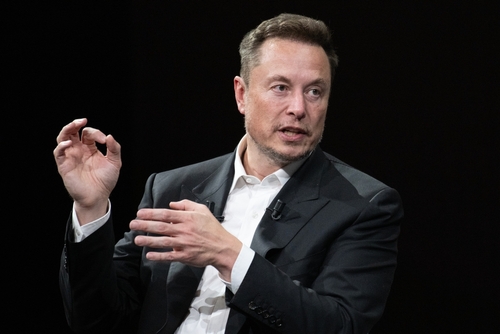
TradingKey - On June 8, ET, as SpaceX prepares for the largest IPO in history, CEO Elon Musk released detailed designs for the "AI1" AI data center satellite to support the company's upcoming record-breaking initial public offering.
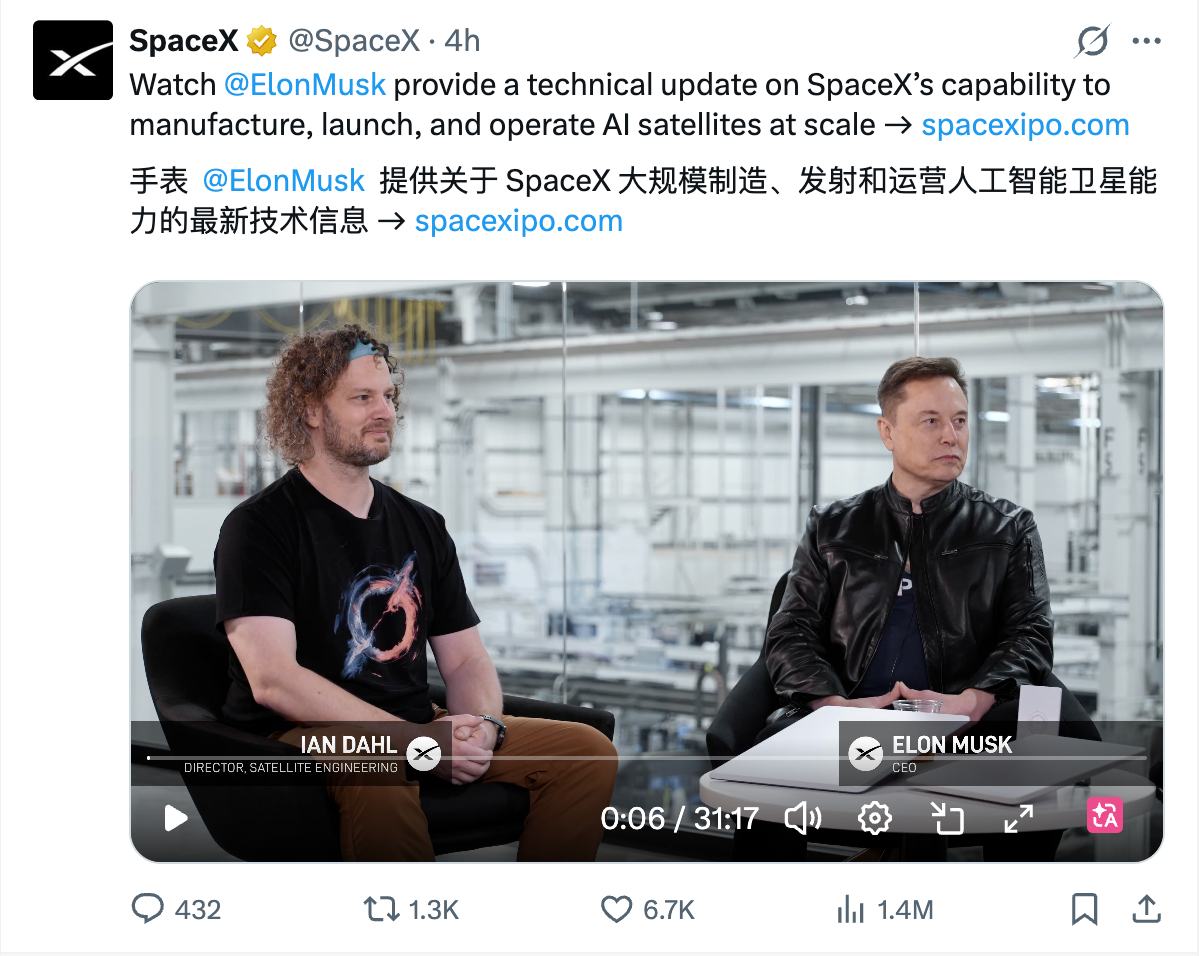
[Source: x.com/SpaceX]
In a 30-minute video on social media platform X, Musk showcased renderings of the first AI satellite. This satellite is part of a planned network of approximately 1 million satellites designed to perform complex artificial intelligence computing tasks in low Earth orbit.
[Source: x.com/SpaceX]
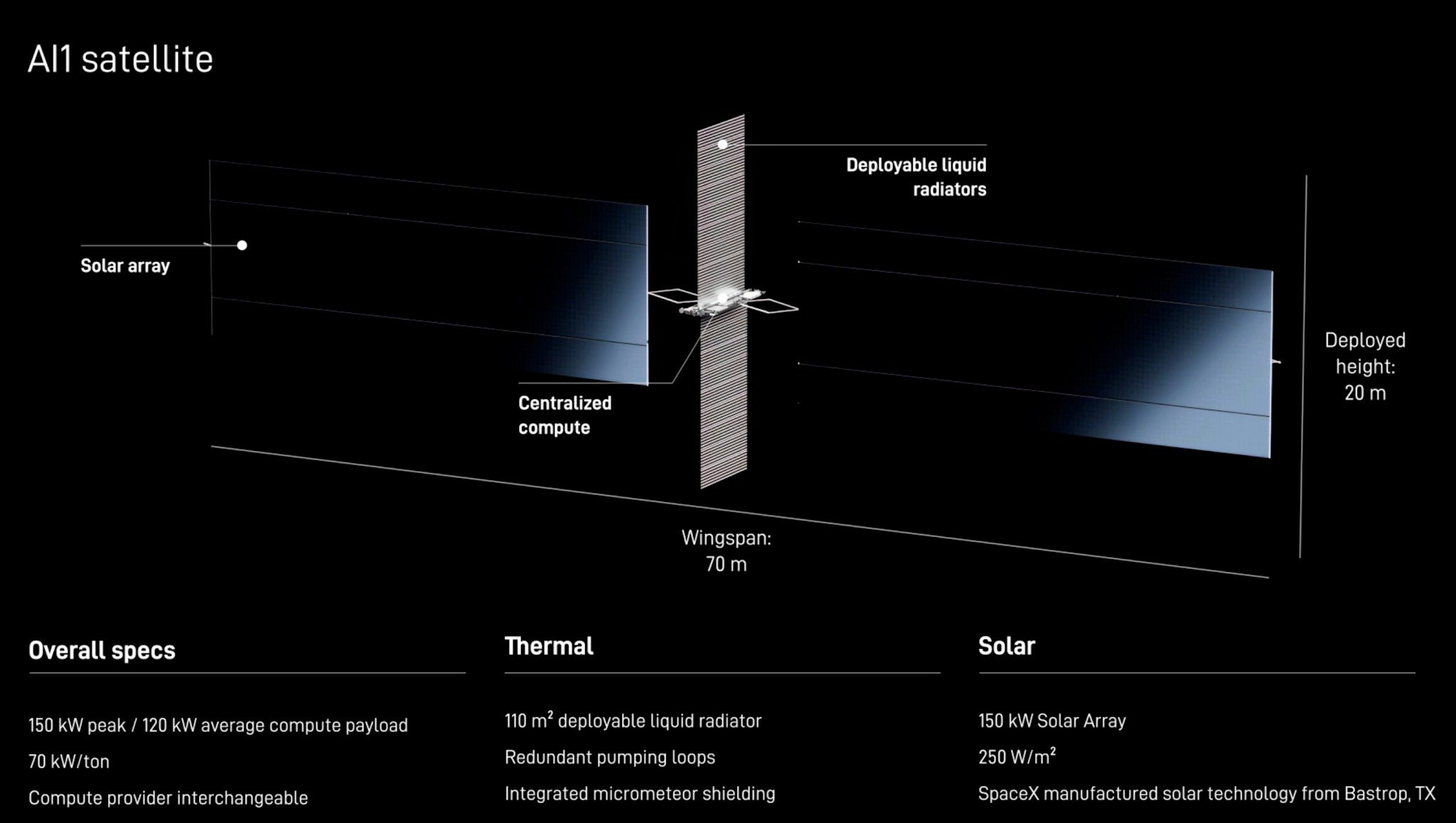
The AI1 satellite is equipped with giant solar panels spanning 70 meters, with an average computing load of 120 kW and a peak of 150 kW, comparable to the power consumption of Nvidia GB300 racks used in terrestrial data centers. Musk stated that the satellite's design is simpler than the Starlink system, "essentially consisting of a massive number of solar cells, a radiator, and some laser links."
The satellites will operate in an orbit of approximately 600 kilometers, with a solar array power density of 250 watts per square meter, and require 110 square meters of deployable liquid cooling panels. The satellites can interconnect via laser links and can also connect to the Starlink constellation.
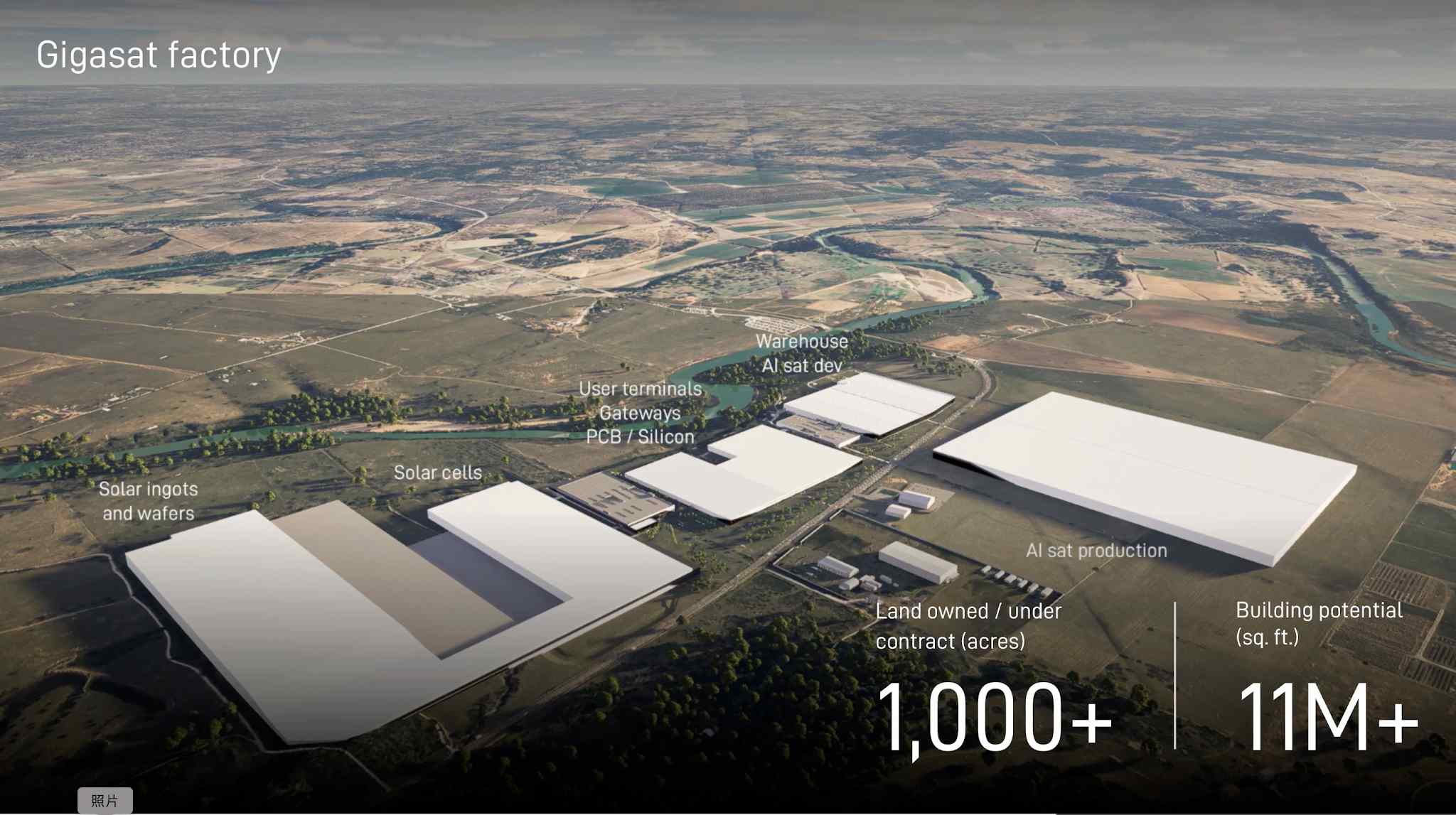
SpaceX plans to build two major manufacturing facilities. In Bastrop, Texas, the company plans to expand the "Gigasat" factory, covering over 11 million square feet, for the production of large-scale solar panels required for AI satellites; production is expected to begin by the end of 2027, with an annual output of over 1,000 satellites.
[Source: x.com/SpaceX]
Meanwhile, Musk disclosed another "Terafab" chip factory, co-developed by SpaceX, Tesla, and xAI, covering an area of 100 million square feet—approximately 10 times the size of Tesla's ( TSLA) Austin Gigafactory. The facility will utilize a 2nm process to produce 100 billion to 200 billion AI chips annually, eventually achieving 1 terawatt of computing power. The first phase of the project costs approximately $55 billion, with total investment reaching up to $119 billion. Musk will attend an ASML closed-door technical conference online on June 11 to detail the 2nm mass production plans for Terafab.
Musk proposed a timeline: by the end of 2027, SpaceX will achieve an annualized deployment of 1 gigawatt of space-based AI computing power, followed by exponential expansion each year to eventually reach 1 terawatt. However, he also cautioned investors to take this "with a grain of salt," as SpaceX's IPO filing provides a more conservative outlook, with initial deployment starting as early as 2028.
The purpose of sending data centers into space is to address terrestrial power bottlenecks. In its IPO filing, SpaceX noted that the total addressable market for AI, valued at up to $26.5 trillion, will be constrained by "access to electricity and water at economically viable prices," a limitation that space-based solar power could overcome.
SpaceX plans to go public on June 12 with an offering price of $135 per share, issuing 555.6 million shares to raise $75 billion—a global IPO record—implying a valuation of approximately $1.77 trillion. The underwriting syndicate is co-led by Goldman Sachs ( GS ), Morgan Stanley ( MS ), Bank of America ( BAC ), Citigroup ( C) and JPMorgan Chase ( JPM) co-leading the offering. Based on the offering price, Musk's personal net worth will reach $988 billion, bringing him very close to becoming the world's first "trillionaire."
On the eve of its listing, SpaceX lobbied index providers for fast-track inclusion in major indices within 10 trading days; however, S&P Dow Jones Indices refused to amend its rules, meaning the company will not join the S&P 500 in the short term. Nevertheless, MSCI has confirmed it will follow existing rules, creating conditions for large IPOs to be included in its Global Standard Indices ahead of schedule. SpaceX's 2025 revenue is approximately $18.67 billion, with a net loss of $4.94 billion; recent IPO subscriptions have been robust, with orders already reaching $10 billion.
This content was translated using AI and reviewed for clarity. It is for informational purposes only.
Recommended Articles





Comments (0)
Click the $ button, enter the symbol, and select to link a stock, ETF, or other ticker.