


Japan, South Korea Stocks Mixed; Nikkei 225 Gains Nearly 1%, Kospi Opens Lower as SK Hynix Falls Over 2%



AI Podcast


On September 28, Japanese and South Korean stock markets diverged following a positive lead from U.S. equities, which closed higher despite a drop in the September U.S. Consumer Sentiment Index to 48.1. The Nikkei 225 Index expanded gains to 0.84%, buoyed by strong performances from SoftBank Group and Kioxia. Conversely, South Korea's KOSPI Index declined, pressured by weak chip stocks including SK Hynix and Samsung Electronics. Meanwhile, geopolitical tensions persist as U.S.-Iran negotiations regarding the Strait of Hormuz face uncertainty amid divergent stances, posing ongoing risks for Asian market stability.

TradingKey - On September 28, Japanese and South Korean stock markets diverged at the open. The Nikkei 225 Index (JPN225) opened up 0.21% at 66,505.94 points, with gains later expanding to 0.84% at 66,921.32 points. South Korea's KOSPI Index opened down 0.33% at 7,057.86 points, and subsequently fell 0.26% to 7,062.23 points.
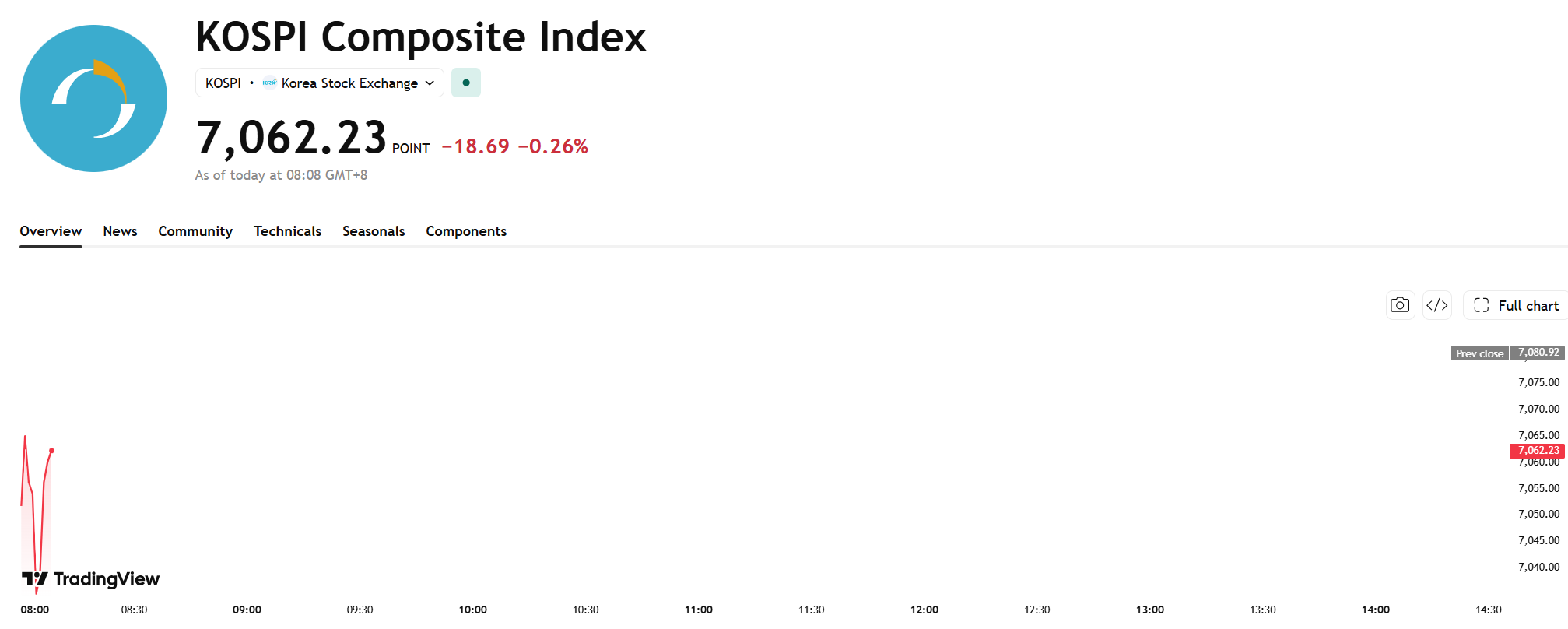
Source: TradingView
Regarding individual stocks, Japan's SoftBank Group rose 2.70% in early trading to 6,316 yen (approx. $40); Kioxia gained 0.16% to 55,870 yen. South Korean chip stocks performed weakly, with SK Hynix dropping 2.09% in early trading to 1.823 million won (approx. $1,341); Samsung Electronics slipped 0.35% to 284,500 won.
Last Friday, the three major U.S. stock indices all closed higher. The S&P 500 Index rose 0.51% to 7,743.41 points; the Dow Jones Industrial Average rose 0.93% to 51,828.62 points; and the Nasdaq Composite Index gained 0.48% to 27,068.72 points. Although the final reading of the U.S. Consumer Sentiment Index for September fell to 48.1, briefly sending the S&P 500 and the Nasdaq into negative territory, U.S. stocks erased losses near the close.
Geopolitical tension remains a key variable for Asian markets. Iran proposed a "seven-day plan" related to transit through the Strait of Hormuz, but the U.S. and Iran hold divergent stances on the proposal and the progress of negotiations, leaving uncertainty over subsequent talks.
This content was translated using AI and reviewed for clarity. It is for informational purposes only.
Recommended Articles







Comments (0)
Click the $ button, enter the symbol, and select to link a stock, ETF, or other ticker.