


How Wall Street Interprets the Fed Resuming Rate Hikes: Goldman Bets on October Hike, Citi Expects Cut Next June



AI Podcast


The Federal Reserve resumed rate hikes, raising the federal funds rate to 3.75%-4.00%. Chair Kevin Warsh’s hawkish remarks and the dot plot signaling prolonged high interest rates surprised markets, pushing Treasury yields up and equities down. Sixteen officials expect further hikes in 2026, projecting a median rate of 4.125%. Wall Street remains divided on the timing of subsequent moves, with Goldman Sachs projecting an October hike, while Citi anticipates a prolonged pause. Future trajectory hinges on upcoming inflation and employment data, with sustained high rates posing ongoing valuation pressures.
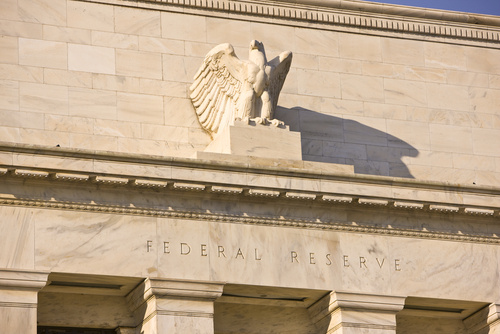
TradingKey - The Fed resumed rate hikes for the first time in three years, but what truly caught the market off guard was not the 25-basis-point adjustment, but Chair Kevin Warsh's hawkish stance and the dot plot's repricing of the duration of high interest rates.
The Fed unanimously voted 12-0 on Wednesday to raise the target range for the federal funds rate to 3.75% to 4.00%. The FOMC statement noted that U.S. economic activity continues to expand at a solid pace, domestic spending remains resilient, and productivity and capital investment stay strong, but inflation remains elevated. This action is aimed at returning inflation to the 2% target "in a more timely manner".
Markets initially had a limited reaction to the statement, but as Warsh described the rate hike as "removing a dose of accommodation" during the press conference, both stock and bond markets quickly weakened, with the 2-year Treasury yield rising to a two-year high and U.S. stocks falling back to session lows.
Dot Plot and Warsh Speech Send Hawkish Signals
The reason this meeting was more hawkish than market expectations is reflected first in the dot plot. Sixteen out of 18 officials expect at least one more rate hike in 2026, with the median policy rate rising to 4.125% by year-end. The median rate forecast for 2027 remains at 4.125%, implying that even if the current rate-hiking cycle ends before year-end, the Federal Reserve may maintain high interest rates for a prolonged period rather than quickly pivoting to rate cuts.
Officials' long-term judgment on the neutral rate also rose, with the median long-term policy rate increasing from around 3.06% previously to 3.25%, indicating that some policymakers believe the U.S. economy can withstand higher interest rate levels under the combined influence of fiscal spending, AI investment, and productivity improvements.
Although Warsh did not provide explicit guidance for the next meeting, his speech did not portray this rate hike as a one-off measure in response to an oil price shock. He stated that the U.S. economy and hard data remain consistently strong, inflation trends have failed to pass muster, and geopolitical risks cannot be ignored. More importantly, he believes there is still a gap between current broad financial conditions and a truly restrictive level.
These remarks altered the market's perception of the policy's nature. If this rate hike were merely an "insurance" adjustment, the Fed would typically emphasize an observation period and a high bar for further action; however, the rhetoric of "removing accommodation" implies that as long as the economy and inflation do not cool significantly, continuing to hike rates remains a plausible option.
Consequently, Goldman Sachs' trading desk stated that this meeting was noticeably more hawkish than expected. The bank had previously anticipated the Fed would execute a "dovish hike"—raising rates while downplaying the likelihood of further tightening—but the dot plot, the upward revision to the long-term neutral rate, and Warsh's speech offered no such reassurance.
Wall Street Divided on October and December Actions
Wall Street currently broadly believes that this round of tightening will not evolve into a prolonged, aggressive rate-hike cycle, but there is clear disagreement over the timing of the second rate hike.
Goldman Sachs (GS) economists adjusted their forecasts after the meeting, believing that the Federal Reserve is most likely to deliver a consecutive 25-basis-point rate hike in October before pausing. Their reasoning is that if the policy goal is to bring inflation back to 2% "in a more timely manner," taking consecutive action is more natural than waiting immediately after a single hike. Sixteen out of 18 officials expect further rate hikes within the year, providing a policy foundation for action in October.
Citi (C), on the other hand, represents a relatively dovish stance among mainstream institutions. The bank expects the Fed to hold interest rates steady in both October and December before resuming rate cuts in June 2027. Citi's report notes that month-on-month core inflation growth over the coming months may come in below officials' expectations, with the potential for downward revisions to core PCE data as well. Citi projects that the Fed will use the remaining time before the end of the year to observe the impact of this rate hike on demand and financial conditions, followed by 25-basis-point rate cuts in June, September, and December 2027, respectively.
Citi's assessment of the labor market also differs from Warsh's. The bank believes recent hiring growth is not strong and that the unemployment rate remaining low stems partly from a rapid decline in the labor force participation rate, which does not prove that corporate labor demand is re-accelerating.
Morgan Stanley (MS) and JPMorgan (JPM)'s views fall between those of Goldman Sachs and Citi. Both institutions lean toward the Fed pausing in October and raising rates by 25 basis points again in December. Their core logic is that the Fed needs more time to assess the second-round effects of rising oil prices on core inflation and wages, while avoiding actions close to the midterm elections that could easily trigger political controversy.
Inflation Data Will Determine Whether Hawkish Signals Materialize
Synthesizing Wall Street views, the core debate is no longer whether the Federal Reserve still leans toward raising rates, but whether a second move will take place in October or December, and how long this cycle will ultimately last.
Upcoming releases of core PCE, CPI, employment growth, wages, and energy prices will likely be critical in determining the rate trajectory. If oil prices remain elevated, core inflation fails to improve, and economic growth stays resilient, the Fed could hike rates again in October or December. Conversely, if core inflation decelerates for consecutive periods and labor demand cools, the scenario proposed by Citi of 'pausing before year-end and resuming rate cuts in 2027' will become more convincing.
For the market, the dot plot showing no rate cuts in 2027 may be more important than another rate hike within the year. Even if the Fed moves by only another 25 basis points, as long as interest rates remain above 4% for an extended period, US Treasury yields, corporate borrowing costs, and equity valuations will continue to face pressure.
This content was translated using AI and reviewed for clarity. It is for informational purposes only.
Recommended Articles






Comments (0)
Click the $ button, enter the symbol, and select to link a stock, ETF, or other ticker.