


Privacy Myth Shattered? Largest Anonymous Coin ZEC Develops Vulnerability, Plunging Over 50% Intraday



AI Podcast


A critical Zcash vulnerability allowing unlimited token issuance has caused ZEC to plummet over 50%, falling below $300. This internal flaw, difficult to detect, has led to a sector-wide sell-off in privacy coins. Major exchanges suspended ZEC transactions, exacerbating panic and creating a liquidity vacuum. Despite an emergency technical fix, uncertainty remains about potential prior exploitation, impacting market confidence. Concerns over similar zero-knowledge proof vulnerabilities and potential selling pressure from Grayscale's holdings suggest continued price volatility.
TradingKey - A vulnerability allowing unlimited token issuance has emerged in Zcash, causing the price of ZEC to plunge over 50% today and triggering a collective sell-off across the privacy coin sector.
On June 5, impacted by the vulnerability incident, Zcash ( ZEC ), the largest privacy coin by market capitalization, saw its price plummet by over 50%. This morning, it broke below $300 from above $600 and hit a low of $255, a fresh two-month bottom. Simultaneously, ZEC's market cap fell to $5 billion, dropping from first to fourth in the privacy sector rankings.
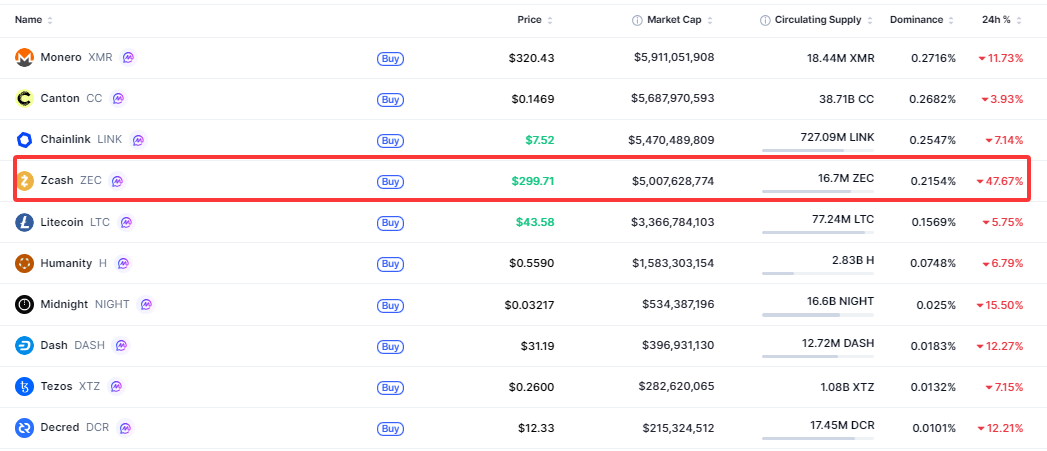 Price changes of the top 10 privacy coins by market cap, Source: CoinMarketCap
The crash in ZEC's price stems from an internal vulnerability that, if maliciously exploited, could allow hackers to forge and issue unlimited ZEC out of thin air, with such actions being extremely difficult to detect. Following the news, investors engaged in a selling frenzy, and even BitMEX co-founder Arthur Hayes was forced to liquidate his position.
To prevent potentially forged tokens from entering the spot market for money laundering, several major exchanges and wallets subsequently announced an emergency suspension of ZEC deposits and withdrawals. This further fueled panic among market participants, causing liquidity to dry up instantly and leading to a "liquidity vacuum" style cliff-like drop in ZEC's price. Simultaneously, the market began to harbor doubts about the entire privacy coin sector, with Monero (XMR) and Dash (DASH) also falling in response.
Notably, while the ZEC vulnerability was immediately addressed with an emergency technical fix, it has not been fundamentally eradicated cryptographically. It remains impossible for the public to confirm with 100% certainty whether hackers had already clandestinely exploited it to issue tokens before the patch, leaving the vulnerability as a "ghost" haunting all privacy coins.
As early as 2018, Zcash experienced a similar vulnerability. In response, the CEO of Solana tooling firm Helius pointed out that this is merely a common theoretical vulnerability in all zero-knowledge proof (the technology used by Zcash) privacy protocols, which is periodically recycled as fear-inducing news to stir up panic.
Although ZEC tokens may not have actually been issued and the news could just be hype, market confidence has been severely shaken and is unlikely to recover in the short term, with the price expected to continue oscillating around $300. Moving forward, attention should be paid not only to the progress of the vulnerability fix but also to Grayscale's movements. Data shows that Grayscale holds approximately 390,000 ZEC, representing about 2.32% of the current circulating supply (16 million coins). Any sell-off would not only directly increase market selling pressure but also trigger retail investors to follow suit.
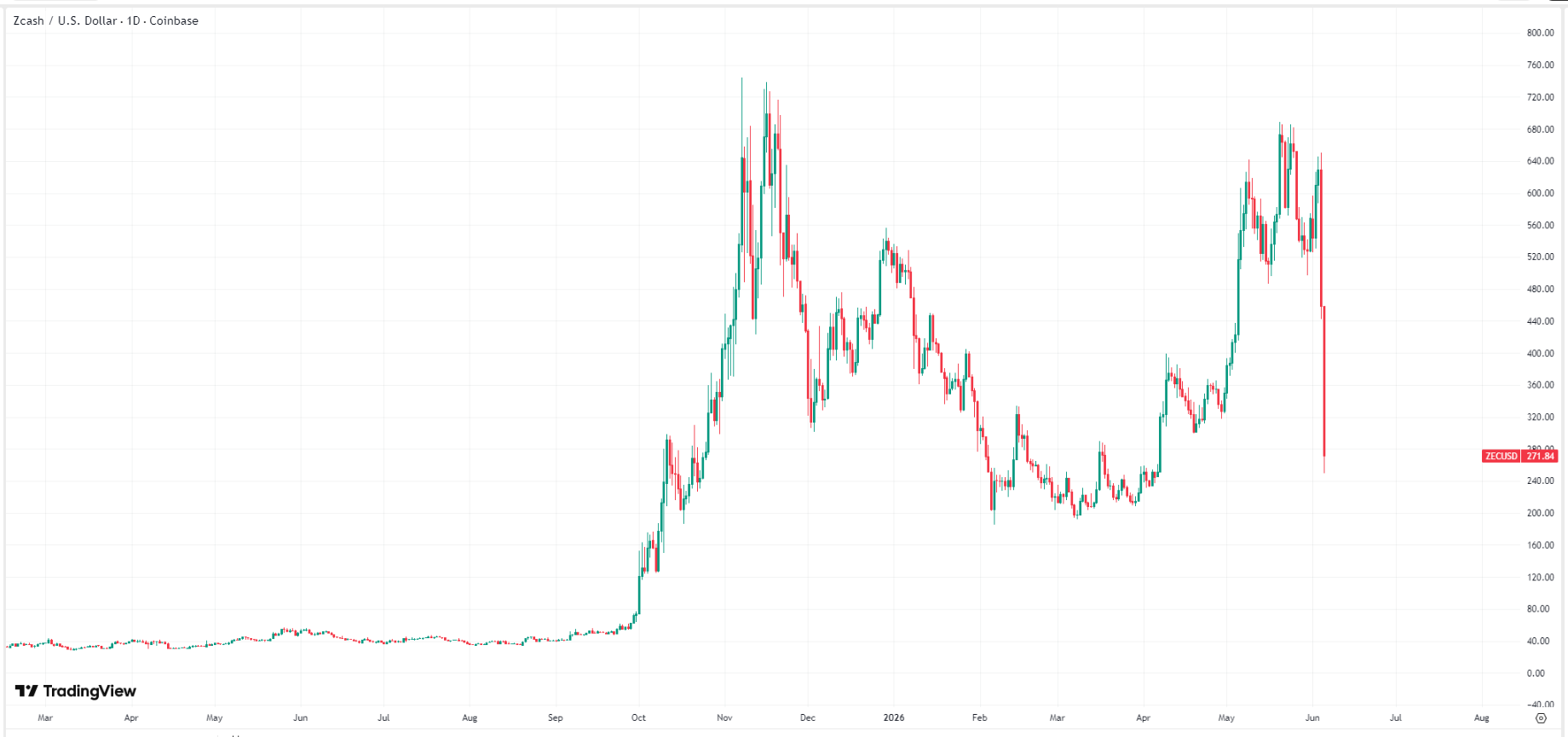 ZEC price chart, Source: TradingView
This content was translated using AI and reviewed for clarity. It is for informational purposes only.
Recommended Articles






Comments (0)
Click the $ button, enter the symbol, and select to link a stock, ETF, or other ticker.