


Bitcoin Drops Below $70,000, May Log Sixth Straight Weekly Loss, Risking Slide Toward $65,000



AI Podcast


As of the Asian trading session on November 13, Bitcoin extended its decline, briefly falling below $70,000 to a near three-month low. Primary market pressures include higher-than-expected U.S. October inflation data—with CPI rising 0.4% month-over-month—fueling expectations of a Federal Reserve rate hike in December, alongside persistent net capital outflows from spot Bitcoin ETFs, which recorded $1.44 billion in cumulative five-day outflows. Consequently, derivatives trading shows heightened defensive positioning, with $70,000 acting as a key psychological support level and further downside risks pointing toward $65,000 amid suppressed institutional inflows and broader risk-asset weakness.

TradingKey - As of the Asian trading session on November 13, Bitcoin (BTC) extended its decline, briefly falling below $70,000 intraday to a low of $69,150, marking a near three-month low. Higher-than-expected U.S. inflation data, rising expectations of a Federal Reserve rate hike in December, and persistent net capital outflows from spot Bitcoin ETFs together constitute the primary pressures facing the cryptocurrency market recently.
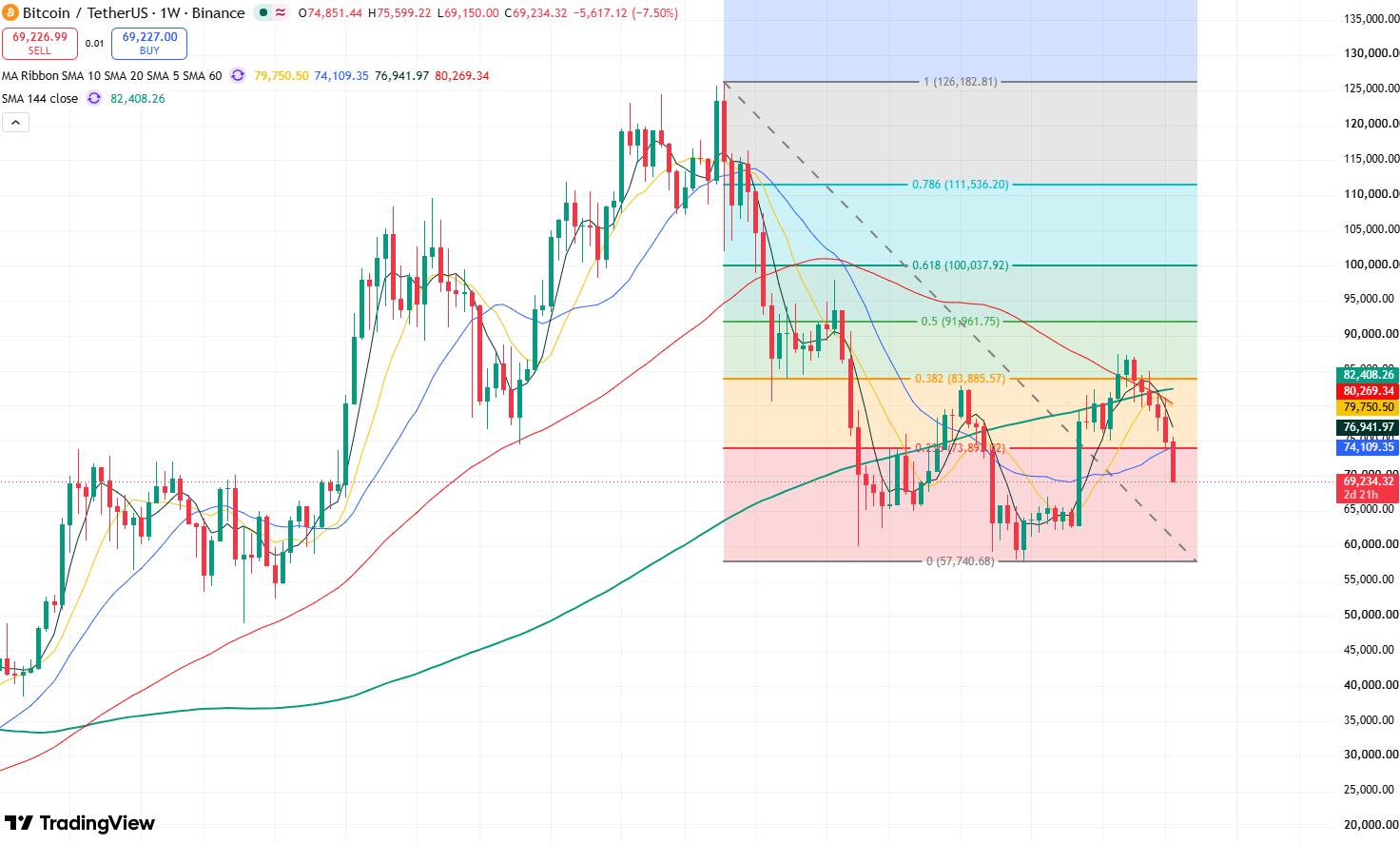
Bitcoin price weekly chart, Source: TradingView
From a weekly perspective, Bitcoin had previously fallen for five consecutive weeks and continued to weaken this week, potentially logging a sixth straight week of declines, with losses already exceeding 6% this week. According to a report by The Block, market concerns over further downside have increased, while the derivatives market has also shown signs of heightened defensive trading, with investor demand for put options on the rise.
Persistent capital outflows from U.S. spot Bitcoin ETFs have been a significant source of recent market pressure. According to data from CoinGlass, U.S. spot Bitcoin ETFs recorded net outflows of approximately $299.9 million on November 11, marking the fifth consecutive trading day of net outflows, with cumulative five-day outflows reaching about $1.44 billion. Among them, BlackRock's IBIT saw a single-day net outflow of approximately $269.7 million and has experienced net capital outflows for nine consecutive trading days. Ongoing ETF redemptions reflect that some capital is trimming exposure to Bitcoin-related assets.
Meanwhile, U.S. inflation data for October exceeded expectations, further reinforcing market expectations of a Federal Reserve rate hike in December. Data showed that the U.S. CPI rose 0.4% month-over-month in October, higher than the expected 0.3%; core CPI rose 0.3% month-over-month, also above the market expectation of 0.2%. As the U.S. dollar and Treasury yields strengthened, risk assets such as Bitcoin faced greater downward pressure.
In addition, heightened volatility in U.S. tech stocks recently has also weighed on risk appetite in the cryptocurrency market. Amid insufficient institutional capital inflows and persistently tight interest rate expectations, any short-term rebound in Bitcoin continues to face resistance.
In the short term, $70,000 will serve as a key psychological threshold for Bitcoin. If the price falls further below this level, the market may focus on support around $65,000; if a rebound occurs, it remains to be seen whether the $72,000-$74,000 range can be reclaimed.
This content was translated using AI and reviewed for clarity. It is for informational purposes only.
Recommended Articles











Comments (0)
Click the $ button, enter the symbol, and select to link a stock, ETF, or other ticker.