


Brent Crude Drops Nearly 2% as Trump Waives Some Russia Sanctions



AI Podcast


International oil prices pulled back, with Brent crude falling 1.90% to $107.85 and WTI dropping 1.57% to $97.49. The decline followed U.S. President Donald Trump's executive order pausing certain sanctions and tariffs on Russia, easing supply concerns and addressing domestic inflation ahead of midterm elections. Despite this relief, global supply risks persist. Ongoing geopolitical conflicts, including continued attacks on Russian energy infrastructure, unresolved U.S.-Iran tensions, and Middle East hostilities, maintain structural vulnerabilities in global crude production, transportation, and export routes, keeping energy security concerns elevated for investors.
TradingKey - On Monday, international oil prices pulled back noticeably. Brent crude (UKOIL) futures fell 1.90% to $107.85 per barrel, while WTI crude (USOIL) futures dropped 1.57% to $97.49.
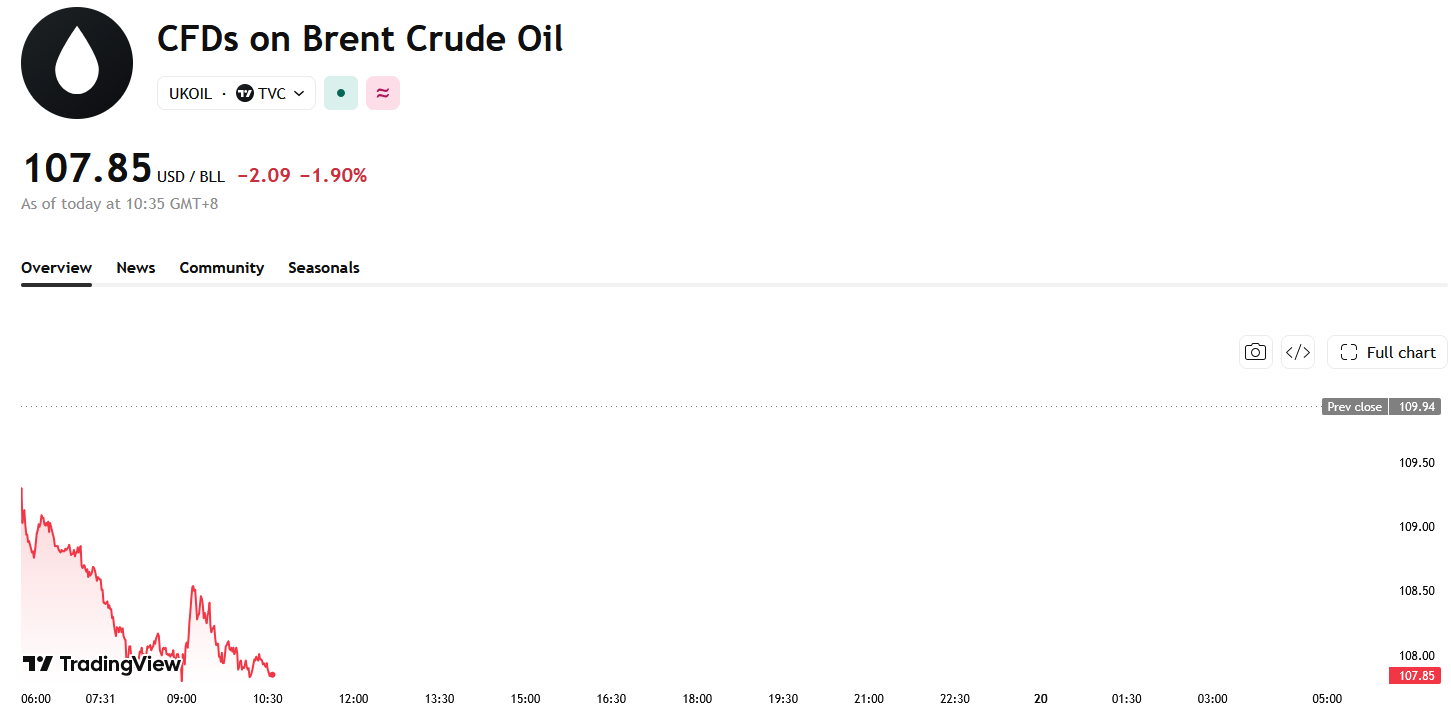
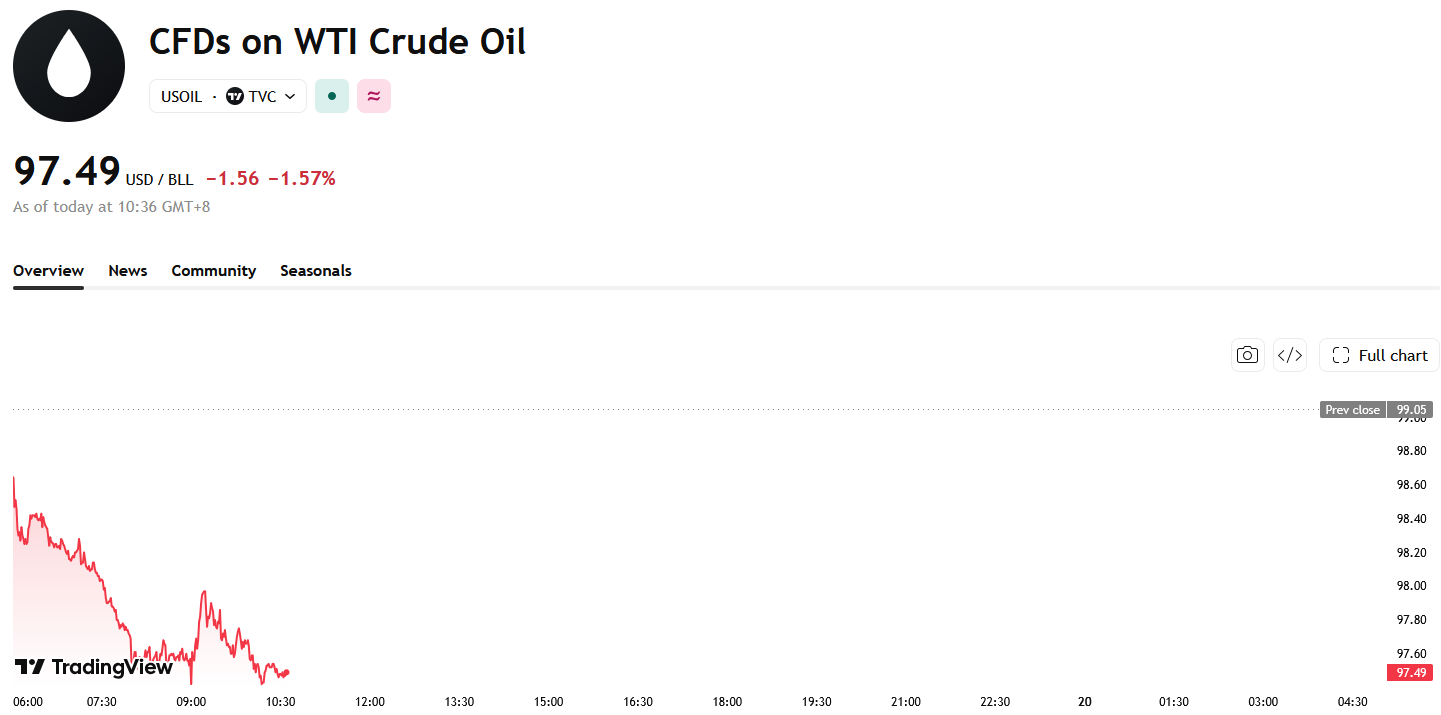
Source: TradingView
In the preceding week, oil prices gained nearly 5% overall as global crude supplies remained continuously disrupted, particularly due to heightened tensions in the Middle East. However, as U.S. President Donald Trump announced a temporary pause on certain sanctions and tariff measures against Russia, market expectations for an increase in Russian energy supply grew, causing oil prices to pull back from their previous gains.
Trump signed an executive order last Friday, granting exemptions from certain sanctions against Russia that were originally set to take effect in a few days, while also suspending relevant tariffs on some countries purchasing Russian oil.
Previously, the U.S. had advanced a sanctions bill targeting Russia and Iran, planning to levy tariffs of up to 100% on U.S.-bound goods from major importing countries purchasing Russian crude oil or natural gas, and to take further action against nations helping Russia evade sanctions. This waiver temporarily prevents the full implementation of those measures, leading the market to expect fewer restrictions on Russian energy trade.
Trump stated that the move aligns with U.S. national interests and emphasized that the U.S. is pushing for peace talks between Russia and Ukraine, seeking to avoid actions that could lead Russia to withdraw from negotiations. Previously, he had attributed the rise in global fuel prices to Ukrainian attacks on Russian energy infrastructure and expressed the need to encourage the restoration of energy supplies.
This policy adjustment is also related to domestic energy cost pressures in the U.S. Months of rising fuel prices have increased the burden on consumers, and with the midterm elections approaching, the trajectory of energy prices has become a pressing issue for the U.S. administration.
However, waiving sanctions on Russia does not mean global crude supply risks have vanished. Ukraine has stated that it will continue targeting Russian infrastructure, while Russia consistently reports strikes on Ukrainian military targets. As long as the conflict between the two sides persists, Russia's crude oil production, transportation, and exports remain vulnerable. In addition, the standoff between the U.S. and Iran has not noticeably eased, and the conflict between Saudi Arabia and the Yemeni Houthis continues, leaving energy facilities and transit routes in the Middle East exposed to security risks.
This content was translated using AI and reviewed for clarity. It is for informational purposes only.
Recommended Articles









Comments (0)
Click the $ button, enter the symbol, and select to link a stock, ETF, or other ticker.