


US-Iran Tensions Escalate Again as Brent Crude Nears $100



AI Podcast


International oil prices rose sharply during early Asian trading on September 9, with Brent crude nearing $100 per barrel, driven by escalating US-Iran military conflicts and severe Middle East supply risks. Following Iranian ballistic missile strikes on US assets and retaliatory US destruction of Iranian oil tankers, the violence spread to Saudi Arabia via Houthi attacks on energy facilities, forcing operational suspensions. Consequently, crude oil transport through the Strait of Hormuz plummeted from up to 9 million barrels per day in late August to under 2 million, significantly threatening global energy shipments.

TradingKey - As of early Asian trading on September 9, international oil prices continued to move higher, with Brent crude (UKOIL) rising to an intraday high of $99.67, just shy of the $100 mark; WTI crude (USOIL) peaking at $94.78. Brent crude prices have accumulated a gain of over 9% in September, mainly driven by the further escalation of the US-Iran military conflict and rising Middle East oil supply risks.
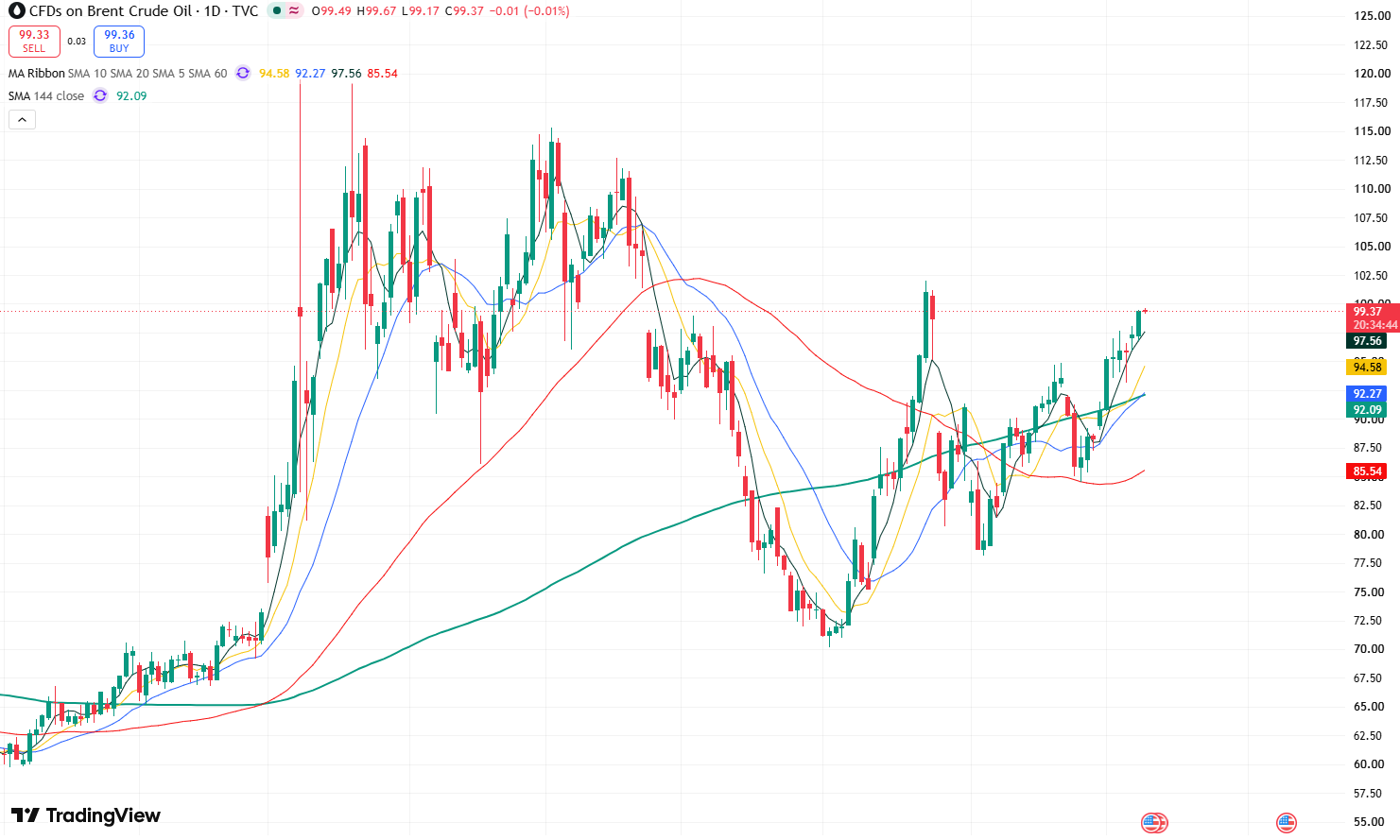
Brent crude price daily chart, Source: TradingView
According to the latest reports, Iran's Islamic Revolutionary Guard Corps stated that it used ballistic missiles to strike two US destroyers and targeted a US military base near Al Azraq in Jordan, in retaliation for US attacks on Iranian oil tankers. Jordanian officials stated that their air defense systems intercepted 18 out of 20 ballistic missiles fired from Iran, with no casualties reported so far.
Meanwhile, US Central Command stated that US forces destroyed five Iranian crude oil tankers on September 8, calling the action a response to Iran's prior attempt to attack US warships. US Secretary of State Rubio warned that if Iran continues to attack US Navy vessels, the US will continue to strike Iranian oil tankers.
At the same time, the conflict has further spread to Saudi Arabia. Yemen's Houthi militants launched missile and drone attacks on several cities in southern Saudi Arabia and claimed strikes on Saudi Aramco energy facilities in Abha, Najran, and Jazan. Saudi officials stated that the attacks injured 73 people, causing fires at some energy facilities and forcing them to suspend operations.
For the market, the continuously escalating conflict is impacting Middle East oil shipments. Data shows that crude oil transport through the Strait of Hormuz has dropped from approximately 8 million to 9 million barrels per day in late August to less than 2 million barrels per day.
This content was translated using AI and reviewed for clarity. It is for informational purposes only.
Recommended Articles












Comments (0)
Click the $ button, enter the symbol, and select to link a stock, ETF, or other ticker.