


Gold Slumps 3% Below $3,900: What Is Causing the Continued Decline in Gold Prices?



AI Podcast


On November 12 ET, spot gold plunged over 3% to $3,864 per ounce, pressured by higher-than-expected October U.S. inflation data and hawkish Federal Reserve signals strengthening the U.S. dollar. The October CPI rose 0.4% month-over-month, exceeding forecasts, while core CPI rose 0.3%, fueling expectations of further Fed tightening. TD Securities highlighted surging Treasury yields and holding costs as key headwinds, outweighing strong central bank purchases. Citi revised its 0-to-3-month gold target to $4,500 while maintaining its 6-to-12-month target at $5,000, hinging future trajectories on Middle Eastern geopolitical developments, energy price fluctuations, and subsequent monetary policy pivots.
TradingKey - On November 12 ET, spot gold (XAUUSD) plunged more than 3% intraday to $3,864 per ounce, hitting a new low since October last year. Higher-than-expected U.S. inflation data, coupled with a series of hawkish signals from Federal Reserve officials, boosted the U.S. dollar and kept sustained pressure on gold investment demand.
The U.S. Consumer Price Index (CPI) rose 0.4% month-over-month in October, slowing from 0.6% in September but exceeding the market expectation of 0.3%. Core CPI, which excludes food and energy, rose 0.3% month-over-month, also topping the projected 0.2%. The slower-than-expected cooling in inflation reinforced market expectations that the Federal Reserve will continue tightening monetary policy.
According to the CME FedWatch Tool, the probability of the Fed raising interest rates by 25 basis points in December is 90.8%, the probability of a 50-basis-point hike is 9.2%, and the probability of keeping rates unchanged is zero. Several Fed officials emphasized this week that inflationary pressures remain stubborn. Chicago Fed President Austan Goolsbee stated on Wednesday that the latest inflation figures have reached an "uncomfortable level" and that the Fed must respond.
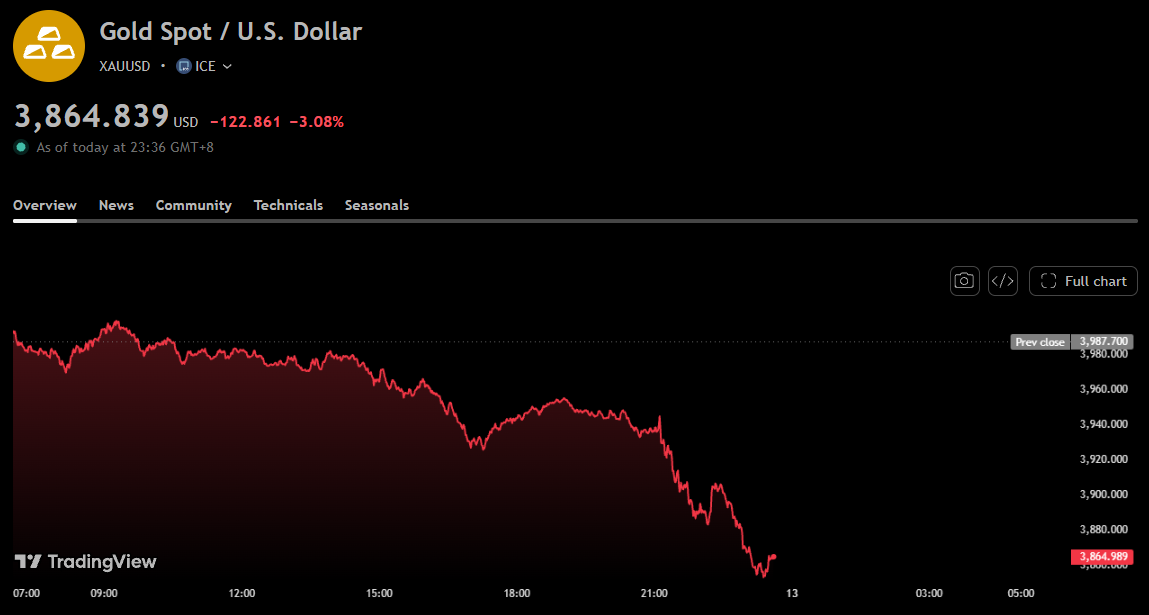
Spot Gold Price Chart, Source: TradingView
TD Securities pointed out that rising Treasury yields, higher holding costs, and a stronger U.S. dollar are posing significant headwinds for gold. The firm had previously warned that gold prices could retest support near $3,900, and current levels have now broken below that mark. Although central banks and the broader official sector have bought a cumulative 675 tonnes of gold so far this year, up 6% from the same period in 2025, the firm believes this may still not be sufficient to offset the pressure from softening investment demand.
Looking ahead, Citi linked gold's trajectory to developments in the Middle East and their impact on energy prices and monetary policy. The bank lowered its 0-to-3-month target price for gold from $4,800 to $4,500, while maintaining its 6-to-12-month target at $5,000. This view is based on a baseline scenario of de-escalation in the Middle East, falling oil prices, and a Fed policy pivot.
Under its 60% probability baseline scenario, Citi expects normal transit through the Strait of Hormuz to resume in the fourth quarter of 2026, which, alongside a de-escalation in the Yemen-Saudi conflict, would drive Brent crude back down to $65 to $70 per barrel. The transmission logic is that falling energy prices ease inflationary pressures, allowing the Federal Reserve to shift from rate hikes to rate cuts; lower real interest rates would subsequently spur a rebound in gold investment demand.
However, under a 30% probability bear-case scenario, if the standoff in the Strait of Hormuz persists and energy supplies continue to face disruptions, inflation could remain elevated, forcing the Fed to keep hiking rates and leaving gold at risk of sliding back to $3,500. There is also a 10% bull-case scenario: if the U.S. and Iran swiftly reach an agreement, oil prices slide sharply, the Fed rapidly pivots dovish, and the U.S. dollar weakens significantly, gold prices could exceed the baseline target.
This content was translated using AI and reviewed for clarity. It is for informational purposes only.
Recommended Articles










Comments (0)
Click the $ button, enter the symbol, and select to link a stock, ETF, or other ticker.