


How Will First Two-Stage Recovery Impact SPCX Stock as SpaceX Starship 15 Test Flight Nears?



AI Podcast


SpaceX plans to conduct the 15th test flight of Starship on November 13, Eastern Time, marking its first attempt to fully recover both the Super Heavy booster and the upper stage using launch tower mechanical arms. This mission is critical for validating full reusability, accelerating Starlink V3 deployment, and lowering marginal launch costs. Morgan Stanley maintains an Overweight rating and a $300 price target, viewing Starship as essential infrastructure. While successful recovery could drive a valuation premium for SPCX stock, investors must monitor subsequent turnaround pace, cost per mission, and long-term cash flow translation.
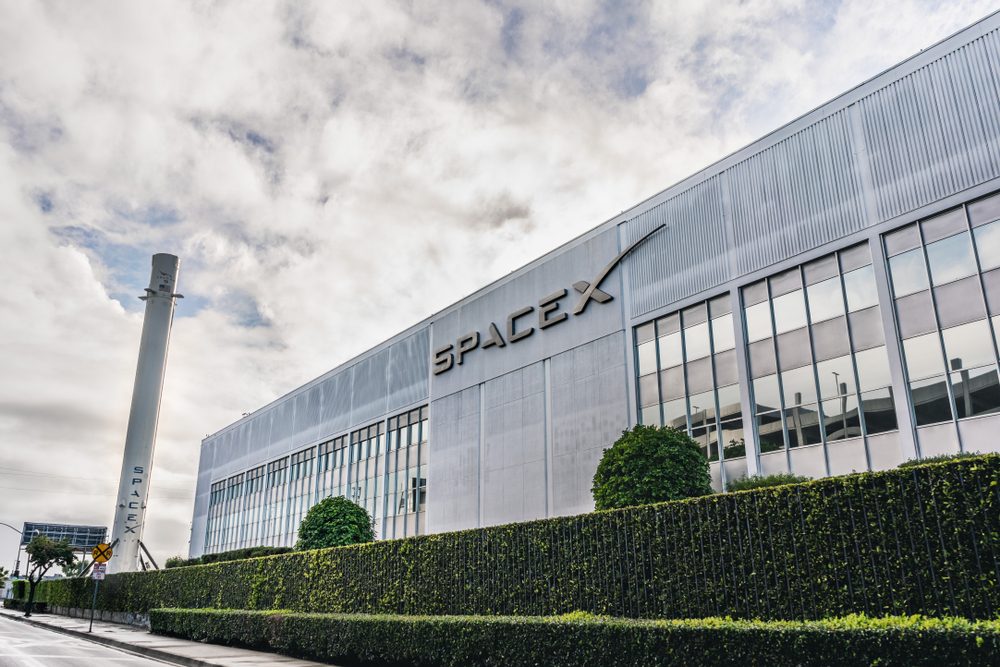
TradingKey - SpaceX (SPCX) plans to conduct the 15th test flight of Starship as early as November 13, Eastern Time. This mission will mark the first attempt to return both the Super Heavy booster and the Starship upper stage to Starbase, Texas, and catch them using the launch tower's mechanical arms.
The significance of this challenge extends beyond setting spaceflight records. Whether both rocket stages can be fully recovered will directly impact Starship's reusability timeline, the deployment costs of Starlink V3 satellites, and the market's assessment of SpaceX's long-term profitability. For SPCX stock, Flight 15 could also serve as a crucial event testing whether its current valuation is supported by technical and commercial fundamentals.
Morgan Stanley analyst Adam Jonas views this flight as one of the most critical Starship reusability tests since SpaceX's listing, maintaining an 'Overweight' rating and a $300 price target. In his view, Starship is not merely a new rocket, but critical infrastructure for SpaceX to boost launch capacity, expand the Starlink network, and scale other space ventures.
Why Starship 15 Is a Key Test for SpaceX After Going Public?
The most closely watched aspect of this mission is SpaceX's first attempt to recover both parts of the rocket in a single flight.
A little over two minutes after liftoff, the Starship upper stage will separate from the Super Heavy booster. After completing its boostback burn, the booster is expected to return to Starbase approximately 6 minutes and 35 seconds after launch, where it will be caught by the launch tower's mechanical arms. SpaceX has previously recovered earlier versions of the Super Heavy booster three times, but this mission uses the upgraded V3 model, which has yet to be verified in returning to the launch site.
The truly formidable test comes from the Starship upper stage. The spacecraft will orbit Earth about 14 times at an altitude of approximately 275 kilometers during a mission lasting more than 22 hours, before re-entering the atmosphere and attempting to return to Starbase. It must not only endure the high temperatures generated at orbital velocity, but also complete a series of maneuvers, including flipping, decelerating, and precisely approaching the launch tower.
SpaceX has never recovered a Starship upper stage, and Flight 15 will mark the company's first official attempt at doing so. The spacecraft will be cleared for return only when ground teams confirm that the thermal protection system, attitude control, landing burn, and tower approach systems are all functioning normally; if any critical parameter shows an anomaly, the company will instead conduct a controlled splashdown in a predetermined ocean area.
Starlink V3 Deployment to Test Starship's Commercial Value
Another key objective of Flight 15 is to deploy 26 next-generation Starlink V3 satellites into low Earth orbit. Each satellite features a designed downlink capacity of approximately 1 Tbps, with three of them also equipped with camera payloads to observe the condition of Starship's heat shield while in orbit.
Starlink V3 is both larger and heavier than the current V2 Mini satellites launched by Falcon 9, making it more dependent on Starship's payload capacity. SpaceX projects that a mature Starship could carry up to approximately 60 V3 satellites in a single launch, potentially adding roughly 20 times the network capacity of a single Falcon 9 mission.
This is precisely why Starship is so crucial to SpaceX's financial outlook. Although Falcon 9 can already reuse its first-stage booster, the upper stage is still discarded after each mission. Starship, by contrast, is designed for full reusability across both stages. If it achieves reliable, regular reflights in the future, the company could theoretically lower per-launch costs, shorten turnaround intervals, and increase the total volume of satellites delivered into orbit each year.
For Starlink, greater deployment efficiency means SpaceX can replenish satellites more rapidly, broaden network coverage, and deliver more capacity to existing users. As the user base expands, the incremental long-term subscription revenue generated per launch could also rise, thereby enhancing the economies of scale for the satellite internet business.
How Could Flight 15 Impact SPCX Stock?
The value of the Starship program cannot be measured solely by the current revenue of SpaceX's launch business.
According to the company's third-quarter 2026 results, SpaceX's total revenue reached $14.6 billion. In comparison, launch revenue was approximately $1.8 billion. On the surface, the launch business does not account for a prominent share of overall revenue, but this does not fully reflect Starship's strategic value to the company's other businesses.
This is because SpaceX uses its own rockets to launch Starlink satellites, which does not generate external commercial sales revenue within its launch business the way commercial launch services for outside customers do. Therefore, looking solely at the launch segment's revenue may underestimate the rocket technology's contribution to the Starlink business.
If Starship achieves higher-frequency reusability, SpaceX will be able to deploy more satellites at a lower marginal cost, boost Starlink's network capacity, and serve more individual, enterprise, and government users. As the satellite network expands, the communications capacity SpaceX can sell is also expected to increase, thereby driving revenue growth in its connectivity business.
If both the Super Heavy booster and the Starship upper stage are successfully caught by the launch tower, SpaceX will prove for the first time that a complete orbital launch system possesses two-stage recovery capability. As a result, the market may adjust its expectations in advance for Starship's launch frequency, Starlink V3 deployment speed, and long-term cost structure, and SPCX stock could also receive a higher valuation premium.
Flight 15 can provide important technical signals, but it is not enough on its own to determine the long-term value of SpaceX stock. Investors also need to monitor Starship's subsequent turnaround pace, the actual cost per mission, Starlink's user and revenue growth, and whether the company can translate technological breakthroughs into steady cash flow.
This content was translated using AI and reviewed for clarity. It is for informational purposes only.
Recommended Articles










Comments (0)
Click the $ button, enter the symbol, and select to link a stock, ETF, or other ticker.