


Deutsche Bank Slashes Gold Price Forecast by 22%: Wall Street Bulls Retreat, Fed Rate Hike Expectations Become Biggest Drag



AI Podcast


Wall Street investment banks are tempering their bullish gold outlooks, with Deutsche Bank and Goldman Sachs cutting price targets amid a hawkish Federal Reserve pivot and resilient U.S. macroeconomic data. Rising interest rate expectations have increased the opportunity cost of non-yielding assets, while ETF outflows and weak Chinese demand exert further downward pressure. Despite these headwinds, central bank gold purchases remain a critical structural support. While some institutions warn of further corrections if rate hikes materialize, others, like JPMorgan, maintain long-term bullish forecasts, citing fiscal deficits and structural drivers as enduring support for the market.
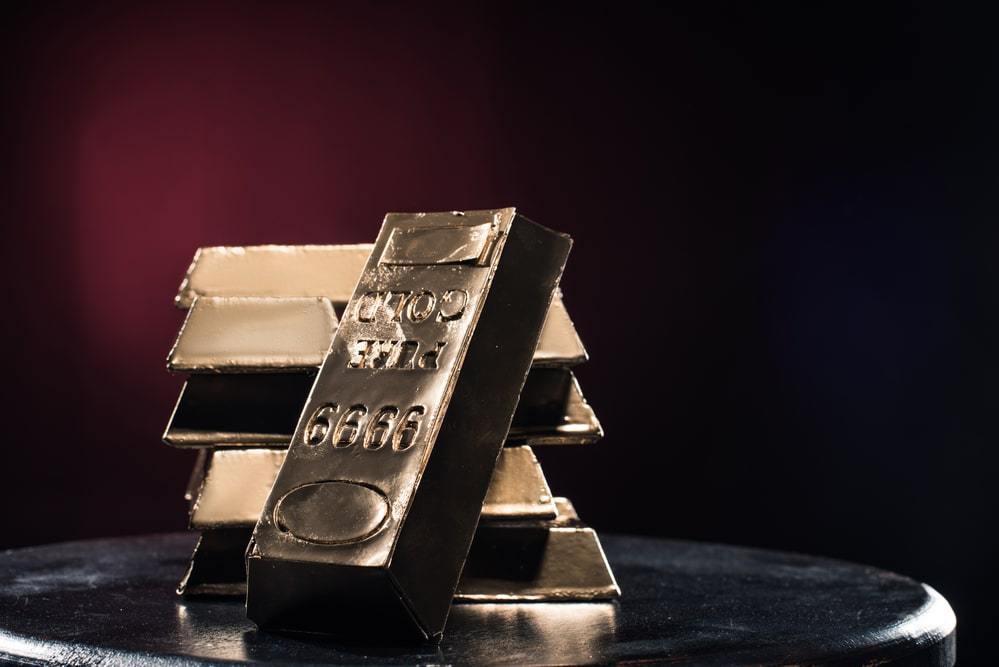
TradingKey - Wall Street investment banks are collectively cooling on their bullish sentiment toward gold. Following Goldman Sachs ( GS) sharply cutting its gold price targets last week, Deutsche Bank ( DB) followed suit on Monday, cutting its gold ( XAUUSD) price forecasts by up to 22%.
According to a report released by Deutsche Bank research analyst Michael Hsueh, the bank lowered its third-quarter gold price forecast by 22% from previous levels to $4,300 per ounce, and cut its fourth-quarter target price by 17% to $4,800.
Although the revised targets remain above the current market price of around $4,140, they are noticeably more conservative compared to previous optimistic expectations.
Hsueh noted in the report that the repricing of Federal Reserve policy expectations, combined with the resilience shown by U.S. macroeconomic data, are the main factors driving gold prices lower recently.
The Fed's hawkish pivot has become the biggest headwind
The Federal Reserve kept interest rates unchanged at its latest policy meeting, but officials sent increasing signals supporting rate hikes, with newly appointed Chairman Kevin Warsh explicitly stating his commitment to restoring price stability.
This hawkish shift has put direct pressure on the gold market. As a non-yielding asset, the opportunity cost of holding gold rises when market interest rates climb, and the remarks from Fed officials have fueled a continuous rise in rate-hike expectations.
Interest rate market pricing shows that the Fed's rate hike window for this year has been pulled forward significantly to September, from December prior to the policy meeting. In addition, the surge in energy prices during the early stages of the Middle East conflict has further reinforced market expectations of monetary policy tightening, acting as another key factor weighing on gold prices.
Hsueh emphasized in a report, "The market's repricing of Fed rate expectations, combined with the resilience of US macroeconomic data, is the primary factor driving gold prices down." He also warned that if the Fed implements three to four rate hikes, gold prices could fall to around $3,800.
Shrinking investment demand exacerbates downward pressure
In addition to monetary policy expectations, a material contraction in investment demand has also kept Deutsche Bank on alert. Michael Hsueh noted in the report that continuous net outflows from gold-backed ETFs indicate the market's "usual support" for gold is conspicuously absent. Data show that gold ETF holdings have declined for several consecutive weeks, reflecting a continuous weakening of investors' willingness to allocate to gold.
Meanwhile, physical gold prices in the Chinese market are trading at a discount relative to Comex futures, indicating that import demand is also struggling to provide support. As the world's largest gold consumer, weak demand in the Chinese market has further undermined gold's upward momentum. This simultaneous weakness in both domestic and foreign demand leaves the gold market facing dual pressures.
However, Deutsche Bank emphasized that ongoing gold buying by global central banks constitutes the most important structural support for the current market. "The pillar of central bank demand remains solid, and we expect this trend to persist for quite some time," Hsueh wrote.
Wall Street's Battle for Gold Pricing Power
Deutsche Bank's cut to its gold price forecast is not an isolated event. A week ago, Goldman Sachs, which had accurately predicted the gold rally, was the first to pivot, slashing its year-end 2026 gold price target from $5,400 to $4,900, a reduction of $500.
Goldman Sachs' report pointed out that the "hawkish debut" of the new Federal Reserve Chair Warsh has altered the market logic. The stronger-than-expected hawkish signals sent at his first FOMC meeting eased market concerns over central bank independence, dampening demand for gold as a macro hedge. Goldman also warned that if the Fed hikes rates twice this autumn, gold prices could fall to $4,440 by the end of the year, nearly $500 below the baseline forecast.
However, institutional sentiment is not entirely one-sided. Citigroup ( C) has recently wavered, cutting its three-month target price to $4,000 on June 12 before raising it to $4,500 four days later. It characterized the previous decline as a 'price reset' rather than the end of the bull market, maintaining its 6-to-12-month bullish forecast of $5,000.
Bank of America ( BAC) acknowledged that short-term gold prices are unlikely to reach $6,000, but believes high fiscal deficits will support a long-term upward trend. JPMorgan Chase ( JPM) is the most optimistic, maintaining its year-end 2026 forecast of $6,000 and an average price of $6,263 for 2027, arguing that long-term structural factors continue to support the bull market.
This content was translated using AI and reviewed for clarity. It is for informational purposes only.
Recommended Articles








Comments (0)
Click the $ button, enter the symbol, and select to link a stock, ETF, or other ticker.