


Germany is redirecting €3B from its semiconductor subsidy program to repair roads and bridges



Germany has redirected funds meant for its semiconductor industry to its infrastructure. The country’s semiconductor sector, which is already plagued by delays, uncertainty, and international competition, is now facing another setback as the government diverts funds away from the sector.
Germany’s goal to reclaim a significant role in the global semiconductor industry has suffered a major setback after the government announced plans to cut €3B ($3.5B) from its chip subsidy budget.
The funds, which were originally designated to boost the production of domestic microelectronics, will instead be used to repair the country’s deteriorating streets and bridges.
Germany redirects funds to infrastructure
“We are making difficult but responsible choices,” Germany’s Vice Chancellor Lars Klingbeil said during a press conference to announce the funds reallocation on Thursday. He added that the “necessary measure” addresses aging infrastructure and fiscal challenges that are “crucial for both economic productivity and public safety.”
The German government earlier announced that it would channel €15B ($17.4B) in subsidies toward semiconductor manufacturing between 2025 and 2028. The funds were central to Berlin’s strategy for reducing its dependence on Asian chip suppliers and strengthening the European Union’s position in the global tech supply chain.
Beyond this reallocation, Germany’s semiconductor push has already faced multiple obstacles. Intel Corp. earlier this year scrapped plans for a $34.7B chip plant in Magdeburg over cost pressures and uncertain funding conditions.
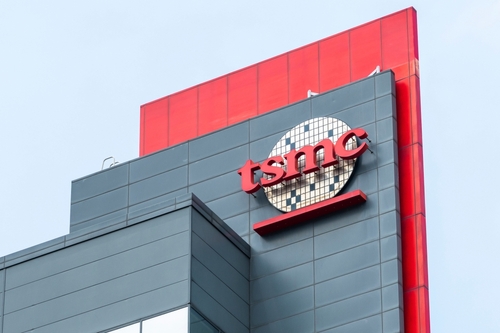
With Germany going back on its decision, industry concerns about Germany’s ability to compete globally in a sector dominated by Taiwan Semiconductor Manufacturing Co. (TSMC), Samsung Electronics, and Intel have returned.
Fund reallocation was unpopular among industry stakeholders
The German government’s “difficult but responsible choices” have quickly drawn criticism from industry groups and stakeholders, who warned that the funding cuts could have lasting repercussions on industrial competitiveness and strategic autonomy.
“This would send a disastrous signal not only for the economic viability of our country, but also for its strategic capacity to act,” Sarah Bäumchen, the managing director of the ZVEI electrical and digital industry association, said. She emphasized that microelectronics is a “key technology vital for survival” and essential to the country’s industrial future.
Germany approved around $2.3B in semiconductor subsidies last year, but none of the funds have yet been disbursed. The Ministry for Economic Affairs previously admitted it was caught off guard by the number of funding applications, which exceeded initial expectations by nearly threefold.
Frank Bösenberg, head of the Silicon Saxony industry group, said he understood the government’s financial constraints but stressed the need for “planning security and speed in the implementation of corresponding programs.” He added that uncertainty in policy and funding discourages private investment, particularly in capital-intensive sectors like chip making.
A spokesperson for Infineon Technologies AG, one of Germany’s largest semiconductor firms, clarified that ongoing and approved projects would not be affected by the cuts.
Germany has been struggling to balance post-pandemic recovery spending with its constitutional “debt brake,” which is a law that limits public borrowing.
The EU launched its Chips Act with the goal of doubling its global market share in chip manufacturing from 8% to 20% by 2030. But according to a joint report by ZVEI and Strategy&, Europe’s share had already fallen to 8.1% in 2024, and is projected to decline further without substantial new investment.
Meanwhile, global rivals are accelerating their chip strategies. China has dedicated $142B in public funding to boost domestic production, and the United States has allocated $52B through its own Chips Act. These massive investments have attracted private capital and manufacturing projects, creating an increasingly uneven playing field for European firms.
Get up to $30,050 in trading rewards when you join Bybit today
บทความแนะนำ








ความคิดเห็น (0)
คลิกปุ่ม $ ป้อนสัญลักษณ์ และเลือกเพื่อเชื่อมโยงหุ้น, กองทุน ETF หรือสัญลักษณ์หลักทรัพย์อื่น ๆ