


Nokia Oyj Stock (NOK) Moved Up by 9.27% on Aug 12: Facts Behind the Movement



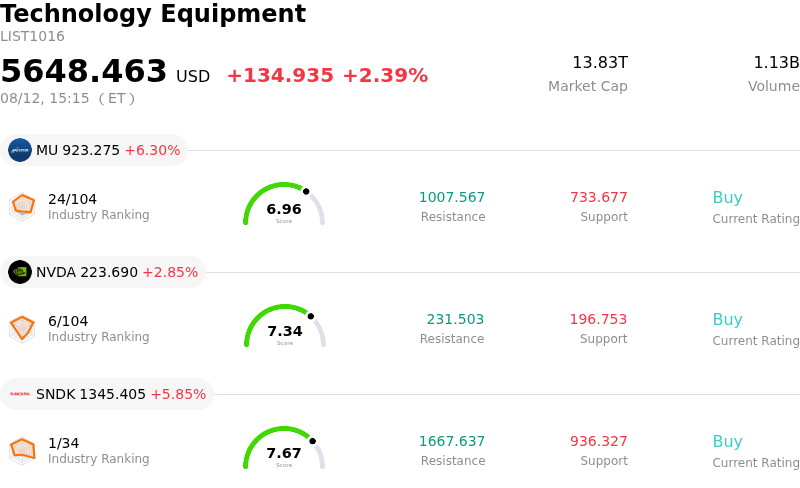
Nokia Oyj (NOK) moved up by 9.27%. The Technology Equipment sector is up by 2.39%. The company outperformed the industry. Top 3 stocks by turnover in the sector: Micron Technology Inc (MU) up 6.30%; NVIDIA Corp (NVDA) up 2.84%; SanDisk Corporation (SNDK) up 5.85%.
What is driving Nokia Oyj (NOK)’s stock price up today?
The significant upward move in Nokia Corporation shares was primarily driven by a sharp market re-evaluation of the company as a core provider of artificial intelligence data center infrastructure. Investor interest accelerated following detailed disclosures surrounding the company's expanding AI and cloud backlog. The massive accumulation in long-term AI-related orders relative to current quarterly segment revenues provided tangible evidence that customer demand for optical and internet protocol networking equipment is accelerating, shifting perception away from legacy telecom growth toward high-margin AI infrastructure buildouts.
Bullish sentiment was further reinforced by positive sell-side actions and strategic developments. Major financial institutions, including Bank of America and SEB Equities, recently raised price targets and upgraded ratings on the stock, citing durable multi-year visibility in AI network deployments and increased full-year profitability guidance. Additionally, Nokia's launch of an AI Radio Access Network platform in collaboration with Nvidia generated enthusiasm by paving the way for higher-margin software revenue upgrades. Potential regulatory developments in the United States, such as proposed restrictions on Chinese optical transceiver suppliers, provided an added structural tailwind by directing vendor demand toward established Western telecom suppliers.
On an operational level, Nokia demonstrated stronger relative execution than industry peers that have grappled with margin pressure and declining legacy spend. This divergence attracted rotational capital into Nokia as a top sector pick. Combined with a constructive macroeconomic backdrop featuring softer inflation data and broader gains in technology shares, favorable market liquidity helped amplify intraday buying pressure, propelling the stock higher amid heightened trading volume.
Technical Analysis of Nokia Oyj (NOK)
Technically, Nokia Oyj (NOK) shows a MACD (12,26,9) value of 0.273, indicating a neutral signal. The RSI at 41.041 suggests neutral condition and the Williams %R at 46.096 suggests neutral condition. Please monitor closely.
Fundamental Analysis of Nokia Oyj (NOK)
Nokia Oyj (NOK) is in the Technology Equipment industry. Its latest annual revenue is $22.43B, ranking 3 in the industry. The net profit is $734.02M, ranking 8 in the industry. Company Profile
Over the past month, multiple analysts have rated the company as Buy, with an average price target of $14.29, a high of $20.00, and a low of $8.61.
More details about Nokia Oyj (NOK)
Company Specific Risks:
- Persistent Memory-Chip Shortages and Supply Constraints: Persistent global memory supply shortages expected to last through 2027 continue to restrict Nokia's hardware production capacity, threatening its ability to convert a massive €2.8 billion AI and cloud order backlog into timely revenue.
- Subdued Near-Term Guidance and Margin Pressure: Despite strong long-term order bookings, management's cautious outlook for Q3 and flat near-term operating margin guidance signal underlying profitability risks and heighten reliance on heavy Q4 delivery.
- Structural Weakness in Legacy Telecom Infrastructure: Persistent capital expenditure reductions and reduced demand across traditional 5G mobile service provider markets continue to act as a drag on core operations, diluting gains from higher-growth optical and enterprise segments.
- High Capex Requirements and Extended Commercialization Timelines: Heavy capital deployment into optical semiconductor manufacturing and new AI-RAN platforms creates significant execution risk, with financial returns exposed to market uncertainty before full-scale deployment in 2027.
This article may include AI-generated content that is human-reviewed, which is for reference and general information purposes only and does not constitute investment advice.
Recommended Articles







Comments (0)
Click the $ button, enter the symbol, and select to link a stock, ETF, or other ticker.