


 Discount


Jensen Huang Returns as Nvidia CEO: What Does It Mean for AI Chip Supply Chain and Rubin Profit Outlook?



AI Podcast


On November 23, Eastern Time, Nvidia reinstated Jensen Huang as CEO, president, and director, driving a surge in Nvidia shares and the AI supply chain. This move alleviates market anxiety regarding next-generation chip production schedules, supply chain capital planning, and cloud service provider financing. While the reinstatement ensures strategic continuity, investors must monitor whether Rubin shipment growth can effectively convert into profits, gross margins can recover from anticipated fourth-quarter troughs following price adjustments, and overseas orders maintain compliance amid ongoing independent investigations.
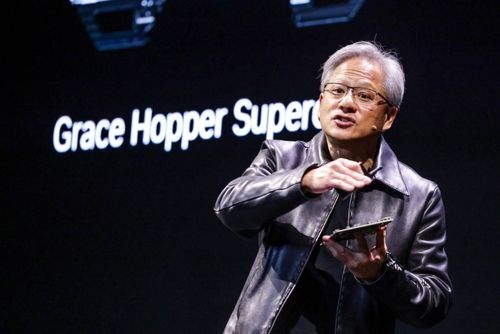
TradingKey - On November 23, Eastern Time, Nvidia (NVDA) announced that its board of directors has reinstated Jensen Huang as chief executive officer, president, and director.
Jensen Huang's return not only ignited Nvidia's own share price, but also drove gains across the entire AI supply chain. As of press time, Nvidia shares touched an intraday high of $171, up over 36% from last Friday's close, while the Philadelphia Semiconductor Index also rebounded more than 15%.
For the AI supply chain, including TSMC (TSM), SK Hynix (SKHY), Micron (MU), and downstream AI cloud service providers, Jensen Huang's return eased market concerns over whether Nvidia can advance the mass production and delivery of next-generation chips as planned. TSMC needs to arrange wafer fabrication and advanced packaging capacity in advance, while SK Hynix and Micron must schedule high-bandwidth memory production based on procurement expectations. For cloud service providers, whether GPUs arrive on schedule and whether Nvidia continues to provide financing support for certain projects directly affect when newly built computing capacity can become operational.
For Nvidia shareholders, the reinstatement resolves the question of who will lead the company in advancing the mass production of Rubin. Following the sharp rebound in the share price, the next factors influencing valuation are whether growth in Rubin shipments can translate into higher profits, and whether the company's gross margin can recover as management expects.
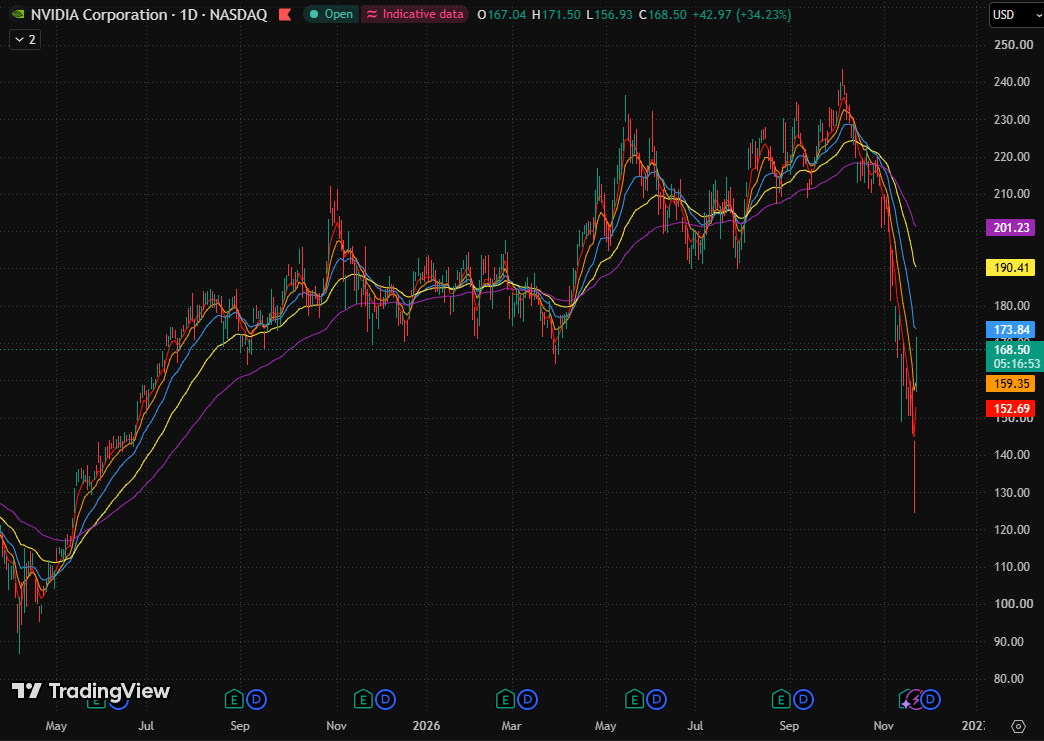
Nvidia daily chart, Source: TradingView
Why Does Jensen Huang Impact the AI Industry Chain?
According to Reuters, Jensen Huang has long personally visited manufacturing partners in Taiwan and held talks with senior executives of South Korean companies on next-generation chips and data center partnerships. While his future remained uncertain, some Asian suppliers had already begun preparing contingency plans.
The reason is that suppliers often have to commit capital several quarters before orders are delivered. Even if final procurement volumes remain unchanged, a one-quarter delay in mass production could leave equipment already put into production temporarily idle, thereby deferring revenue. Jensen Huang's reinstatement reduced the need for suppliers to reassess established plans, which was one reason chip stocks subsequently rebounded.
Downstream cloud service providers also have another financial tie with Nvidia. As of the end of the third fiscal quarter, Nvidia's contractual commitments related to emerging AI cloud service providers reached $32 billion. Some agreements stipulate that after selling equipment, Nvidia can also share in compute leasing revenue that exceeds an agreed threshold. Management previously stated that it would be more prudent in selecting recipients of financing support. Therefore, for cloud service providers that have not yet raised sufficient construction funds, what is more worth watching going forward is whether specific projects can secure financing and initiate procurement.
Jensen Huang Returns to Nvidia: Clearer Strategy, Profits Still Rely on Rubin to Deliver
Even before Jensen Huang's return, Nvidia had already raised its fiscal 2028 revenue growth forecast from about 70% to around 75%. In Rubin's first quarter of volume shipments, it contributed nearly $20 billion in revenue, accounting for approximately 17% of the company's revenue for the quarter.
Therefore, the reinstatement primarily eases market concerns regarding strategic continuity. To support further gains in the stock price, however, investors still need to see sales growth translate into profits. Near-term share price pressure stems from orders previously signed at original prices, requiring Nvidia to absorb part of the rising supply costs. Based on the midpoint of fiscal fourth-quarter guidance, the company's revenue is expected to grow about 12% quarter-over-quarter, while gross profit growth will be only around 7%. Management expects the fiscal fourth quarter to mark the trough for gross margins.
Looking ahead, what is most critical to monitor is whether customers will continue to purchase Rubin as planned after the new prices take effect, and whether the company can improve its gross margin while scaling deliveries. If customers continue procuring Rubin as planned once the new prices take effect, Nvidia will be well-positioned to expand gross margins alongside ramping up deliveries, providing earnings support for further upside in the stock price.
Notably, the board has confirmed that the independent investigation will continue, while the execution of overseas orders still warrants close attention to developments in export compliance.
This content was translated using AI and reviewed for clarity. It is for informational purposes only.
Recommended Articles






Comments (0)
Click the $ button, enter the symbol, and select to link a stock, ETF, or other ticker.