


Is Jensen Huang Leaving Nvidia? Potential Successors and Risks Facing NVDA Stock



Nvidia’s board is evaluating CEO Jensen Huang’s future following an investigation into potential foreign intelligence risks tied to his personal conduct. The crisis has erased about $600 billion in market value. With earnings approaching, the company faces governance and succession challenges. CFO Colette Kress is considered a leading candidate for interim CEO, alongside internal and external contenders. Huang’s irreplaceable role stems from his concentrated management structure and deep industry influence, though his 3.58% stake does not grant absolute voting control. The board has not yet announced final personnel decisions.
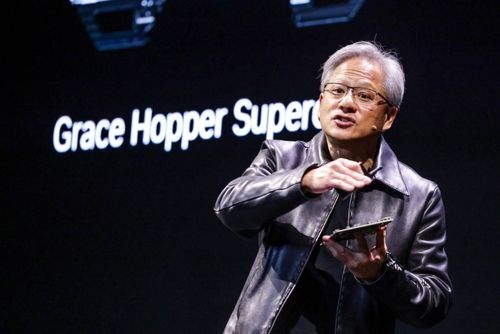
TradingKey - Nvidia's (NVDA) succession issue has evolved from a hypothetical discussion into a real-world governance test.
According to media reports from Reuters, Bloomberg, and others citing people familiar with the matter, Nvidia's board of directors met on the evening of November 11 Eastern Time to discuss the future of founder and CEO Jensen Huang. The board has also reportedly engaged external executive search firms to scout potential successors and is considering appointing an interim leader before a permanent CEO is finalized. Nvidia has not yet announced the outcome of the meeting, nor has it officially confirmed any personnel decisions.
Factoring in Wednesday's after-hours selloff, the company has shed about $600 billion in market capitalization this week since Nvidia's board announced an investigation into whether Jensen Huang had become a target of foreign intelligence activities, signaling that investors are pricing in the possibility of a leadership change and heightened governance risks.
Nvidia is scheduled to release its quarterly results on November 17, further compressing the board's timeline to handle the crisis. While the market was originally focused on GPU demand, gross margins, and the progress of next-generation platforms, whether Huang will continue to host the earnings call and how management will address succession arrangements could now also become critical variables swaying Nvidia's stock price.
Jensen Huang’s Future Enters Board Decision Stage, Colette Kress May First Serve as Interim Head
As the board begins evaluating Jensen Huang's future, who could take over Nvidia if necessary has become a central focus for the market. Nvidia does not lack experienced executives, but the company has yet to publicly designate a second-in-command capable of fully assuming Huang's responsibilities.
Huang concurrently oversees technology roadmaps, product definitions, client partnerships, supply chain coordination, and capital allocation. Nvidia's highly flat organizational structure, with dozens of business leaders reporting directly to him, previously enhanced decision-making efficiency, but it also led to highly centralized managerial authority. Lacking a traditional chief operating officer, any sudden succession would require the board to redistribute his extensive responsibilities.
Under current circumstances, Chief Financial Officer Colette Kress is viewed as the most likely candidate for interim CEO. According to media reports, some Nvidia directors favor having Kress temporarily take the helm should Huang depart. Having joined Nvidia in 2013, she has been with the company throughout its transformation from a gaming graphics card vendor into an AI chip leader, and is intimately familiar with its financial position, capital allocation, and investor expectations.
Dan Niles, portfolio manager and founder of Niles Investment Management, also believes Nvidia's leadership could soon see a change. He noted that Huang's tenure may be nearing its end, with an exit announcement possible as early as the following morning; should the board decide to replace the CEO, current CFO Kress would likely serve as the interim leader. Niles also expects that interim management might adopt a more conservative guidance strategy in subsequent earnings reports, setting a lower performance bar for the coming quarters.
If the board's top priority is stabilizing market expectations and ensuring continuity across earnings releases, capital allocation, and client communications, Kress represents a more natural transitional choice.
Within the internal technical ranks, Ian Buck is another candidate worthy of attention. As an early developer of CUDA who currently oversees Nvidia's datacenter business, he possesses deep insight into the company's most vital hardware-software ecosystem and AI customer needs. If the board seeks to maintain a technology-driven leadership model, Buck may better suit long-term requirements than a functional executive.
On the external front, media reports indicate that Johny Srouji, Senior Vice President of Hardware Technologies at Apple, has been discussed as a potential candidate. Srouji has long led Apple's custom silicon operations, bringing vast experience in semiconductor design, supply chain coordination, and managing large engineering teams. However, this report has not been confirmed by Nvidia or Apple, and any external executive, if hired, would still face challenges such as adapting to company culture, navigating client relationships, and transitioning product roadmaps.
Why Jensen Huang Is Hard to Replace: Nvidia's Management System Heavily Relies on Founder
What distinguishes Nvidia from many large tech companies is that Jensen Huang is not merely a CEO responsible for strategy and capital allocation, but a central figure deeply involved in product planning, technology decisions, and day-to-day operations.
Since co-founding Nvidia in 1993, Jensen Huang has served as CEO and a board member. He led Nvidia's transformation from a graphics processor vendor to an accelerated computing platform company and drove the development of the CUDA ecosystem, establishing the company as a key supplier for global AI infrastructure construction.
This influence extends beyond the company itself. With the rise of generative AI, Nvidia's GPUs have become critical infrastructure for large-model training and inference. Tech giants such as Microsoft (MSFT), Amazon (AMZN), Google (GOOGL), and Meta (META) continue to expand data center investments, while cloud computing providers and emerging AI compute operators also rely heavily on Nvidia's chip supply.
Throughout this process, Huang has increasingly become a key figure connecting chip suppliers, cloud service providers, AI startups, and Big Tech companies. He not only publicly defends AI infrastructure investments, but also shapes market perceptions of the AI industry's growth prospects through client engagements, industry investments, and product launches.
According to reports, Nvidia maintains a remarkably flat management structure, with more than 60 executives reporting directly to Huang. While this arrangement allows him to quickly track progress across different business units, it also means that many of the company's critical decisions are concentrated in the hands of a single individual.
For Nvidia, this management style offers clear advantages during periods of rapid expansion. Huang can directly coordinate chip R&D, supply chains, product rollouts, and customer demand, reducing decision-making friction across departments. However, if he were to step down, the company would face a realistic question: who could simultaneously understand the technology roadmap, business models, customer needs, and the dynamics of the global AI industry?
This is also at the core of the market's concern. While Nvidia possesses a massive R&D team and leadership bench, extensive management experience does not equate to being able to seamlessly succeed Huang. Over more than 30 years at the company, Huang has built technical acumen and customer relationships that cannot easily be transferred through a single leadership appointment.
Jensen Huang Holds Only 3.58% Stake: Would His Departure Change Nvidia Control?
In addition to the management transition, Jensen Huang's shareholding structure is another key reason this event has drawn widespread attention.
According to Nvidia's 2026 annual report filed with the U.S. Securities and Exchange Commission, as of March 23, 2026, Jensen Huang held approximately 870.6 million shares of Nvidia common stock, representing 3.58% of the company's outstanding shares. This stake is not sufficient to grant him absolute control based solely on his personal holdings.
Unlike tech peers such as Meta and Alphabet that employ multi-class share structures, Nvidia does not grant special founder voting rights to ensure Huang holds majority voting power. In other words, Huang's control over the company stems primarily from his role as CEO and co-founder, an established management framework built over time, and the board and shareholders' confidence in his leadership, rather than from a special equity structure.
However, Huang's actual shareholding arrangement is more complex than a straightforward personal ownership figure. Nvidia's annual report indicates that his holdings include family trust assets for which Huang and his wife, Lori Huang, serve as co-trustees, as well as shares held through other trusts, limited liability companies, and foundations. A portion of these shares involves shared beneficial ownership, voting power, or investment decision-making authority between the spouses.
This means that if the couple's marriage or related trust arrangements were to change in the future, it could indeed prompt market scrutiny over the ownership and voting arrangements of certain shares. However, it must be emphasized that there is currently no public evidence indicating that this event has altered their marriage, trust agreements, or Nvidia share voting arrangements. Nor does a marital dispute imply that the underlying shares would be immediately reallocated.
More importantly, Huang stepping down from the CEO role would not automatically trigger a transfer of his Nvidia shares, nor does it mean that corporate control would shift as a result. The appointment or removal of a CEO is a matter of corporate governance, whereas equity ownership is governed by shareholding structures, trust agreements, and applicable laws—and the two must not be conflated.
This content was translated using AI and reviewed for clarity. It is for informational purposes only.
Recommended Articles









Comments (0)
Click the $ button, enter the symbol, and select to link a stock, ETF, or other ticker.