


AMD Surges 24% in Five Days, Seen Rising Another 15% to Retest $658 Record High



AI Podcast


Driven by short covering and institutional capital rotation, AMD shares surged 24% over five days following November 11, Eastern Time. Growth in data center chip market share, cloud capex acceleration, and supply chain diversification away from Nvidia propelled the rally. While technical indicators signal potential for a 15% surge toward all-time highs, the stock must first overcome a critical overhead resistance zone between $580 and $600. Break-even selling pressure in this range will require sustained high trading volume to complete market turnover and maintain its upward momentum.
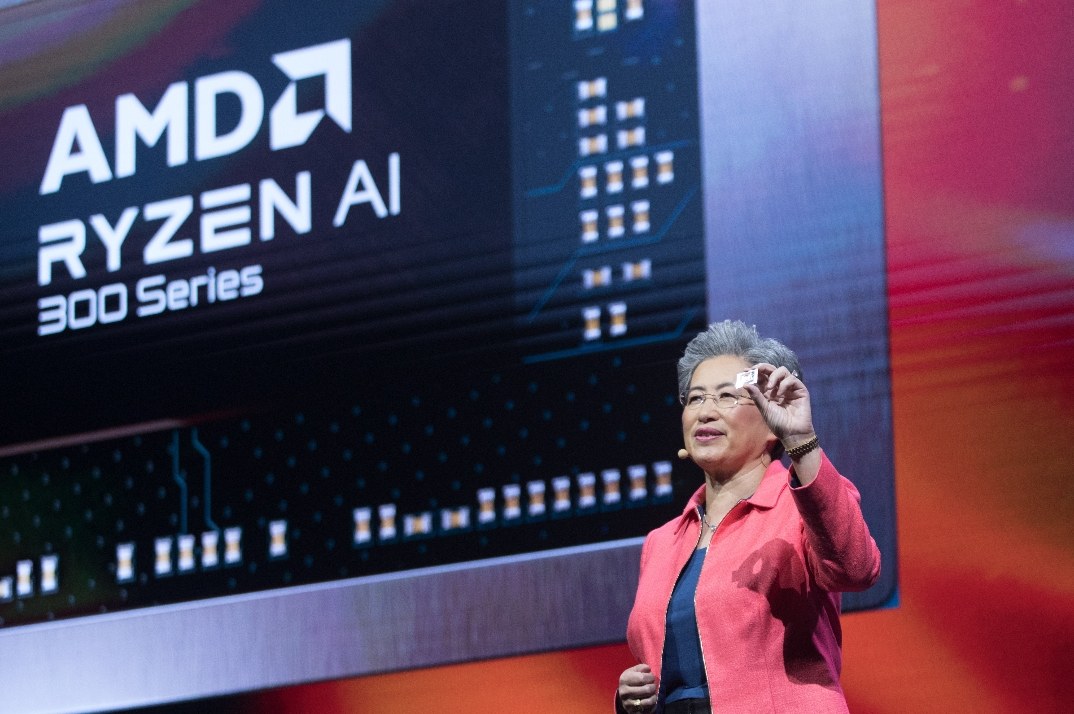
TradingKey - AMD short covering and buying momentum push stock up 24% over five days, with technicals signaling potential for another 15% surge toward all-time highs.
On November 11, Eastern Time, shares of Advanced Micro Devices (AMD) surged over 7% in regular trading and rose another 4% after hours, demonstrating formidable explosive momentum. Benefiting from expanding data center chip market share, continued capex acceleration from cloud hyperscalers, and strong sentiment spillover across the broader semiconductor sector, AMD surged 24% in just five trading sessions, triggering aggressive buying from short-term bulls and setting it up to potentially retest its all-time high of $658.
Following a pullback in semiconductors from October to early November driven by macroeconomic inflation and post-election political and economic noise, AMD became the first sector heavyweight to fully recoup its steep losses. This triggered a powerful confluence of short covering and passive institutional allocation flows, propelled by catalysts from both the broader industry and its competitors.
As major cloud service providers such as Microsoft, Meta, and Oracle actively pursue diversified supply chain strategies to reduce their overreliance on Nvidia as a single supplier, AMD's Instinct AI chip series has captured greater market share in large data centers, driving significant upward revisions to the company's revenue and gross margin forecasts.
A capital substitution effect triggered by an executive leadership crisis at Nvidia (NVDA) has also been a key driver. Recently, as Nvidia was hit by CEO Jensen Huang facing a board investigation and a sharp after-hours plunge, some hedge funds and institutional investors rebalanced their portfolios, partially pulling capital from Nvidia and reallocating it to AMD—the contender with the strongest catch-up potential in the AI chip space—generating a pronounced symmetrical capital rotation.
In addition, the resonance between macroeconomic liquidity and supply chain sentiment has catalyzed AMD's share price advance. With South Korea's semiconductor exports surging by an explosive 331% and CoreWeave reporting a hundred-billion-dollar-scale order backlog, visibility across the entire AI infrastructure supply chain has improved collectively, driving a powerful confluence of short covering and programmatic buying in AMD shares.
Despite the powerful momentum of a 24% five-day rally, retesting the all-time high of $658 will first require overcoming a critical technical and overhead supply resistance zone at $580–$600, where a substantial volume of trapped shares from previous peaks has accumulated. As the stock approaches this zone, it will inevitably face the release of break-even selling pressure, requiring higher trading volume to complete the turnover.
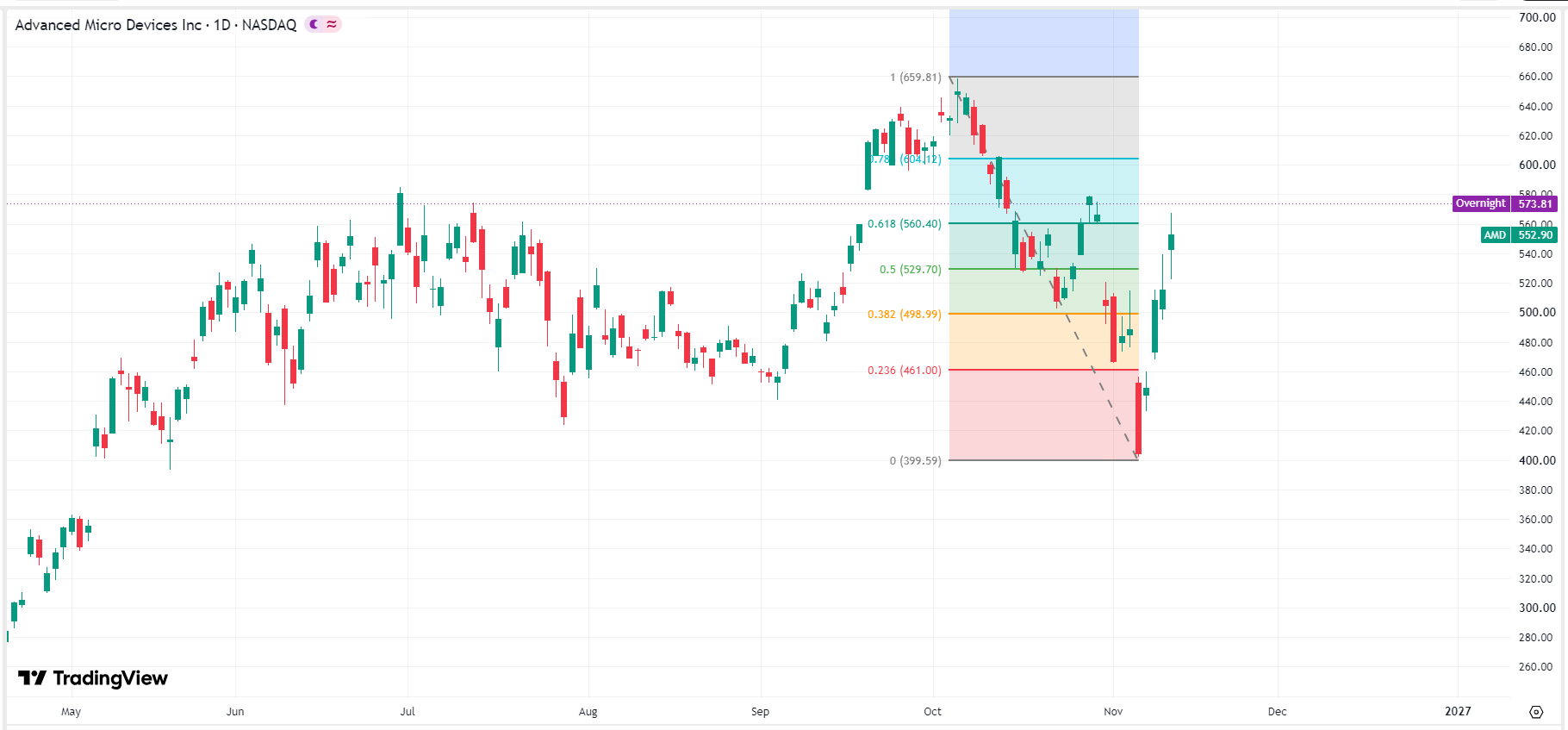 AMD Stock Chart, Source: TradingView
This content was translated using AI and reviewed for clarity. It is for informational purposes only.
Recommended Articles











Comments (0)
Click the $ button, enter the symbol, and select to link a stock, ETF, or other ticker.