


Gold Extends Slide Below $4,000 as Rising US Inflation, Fed December Hike Bets Pressure Prices



AI Podcast


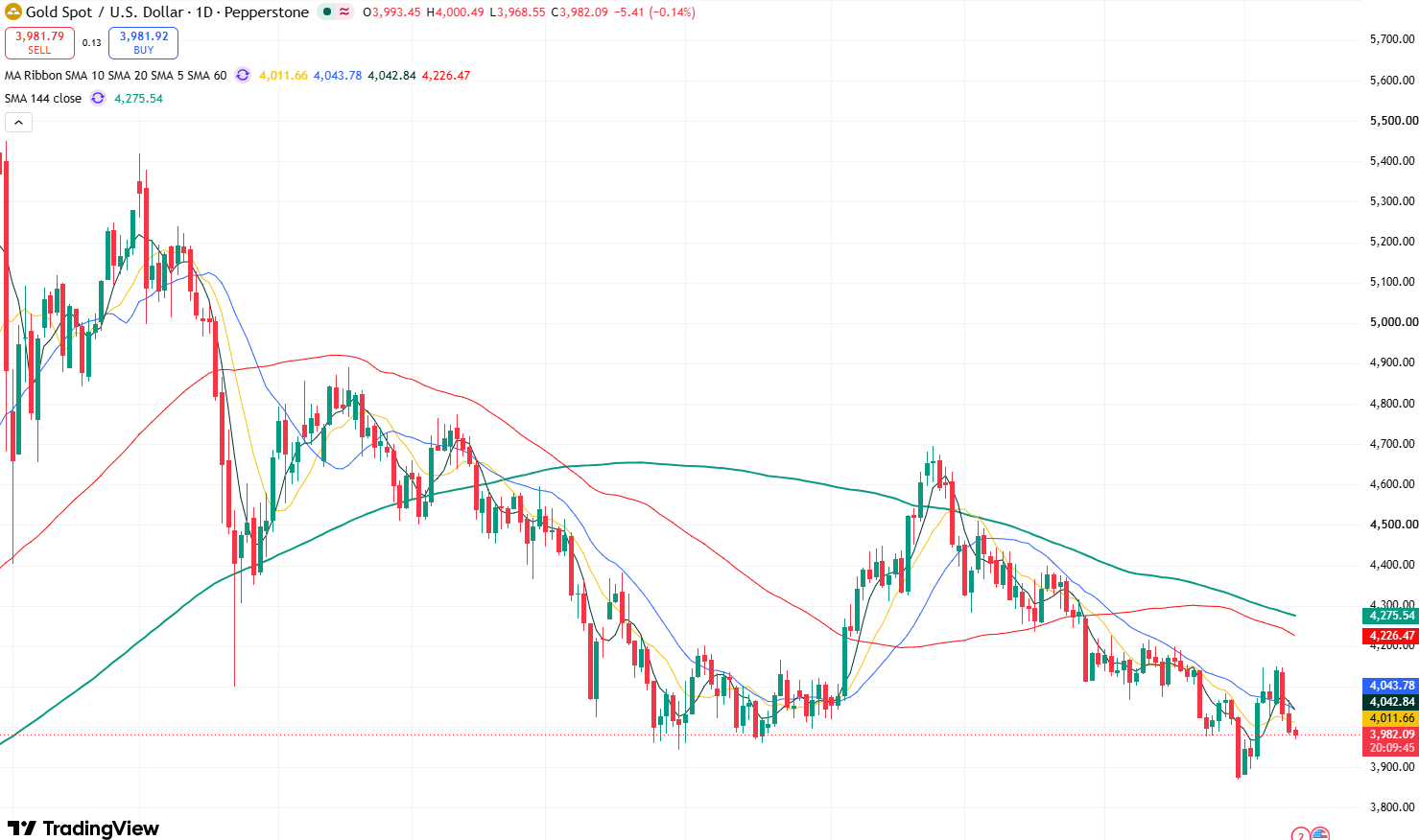
Gold prices extended losses for a third consecutive day, falling below $4,000 to an intraday low near $3,968 on November 12. Hotter-than-expected October US CPI data—with core CPI rising 0.4% month-over-month—and hawkish Fed signals heightened expectations for a December rate hike, lifting the US Dollar Index to its highest level since April 2025 and the 10-year Treasury yield toward 5%. This macroeconomic pressure weighed on non-yielding gold, though sustained central bank purchases provided medium- to long-term support. Short-term downside risks persist if prices fail to reclaim the $4,000 psychological level, with upcoming PPI data and Fed speeches remaining critical.

TradingKey - On November 12, gold prices (XAUUSD) extended their recent losses, falling further below $4,000 in early Asian trading to hit an intraday low near $3,968, marking a third consecutive day of declines. Earlier, US October CPI data came in hotter than expected, which, combined with hawkish signals from Federal Reserve officials, significantly heightened market expectations for a December rate hike, as a strengthening US dollar and Treasury yields added further downward pressure on gold prices.
Gold price daily chart, Source: TradingView
From a fundamental perspective, higher-than-expected US inflation data has been a key factor behind the recent decline in gold prices. Data released by the US Bureau of Labor Statistics showed that the October CPI rose 0.4% month-over-month, exceeding the market expectation of 0.3%. Meanwhile, Fed officials have recently reiterated that inflationary pressures persist. Federal Reserve Governor Christopher Waller previously noted that if core CPI reached 0.3% month-over-month, the Fed should consider a 50-basis-point rate hike in December, and the October core CPI ultimately reached that level.
Following the inflation data release, the market notably adjusted its expectations for Federal Reserve monetary policy. CME data showed that traders' priced-in probability of a 25-basis-point Fed rate hike in December rose to 90.6%, while the probability of a 50-basis-point hike climbed to 9.4%. Meanwhile, the US Dollar Index rose to its highest level since April 2025, and the 10-year US Treasury yield briefly touched around 5%. A stronger dollar raises the cost of gold for holders of other currencies, while higher Treasury yields increase the opportunity cost of holding non-yielding gold.
However, gold continues to see some medium- to long-term demand support. Reuters noted that sustained gold purchases by China and other major central banks have provided a floor for prices, partially offsetting the pressure from the short-term strength in the US dollar and interest rates.
In the short term, $4,000 has become an important psychological level that gold needs to reclaim. If gold prices remain below this level, the market will monitor support near $3,960; if the US dollar and Treasury yields continue to strengthen, gold could face further downward pressure. Looking ahead, US Producer Price Index (PPI) data and upcoming speeches by Fed officials will continue to guide market expectations for the December interest rate decision.
This content was translated using AI and reviewed for clarity. It is for informational purposes only.
Recommended Articles










Comments (0)
Click the $ button, enter the symbol, and select to link a stock, ETF, or other ticker.