


SpaceX Drops Over 7% Pre-Market: Democratic Control of Congress, Government Contract Review and Texas Data Center Policy Draw Attention



AI Podcast


As of pre-market trading on Nov. 4 ET, SpaceX fell over 7% to $130.64 following Democratic victories in the U.S. midterm elections and the Texas gubernatorial race. The shift raises risks of increased congressional scrutiny over SpaceX’s $16.65 billion in federal government contracts, though political contributions do not imply non-compliance. Additionally, potential policy changes in Texas, including tighter data center approvals and reduced tax incentives, pose headwinds for AI infrastructure investments. While election results elevate policy uncertainty regarding government procurement and data center costs, investors should monitor upcoming contract delivery, defense project progress, and long-term cash flow generation.
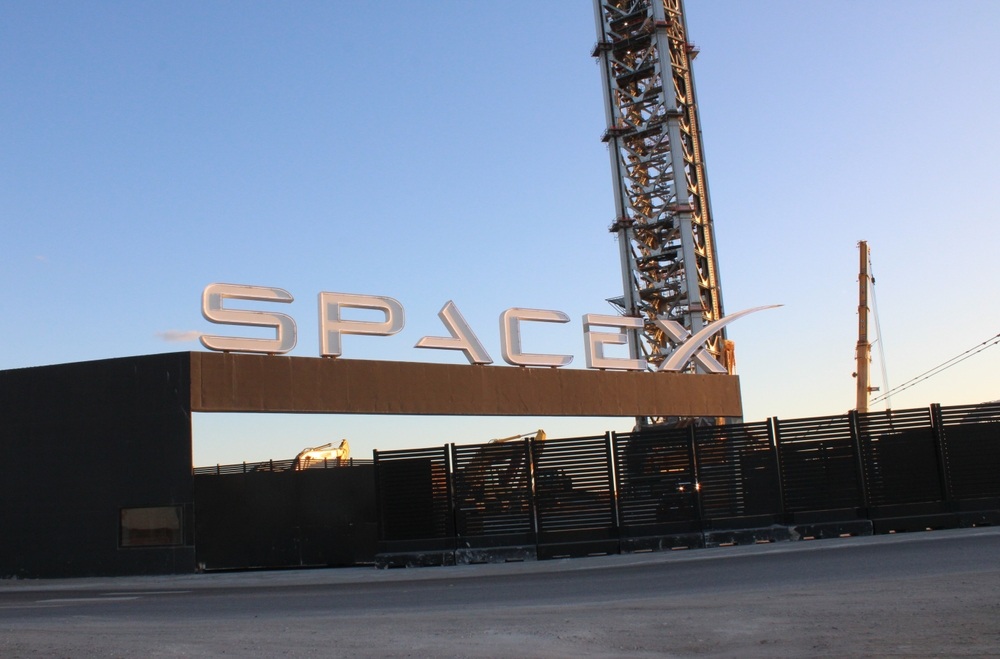
TradingKey - As of press time on Nov. 4 ET, SpaceX (SPCX) fell over 7% in pre-market trading, currently reporting at $130.64.
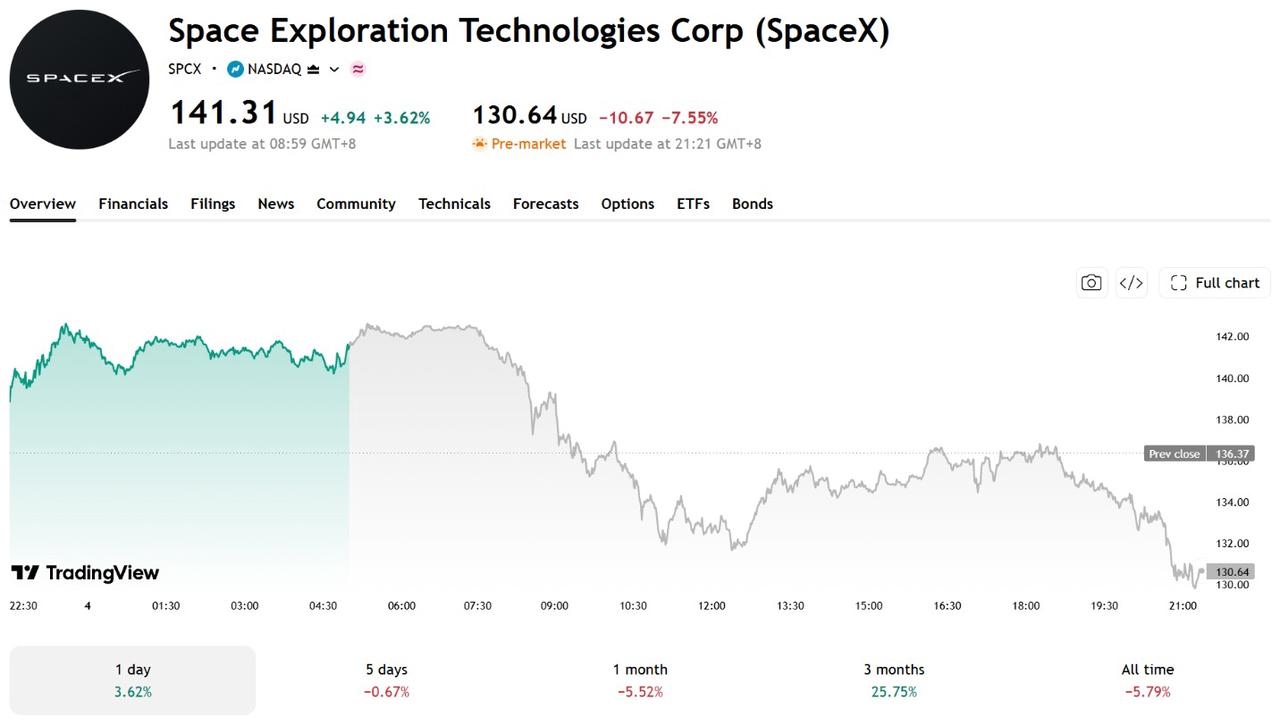
[Source: TradingView]
Following the U.S. midterm elections, Democrats won majorities in both houses of Congress. In Texas, Democratic candidate Gina Hinojosa defeated incumbent Governor Greg Abbott to be elected as the new governor. The market has begun focusing on congressional oversight of government contracts for Elon Musk's companies, as well as changes to data center approval policies in Texas.
SpaceX Government Contract Scale and Potential Scrutiny Risks
Musk had previously publicly supported Trump and the Republican Party. According to calculations by The New York Times, as of mid-October 2026, Musk had contributed a cumulative total of approximately $474 million to federal and state political groups during this US midterm election cycle, a significant portion of which was used to support Republican candidates.
After the Democrats regain control of Congress, relevant committees may step up scrutiny of government procurement, contract awards, and corporate conflicts of interest, including investigating the process by which SpaceX obtained government contracts. However, political contributions themselves do not mean that SpaceX's government contracts involve any non-compliance.
SpaceX's business with the US government involves NASA human spaceflight, lunar exploration, military satellite launches, and Starshield communication services. Key projects include:
Government Projects | Contract or Project Amount |
NASA Commercial Crew CCtCap | $2.599 billion |
NASA Human Landing System Option A | $2.89 billion |
NASA Human Landing System Option B | $1.15 billion |
US Space Force NSSL Phase 3 Lane 2 | $5.924 billion |
US National Reconnaissance Office Starshield Project | Approximately $1.8 billion |
US Space Force SDN Military Communication Backbone Network | $2.29 billion |
The total amount of the above projects is approximately $16.65 billion. However, due to differing statistical methodologies—including awarded contract amounts, expected contract values, and classified contract amounts reported by the media—it cannot be directly treated as SpaceX's recognized revenue.
SpaceX's offering documents show that the company's 2025 consolidated revenue was $18.674 billion, with approximately one-fifth coming from US federal government agencies, equivalent to about $3.7 billion. Government orders are an important source of revenue for SpaceX, giving it a prominent position in the US aerospace and defense system.
However, a congressional investigation will not automatically lead to the cancellation of existing contracts. Investors still need to monitor whether subsequent investigations will affect government procurement, budget appropriations, and new contract awards.
Texas Policy Changes Pressure AI Data Center Construction
Democrat Gina Hinojosa defeated incumbent Governor Greg Abbott on November 3 to win the Texas gubernatorial election and is expected to take office in January 2027. During her campaign, she advocated pausing approvals for new data center projects until the state legislature establishes regulatory measures, while also pushing to eliminate related tax incentives and requiring companies to bear electricity and grid expansion costs.
Abbott had already ordered a pause on data center-related permits in September pending the completion of power grid and water resource reviews. Following Hinojosa's victory, the market will monitor whether she pushes the state legislature to further tighten approvals and revoke related tax incentives. If implemented, these policies could raise data center construction costs and extend project approval cycles.
SpaceX is also expanding its investment in AI computing infrastructure and has proposed deploying a portion of its computing capacity into space in the future. The company's R&D expenses reached $8.643 billion in 2025, up 149.5% year-over-year. The increase in AI R&D expenses was primarily driven by GPU depreciation and computing infrastructure investments, while the growth in Space R&D expenses was mainly related to Starship development and launch facility construction.
However, space computing still faces challenges such as launch costs, power supply, heat dissipation, and equipment maintenance, making it unlikely to replace terrestrial data centers in the short term.
What Should SpaceX Investors Watch Next?
In the short term, investors need to monitor whether congressional investigations will affect government contract awards, as well as the impact of policy adjustments in Texas on data center investments.
In the medium to long term, the focus will be on the delivery progress of NASA and defense projects, Starshield orders and revenue growth, and whether AI infrastructure investments can generate corresponding revenue and cash flow.
Overall, the election results have increased policy uncertainty for SpaceX, but at this stage, it is still insufficient to judge whether its government business and AI investment plans will suffer a material impact.
This content was translated using AI and reviewed for clarity. It is for informational purposes only.
Recommended Articles








Comments (0)
Click the $ button, enter the symbol, and select to link a stock, ETF, or other ticker.