


Tesla Stock Price Forecast: Roadster Event Boosts TSLA Over 3%, Can It Break the $400 Mark?



AI Podcast


On October 16 US Eastern Time, Tesla shares surged over 3% to $374.89, driven by the Next-Gen Roadster launch event, which temporarily offset inflation-driven tech sell-offs. While the Roadster boosts brand confidence, its 2028 mass production, limited hypercar volume, and negligible revenue contribution under 0.1% mean it cannot resolve mass-market margin pressures. Institutional focus remains on Q3 automotive gross margins, FSD progress, and Robotaxi commercialization. Consequently, the Roadster serves as a short-term sentiment catalyst, with the stock likely facing technical resistance at $380–$390 and an unlikely immediate breakthrough of the $400 mark.

TradingKey - Roadster launch event sparks buying momentum, sending Tesla stock surging over 3%, but a direct breakthrough above the $400 mark remains unlikely.
On October 16 US Eastern Time, driven by market sentiment surrounding the Next-Gen Roadster flagship launch event, Tesla (TSLA) shares staged a strong rebound, successfully shaking off the shadow of tech stock sell-offs triggered by hotter-than-expected US September CPI and PPI inflation data, as bulls gradually regained short-term control. In overnight trading, Tesla's stock rose 3.4% to temporarily trade at $374.89.
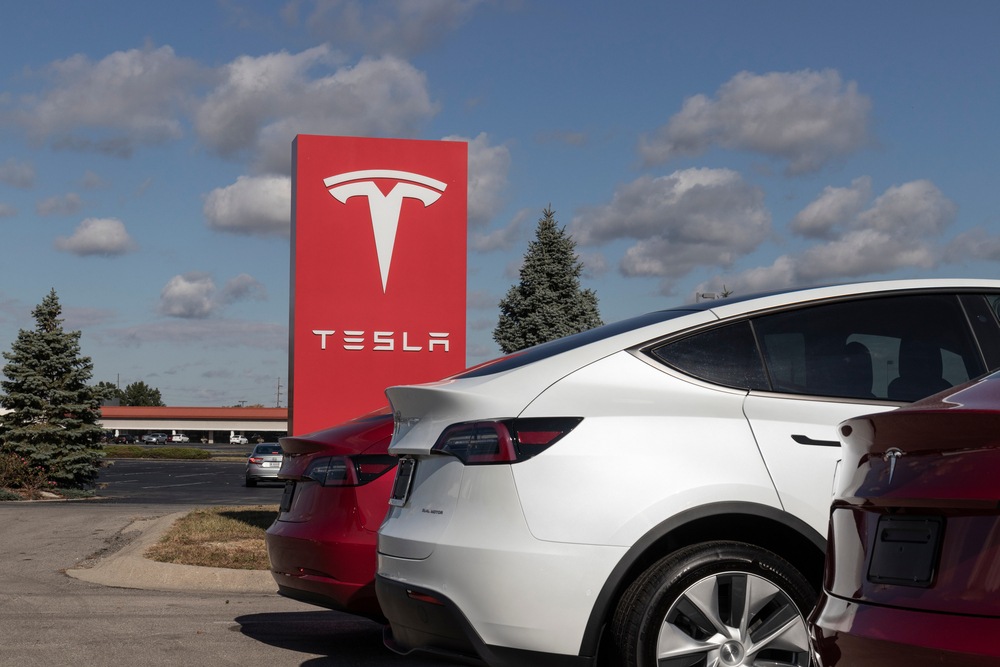
As a flagship product developed in collaboration with SpaceX, Roadster 2.0 has significantly boosted retail and institutional investors' confidence in Tesla's engineering innovation capabilities, reshaping its brand premium. However, mass production of the Roadster is scheduled for 2028, roughly two years away, presenting high uncertainty; moreover, as a limited-edition, high-priced hypercar, it cannot directly contribute to large-scale quarterly vehicle deliveries for Tesla.
Currently, Wall Street estimates that annual sales of the Roadster will only be around 2,000 units once mass production begins. Compared to Tesla's annual delivery scale of nearly 1.8 million to 2.8 million vehicles, its revenue contribution will account for less than 0.1%. Among them, Goldman Sachs pointed out that the market scale for multi-million-dollar ultra-luxury hypercars is extremely small, and the Roadster cannot resolve the gross margin decline pressure faced by mass-market models like the Model 3 and Model Y under high macro interest rates.
For Wall Street, Tesla's core anchors remain AI and Robotaxi. Institutional capital is more focused on the Q3 financial report to be released in late October, specifically the performance of automotive gross margin excluding regulatory credits, as well as the regulatory approval of FSD V13/V14 and the progress of Robotaxi commercial operations.
In short, while Roadster 2.0 is eye-catching, it is insufficient to significantly impact Tesla's financial metrics and unlikely to provide a substantive drive for the stock price. It serves more as a sentiment catalyst, and the impact from this aspect is relatively short-lived.
From a technical analysis perspective, Tesla's stock price is expected to rebound in the short term toward the upper boundary of the previous high-level consolidation box at $380–$390. However, the likelihood of a further rise breaking through this resistance level is not high, let alone breaking the $400 psychological mark, unless the broader tech sector stops falling and rebounds to give Tesla beta momentum to follow the market higher, or Tesla itself sees new positive developments, such as new progress in FSD commercialization.
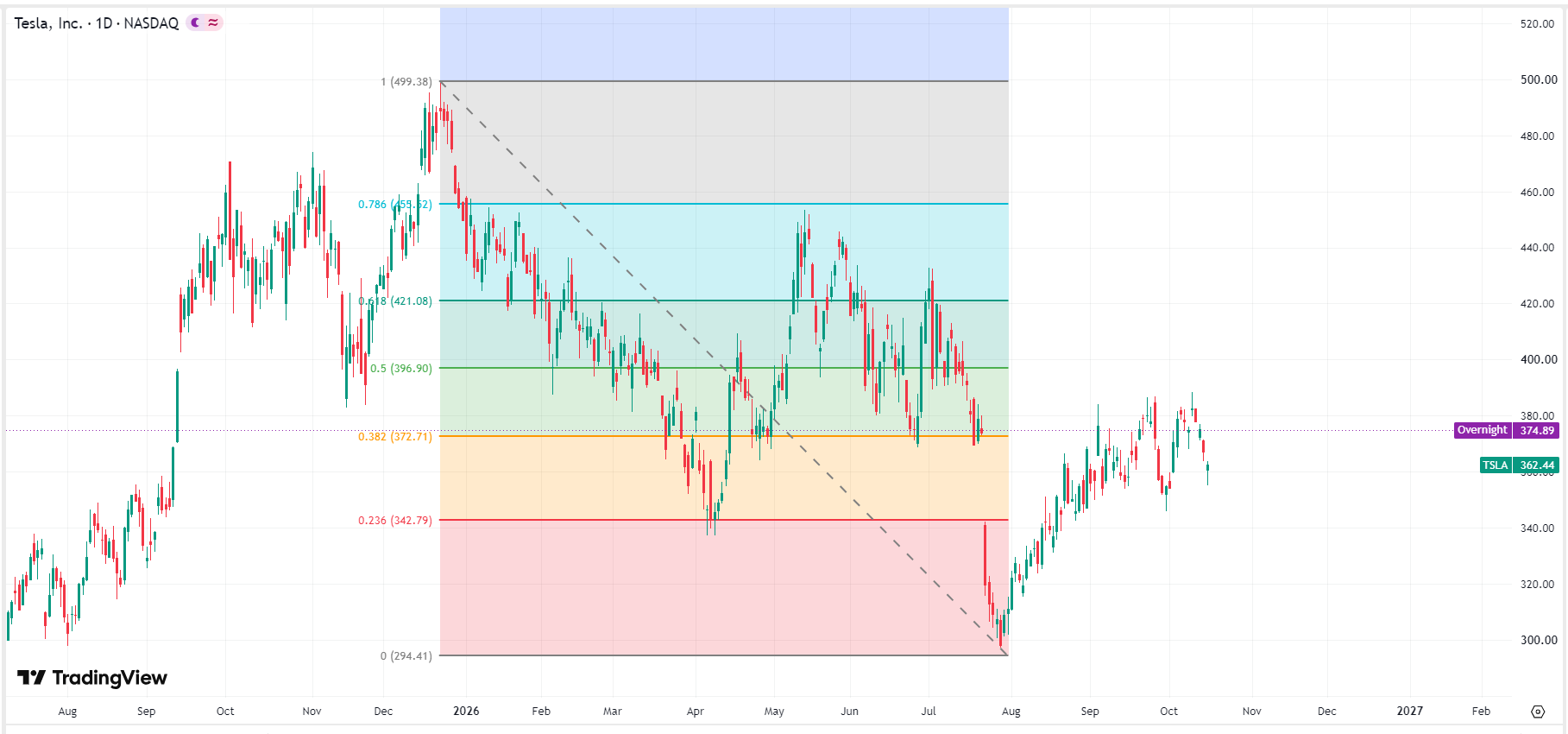 Tesla stock price chart, source: TradingView
This content was translated using AI and reviewed for clarity. It is for informational purposes only.
Recommended Articles









Comments (0)
Click the $ button, enter the symbol, and select to link a stock, ETF, or other ticker.