


Nike Stock Plunges to More Than a Decade Low: Is Now a Good Time to Buy the Dip?



AI Podcast


Nike shares have plunged over 40% in 2026 to around $35, marking a 12-year low and an 80% retreat from its 2021 peak. The decline stems from inventory backlogs, the pitfalls of its DTC strategy, and fierce competition from emerging brands like On and Hoka. While short-term financial performance and technical indicators remain pressured during CEO Elliott Hill's strategic restructuring, Nike retains a strong brand moat, solid balance sheet, and a discounted forward P/E of 20x. Long-term value investors may find a margin of safety for phased positioning.
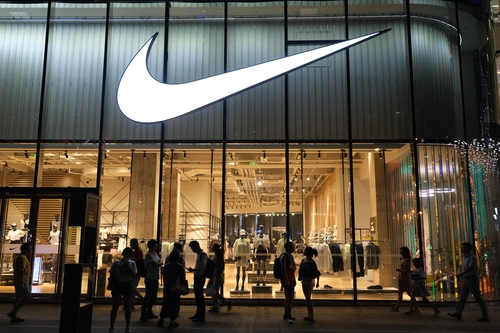
Nike Shares Plunge to Lowest Since 2014
TradingKey - Entering 2026, Nike (NKE) stock continued its downward trend of recent years. As of September, Nike's stock price has plummeted by over 40%, falling to around $35, a price level returning directly to around 2014 and setting a new stock price low in nearly 12 years.
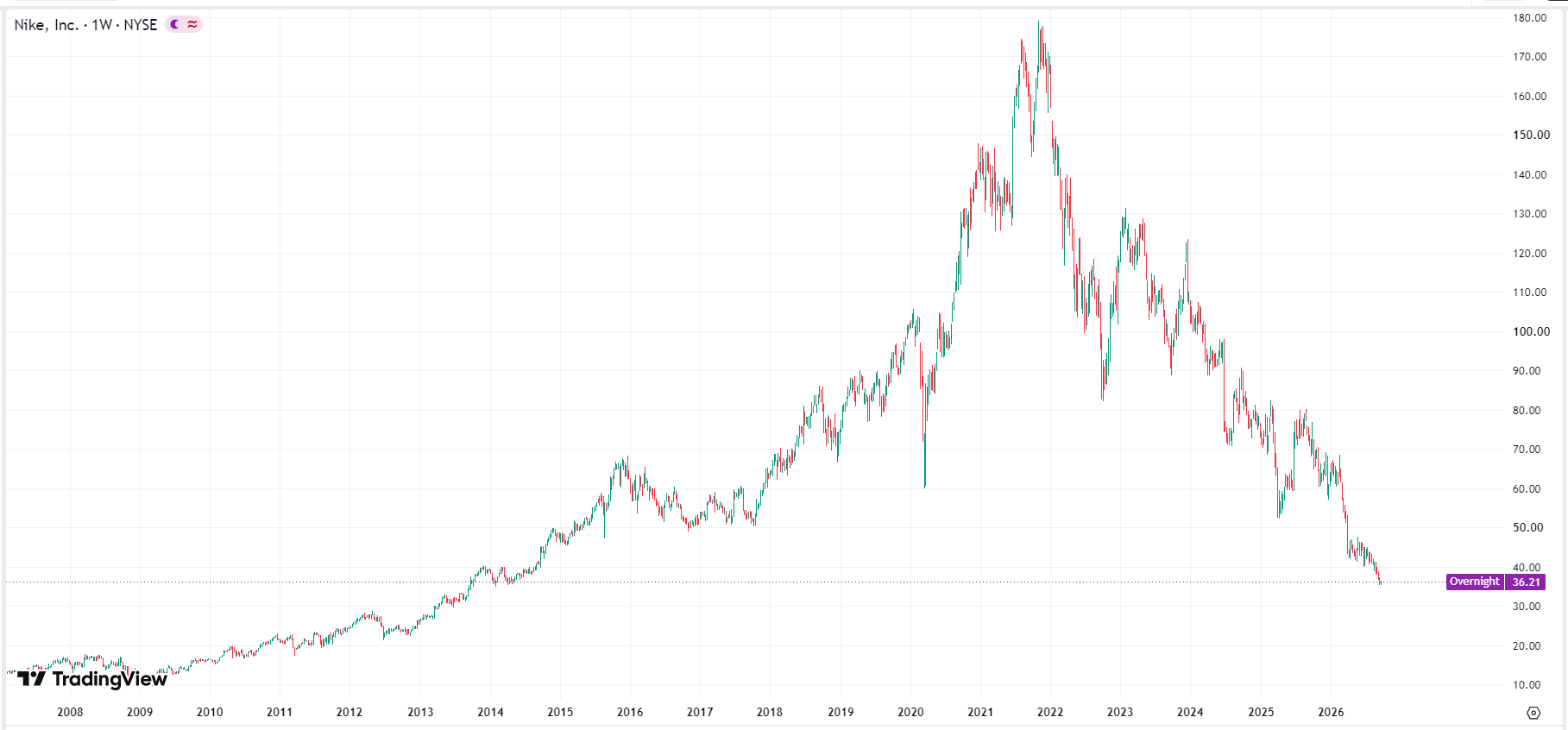 Nike stock price chart, Source: TradingView
In early 2020, the global outbreak of COVID-19 triggered circuit breakers in US stocks, and Nike's stock price briefly fell to around $60. However, in the second half of 2020 through 2021, global central banks took center stage, coupled with an e-commerce boom and a fitness craze, causing Nike's direct-to-consumer and digital revenues to surge. Its stock price reached an all-time intraday high of $179.10 in November 2021, with its market capitalization surpassing $280 billion. Subsequently, Nike's stock price continued to fall, retreating by as much as 80% from its historical peak.
Why Is Nike Stock Falling?
Since 2022, Nike's stock price has been under sustained downward pressure due to a variety of factors driven by different forces at each stage, mainly including inventory backlogs and high inflation, side effects of its DTC strategy combined with the rise of emerging brands, and disappointing earnings performance, among others.
In 2022–2023, high inflation suppressed consumer demand while supply chain disruptions led to elevated inventory levels, forcing Nike to clear stock through heavy discounts. This kept net profit under pressure, while the recovery in Greater China continued to fall short of expectations. Entering 2024, Nike prematurely cut wholesale footwear channels, which not only hurt terminal market coverage, but also left a massive market vacuum for emerging rivals such as On, Hoka, and Lululemon. Coupled with sluggish iterations of Nike's classic shoe models, sales of its core products plummeted. In 2025–2026, Nike issued weaker-than-expected revenue guidance for several consecutive fiscal quarters, triggering further market sell-offs.
Will Nike Stock Continue to Fall?
Under multiple pressures including stagnating revenue growth, price cuts to clear inventory, emerging brands aggressively taking market share, and a sluggish recovery in core markets like Greater China, new CEO Elliott Hill launched a sweeping strategic restructuring after taking the helm in October 2024, repairing wholesale partnerships and refocusing on product innovation.
However, supply chain and product cycle adjustments typically take 12 to 18 months or even longer to filter through to financial statements, meaning Nike's short-term financial performance may remain under pressure and continue to weigh on its stock price. Technical analysis shows that Nike's stock has yet to exhibit signs of bottoming out or rebounding, such as sideways consolidation. Instead, it remains in a unidirectional downtrend dominated by bears, indicating a high likelihood of hitting new lows.
Is It Time to Buy Nike Stock Now?
Although Nike Inc. has been hit by multiple headwinds in recent years and faces numerous risks and challenges, such as slowing growth momentum, it is currently in a transition period of brand transformation and performance recovery. Management has shifted to reaffirming a core focus on product innovation and professional sports, while re-deepening partnerships with retailers like Foot Locker, which helps stabilize its core sales foundation. Crucially, Nike still maintains a strong brand moat in the global athletic footwear and apparel sector, backed by ample cash flow and a healthy balance sheet, offering strong resilience against risks.
In addition, Nike's forward price-to-earnings (P/E) ratio stands at around 20x, well below its multi-year historical average of 30x to 31x, indicating that market expectations have already priced in a significant amount of pessimism. As the stock price has pulled back, Nike's dividend yield has risen to recent highs, increasing its appeal to value-oriented or income-focused long-term investors. Therefore, for those optimistic about Nike's brand heritage and long-term product innovation capabilities, the current valuation provides a margin of safety, allowing for fixed-amount or phased positioning to smooth out short-term volatility risks.
Conclusion
Hit by the side effects of its DTC strategy, sluggish innovation, and competition from emerging brands, Nike's stock price has retreated 80% from its 2021 high to around $35, hitting a nearly 12-year low. Although its short-term financial performance and technicals remain under pressure, its brand moat remains intact and its valuation is low, so long-term investors may consider building positions in tranches.
This content was translated using AI and reviewed for clarity. It is for informational purposes only.
Recommended Articles










Comments (0)
Click the $ button, enter the symbol, and select to link a stock, ETF, or other ticker.