


Dow Plunges 500 Points: 30-Year Treasury Yield Spikes Again to 5.26%, JPMorgan Says Bond Buybacks Won't Ease Long-Term Pressure on Long-End Yields



AI Podcast


On August 20, Eastern Time, U.S. stocks declined as Treasury yields surged despite proposed bond buybacks. The 30-year yield rose 6 basis points to 5.26%. Analysts note that long-end yields are now driven by fiscal fundamentals rather than technicals, limiting the effectiveness of suppression measures. Consequently, major equity indices dropped, with the Dow falling over 550 points. Concurrently, escalating U.S.-Iran tensions drove WTI crude up 2.65% to $86.64, while fiscal pressures and persistent inflation continue to support expectations of higher yields and steeper yield curves, prompting institutional underweight stances on long-duration bonds.

TradingKey - On August 20, Eastern Time, U.S. stocks took another hit. Although U.S. Treasury Secretary Bessent stated that he is prepared to further expand bond buybacks, with the size of a single long-term bond buyback potentially exceeding $4 billion, U.S. Treasury yields continued to surge.
Among them, the 30-year U.S. Treasury yield rose by 6 basis points at one point to 5.26%, returning to its level before Treasury Secretary Bessent announced the expansion of the buyback plan on Wednesday. The 10-year Treasury yield also moved up by a similar magnitude.
Impacted by the renewed rise in bond yields, U.S. stocks fell. As of press time, the Dow Jones Industrial Average dropped over 550 points, or 1.04%, to 52,906.29; the Nasdaq Composite Index fell 0.95% to 26,079.88; and the S&P 500 Index fell 0.60% to 7,661.68.
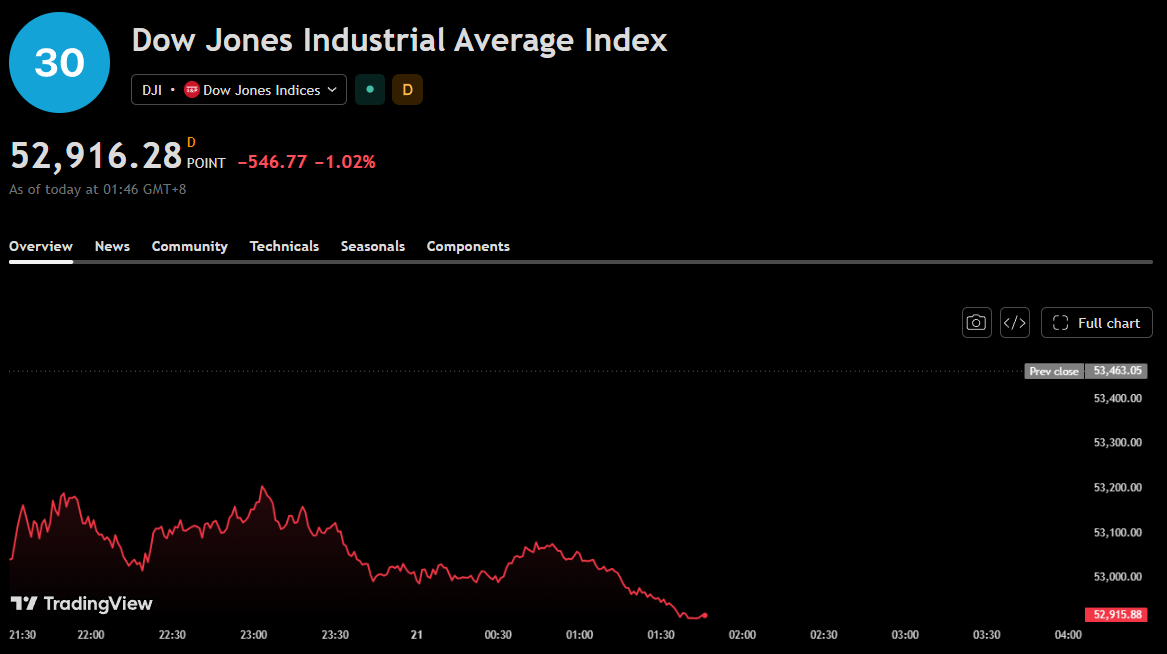
Source: TradingView
Goldman Sachs macro strategist Vitali Meschoulam stated that the driver behind the rise in long-end yields has shifted from technical factors to fiscal fundamentals, and once the market begins pricing in sovereign financing dynamics, the effectiveness of yield suppression measures will become increasingly limited. This operation may bring a brief compression of 20 to 40 basis points and a temporary curve flattening, but it cannot reverse the broader trend.
Franklin Templeton continues to maintain an underweight stance on long-duration bonds. Andrew Canobi, the firm's director of fixed income, pointed out that fiscal pressure and persistent inflation are combining forces in major developed markets, collectively pointing toward higher yields and a steeper yield curve. "As long as these forces persist, I don't see the long end getting much buying support."
Meanwhile, oil prices rose again as tensions between Iran and the U.S. escalated. WTI crude gained 2.65% to $86.64, while Brent crude also posted a gain of over 2%.
In a post about Iran on Truth Social, U.S. President Donald Trump stated that the U.S. will begin "the most destructive economic action imposed on any country!"
This content was translated using AI and reviewed for clarity. It is for informational purposes only.
Recommended Articles










Comments (0)
Click the $ button, enter the symbol, and select to link a stock, ETF, or other ticker.