


 Discount


South Korea Delays Market Open by One Hour for College Entrance Exam; Nikkei 225 Opens Up 0.36% as SoftBank Rises Over 1% and Kioxia Bucks Trend to Fall Over 2%



AI Podcast


During Asian trading, South Korea’s KRX delayed operations by one hour for the college entrance exam, while Japan’s Nikkei 225 opened 0.36% higher at 59,238.11, driven by divergent heavyweight performances. Macroeconomic liquidity remains constrained as elevated U.S. Treasury yields and a firm U.S. Dollar Index pressure regional risk appetite. Japanese equities face profit-taking and tightening liquidity, anticipating a defensive, sector-rotation posture. Investors should monitor yen volatility stemming from U.S. yield fluctuations and upcoming U.S. tech sector pricing to manage currency and market risks effectively.
TradingKey - On South Korea's college entrance exam day, the KRX delayed its opening by one hour; the Nikkei 225 opened steadily higher, rising 0.36%, while heavyweights SoftBank and Kioxia diverged.
In Asian trading on November 19, the Korea Exchange (KRX) adjusted market trading hours today by delaying the opening and closing of financial markets by one hour to ensure smooth traffic flow and minimize noise disruptions around test venues during the national college entrance exam. Meanwhile, the Japanese stock market opened at its regular time, trading steadily with modest opening gains.
The Nikkei 225 edged higher after the open, rising 0.36% to trade at 59,238.11 points. The two major heavyweights diverged: Kioxia opened sharply lower and extended losses, falling 2.36% to slip below the 8,000 mark and trade at 7,836 yen, while SoftBank gained 1.18% to 3,423 yen.
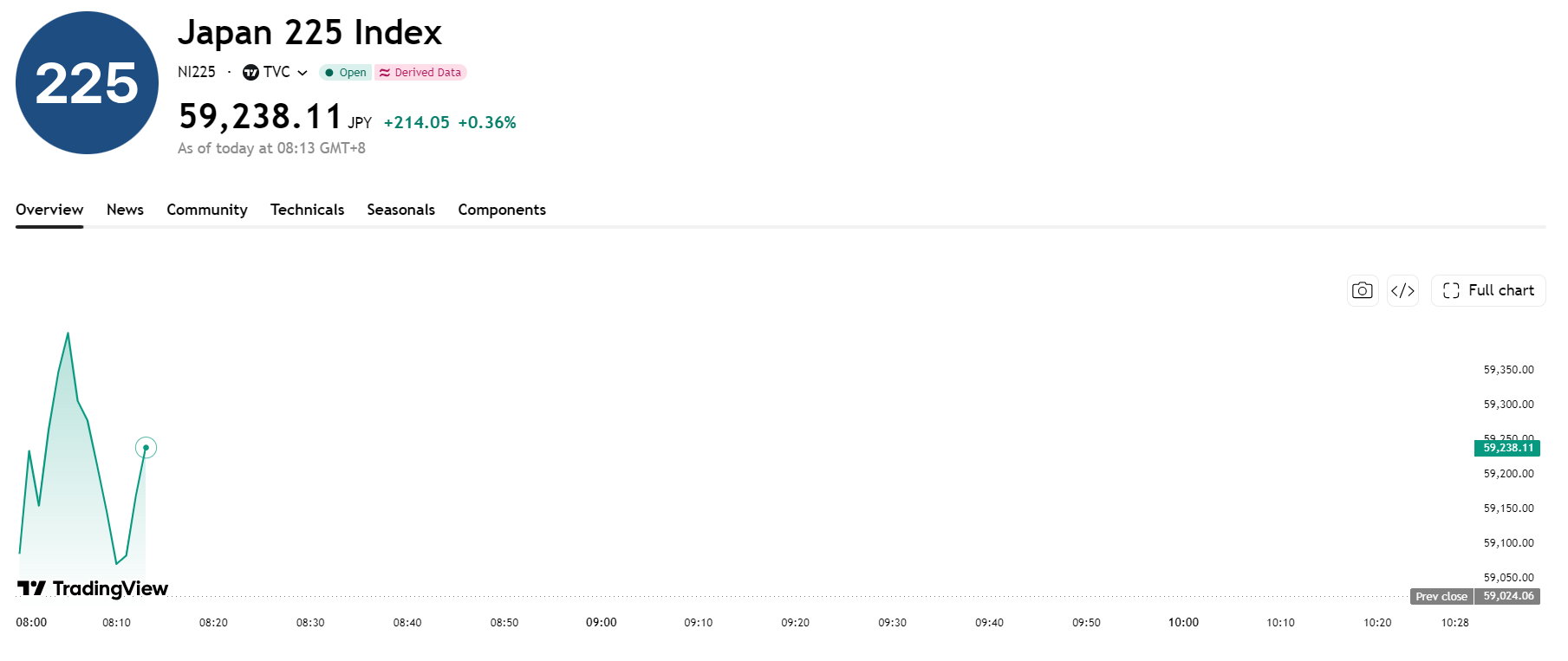 Nikkei 225 Chart, Source: TradingView
The 10-year U.S. Treasury yield hovered at elevated levels (in the 5.06%–5.15% range) while the U.S. Dollar Index held firm near a 19-month high, keeping liquidity and foreign exchange dynamics across the Asia-Pacific region under sustained structural pressure and dampening appetite for an aggressive, broad-based push into risk assets.
The Japanese stock market faces the dual tests of profit-taking and tighter macroeconomic liquidity. In the near term, it is expected to maintain a resilient defensive posture characterized by sector rotation. Investors must closely monitor whether the yen depreciates sharply due to fluctuations in U.S. Treasury yields, as well as how U.S. markets further price the technology sector tonight.
This content was translated using AI and reviewed for clarity. It is for informational purposes only.
Recommended Articles










Comments (0)
Click the $ button, enter the symbol, and select to link a stock, ETF, or other ticker.