


World's Largest Companies by Market Cap (July 2026): Nvidia Leads, AI Theme Intact but Chip Stocks Face Valuation Adjustments



AI Podcast


In July 2026, Nvidia led global market capitalization at $4.86 trillion, with major tech giants dominating the top ranks. Despite solid AI infrastructure demand, the Philadelphia Semiconductor Index dropped 20.61% in July, reflecting a market shift from aggressive capital expenditure expansion to rigorous scrutiny of return on investment. Investors are increasingly demanding verifiable AI revenue, scalable profit margins, and sustainable supply chain profits. While platform giants leverage diverse ecosystems for valuation resilience, upstream hardware suppliers face tighter valuation adjustments, signaling a transition from broad AI sector betting to selective earnings evaluation.
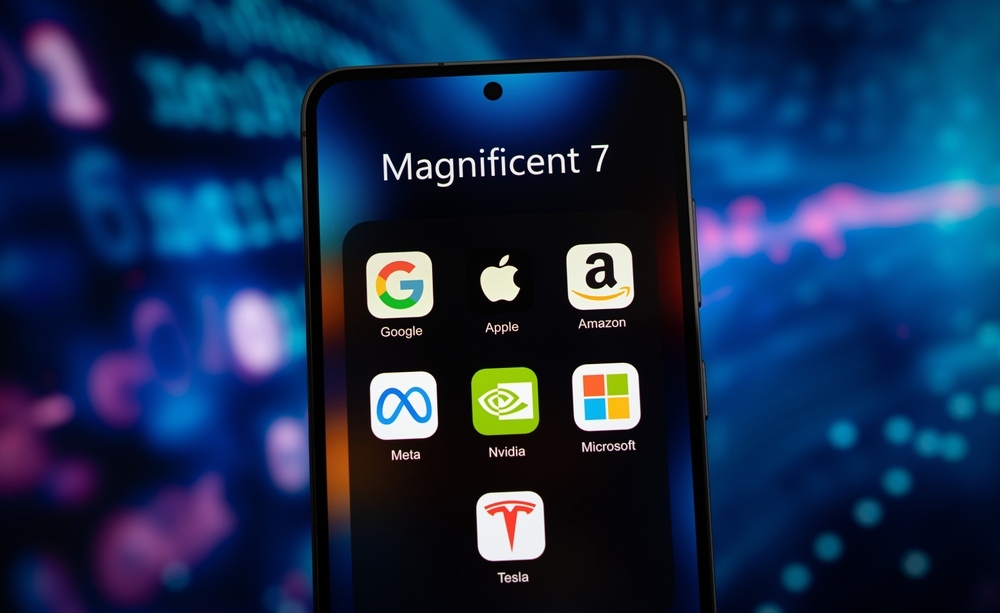
TradingKey - In July 2026, Nvidia continued to rank first globally with a market capitalization of $4.86 trillion. Apple, Alphabet, and Microsoft followed closely behind, with the top five companies all driven by AI-related businesses and cloud computing.
However, capital did not continue to flow unilaterally into chip stocks in July: the Philadelphia Semiconductor Index (SOX) fell 20.61% in a single month, with upstream targets such as TSMC, SK Hynix, and Micron coming under noticeable pressure, demonstrating that the market is shifting from "AI investment expansion" to scrutinizing the return on capital expenditures and the sustainability of supply chain profits.
Global Market Cap Rankings: Nvidia Holds Top Spot, Trillion-Dollar Club Dominated by Tech and AI Hardware
As of July 31, the world's most valuable companies remained highly concentrated in technology and AI infrastructure. Nvidia (NVDA) retained the top spot with a market capitalization of $4.86 trillion, Apple (AAPL) ranked second at $4.51 trillion, and Alphabet (GOOGL) stood third at $4.36 trillion; Microsoft (MSFT) and Amazon (AMZN) followed at $3.45 trillion and $2.93 trillion, respectively.
Company | Ticker | Closing Price (USD) | Market Cap (USD) |
Nvidia | 200.75 | $4.86 trillion | |
Apple | 308.91 | $4.51 trillion | |
356.13 | $4.36 trillion | ||
Microsoft | 464.72 | $3.45 trillion | |
Amazon | 271.58 | $2.93 trillion | |
TSMC | 404.25 | $2.09 trillion | |
Broadcom | 389.28 | $1.85 trillion | |
SpaceX | 108.37 | $1.43 trillion | |
Meta | 556.71 | $1.42 trillion | |
Tesla | 311.21 | $1.23 trillion | |
Berkshire Hathaway | BRK.A | 766600 | $1.09 trillion |
Eli Lilly | 1147.2 | $1.08 trillion | |
SK Hynix ADR | 143.73 | $1.05 trillion | |
Micron | 823.03 | $929.2 billion |
Generative AI has not altered the central position of Big Tech in capital markets, but a new tiering is emerging in value distribution. At one end are large platforms with ecosystems spanning cloud, software, advertising, and end-user devices.
At the other end are upstream hardware vendors providing computing power, wafer fabrication, networking chips, and high-bandwidth memory for AI training and inference. Nvidia, TSMC, Broadcom, SK Hynix, and Micron all occupy pivotal positions along this latter chain.
Nvidia Maintains Lead, but Market Starts Demanding AI Investments Yield Verifiable Returns
Nvidia continues to top the list, with its $4.86 trillion market cap reflecting strong market recognition of its position as an AI computing platform. From training to inference, GPUs, networking, and the software ecosystem remain core components of large model infrastructure; meanwhile, hyperscale cloud vendors continue to expand data centers, maintaining strong demand for high-performance computing chips. However, July's market performance also indicates that the AI trade is entering a more rigorous validation phase.
Investors no longer grant higher valuations to upstream suppliers based solely on the scale of capital expenditures, but are instead asking three questions: when cloud vendors' AI products will generate sustained revenue, whether adoption rates among enterprise clients can increase, and whether massive infrastructure investments can translate into scalable profit margins. Consequently, Nvidia's leading position remains solid, but valuations across the entire industry chain are no longer rising in tandem.
Apple, Microsoft, Amazon and Alphabet Still Hold Upper Hand in AI Commercialization
Apple, Microsoft, Amazon, and Alphabet have a combined market capitalization of over $15 trillion. Compared with pure-play hardware companies, they possess more complete application gateways, enterprise customer relationships, cloud resources, or ad distribution systems, giving them relatively greater valuation resilience as the market re-evaluates the return on AI investments.
Microsoft's advantage lies in its cloud and enterprise software channels, enabling AI features to be embedded into existing products and subscription systems; Amazon is supported by multiple cash flow streams across cloud computing, retail, and advertising; Alphabet retains traffic and data advantages through Search, YouTube, and cloud services; while Apple leverages its device ecosystem and user base to maintain its high market cap status. For such platform companies, the key is not just the scale of capital expenditure, but whether model capabilities can be converted into monetizable cloud services, subscriptions, advertising efficiency, or hardware upgrade cycles.
Meta (META) ranks ninth with a market capitalization of $1.42 trillion and remains one of the world's most important digital advertising platforms. Tesla (TSLA) ranks tenth with a market capitalization of $1.23 trillion, with its valuation still incorporating long-term market expectations for autonomous driving, robotics, and extended AI applications. Both companies demonstrate that AI has expanded from "computing infrastructure" into broader commercial scenarios such as advertising, content distribution, autonomous driving, and smart terminals.
Upstream Chips Experience Sharp Drop: Philadelphia Semiconductor Index Falls 20% in July
If the market in the first half of the year focused more on supply bottlenecks in AI infrastructure, July highlighted the drawdown risks of high valuations and crowded trades. The Philadelphia Semiconductor Index fell 20.61% in July alone, indicating a clear decline in capital risk appetite for the chip sector.
This adjustment does not equate to the disappearance of AI demand. On the contrary, data center investments by cloud providers and big tech companies remain a vital support for industry prosperity. However, the market has begun reassessing the pace, return cycles, and profit distribution of AI capital expenditure: once orders and capacity expansion expectations are fully priced into stock values, any failure of corporate guidance, gross margins, or capex pace to exceed expectations can lead to rapid valuation compression.
TSMC (TSM) still boasts a market capitalization of $2.09 trillion, serving as an irreplaceable key link in advanced process nodes and AI chip manufacturing; Broadcom (AVGO) ranks near the top with a market cap of $1.85 trillion, occupying a major position in custom ASICs, networking connectivity, and data center infrastructure. Both companies remain core assets in the AI hardware supply chain, but the market in July also showed that core assets are not immune to valuation and cyclical fluctuations.
The memory chip segment is also receiving attention. SK Hynix (SKHY) has a market cap of $1.05 trillion, while Micron (MU) stands at $929.2 billion. Both benefit from high-bandwidth memory (HBM) and the demand for high-performance memory driven by AI servers, but the memory industry itself is distinctly cyclical. As suppliers step up capital expenditures and the market digests earlier gains, investors will more closely track HBM supply and demand, DRAM and NAND prices, inventory levels, and the pace of capacity expansion.
AI Theme Unchanged as Market Shifts From 'Betting on Investment' to 'Screening for Returns'
As of July 31, Nvidia, Apple, Alphabet, Microsoft, and Amazon continued to dominate the top ranks of global market capitalization, with AI remaining the core growth logic across tech platforms, cloud computing, and the semiconductor supply chain. However, the Philadelphia Semiconductor Index fell 20% in July, signaling that the market's pricing framework is shifting.
In the next phase, what determines a company's stock price performance will no longer be simply "whether it is involved in AI," but whether it possesses scarce technological or channel barriers, whether it can convert AI investments into revenue and cash flow, and whether it can maintain profit margins amid capacity expansions and intensifying competition. For upstream chipmakers, AI demand continues to provide long-term support; for large platform companies, AI monetization capabilities will become the key driver of valuation divergence.
A shift in capital flows from broadly chasing the chip supply chain to screening for earnings delivery capabilities may become a key characteristic of future global tech stock market trends.
This content was translated using AI and reviewed for clarity. It is for informational purposes only.
Recommended Articles







Comments (0)
Click the $ button, enter the symbol, and select to link a stock, ETF, or other ticker.