


Oil Prices Surge 3% as Iran Adds Hormuz Conditions, Houthis Strike Saudi Refinery



AI Podcast


On August 10, Eastern Time, international crude oil prices surged as WTI reached $80.91 and Brent exceeded $86.75. The rally follows heightened geopolitical tensions in the Middle East and Iran’s stringent conditions for reopening the Strait of Hormuz, which complicate prospects for stable supply. While U.S. officials maintain a cautious, monitoring stance amid Iran's economic volatility, security risks persist, evidenced by a recent drone strike on a Saudi Aramco refinery. Market participants remain concerned that diplomatic progress will not immediately restore transport capacity, keeping the crude oil risk premium elevated.
Tradingkey - On August 10, Eastern Time, driven by uncertainty over the prospects of reopening the Strait of Hormuz and ongoing security tensions in the Middle East, market concerns over crude oil supply disruptions intensified, supporting the risk premium for international oil prices and sending them surging.
As of press time, WTI crude ( USOIL) rose 3.49% to $80.91; Brent crude ( UKOIL) rose over 3% to $86.75.
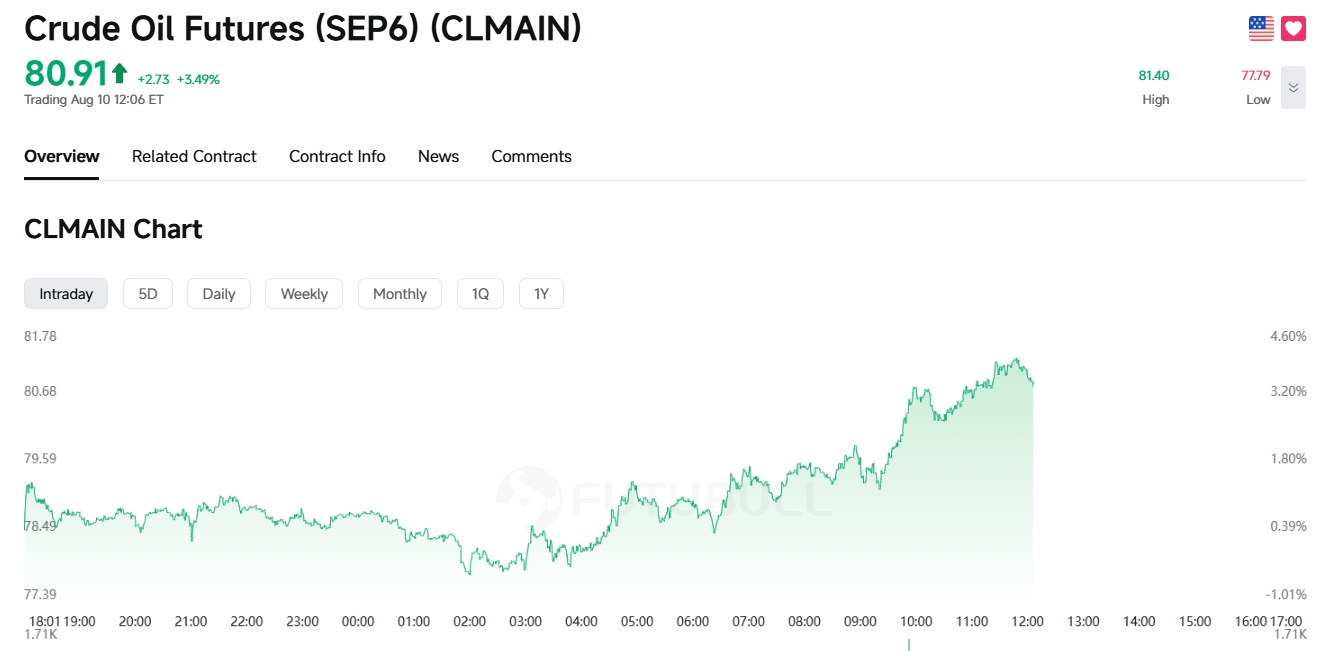
Source: FutuBull
Iran has recently further raised the conditions for reopening the Strait of Hormuz. Zolghadr, political advisor to Iran's Supreme Leader, stated that the U.S. needs to lift the naval blockade on Iranian ports, withdraw military forces deployed around Iran, lift sanctions, unfreeze frozen assets, and compensate for war damages. Iran also demanded that the U.S. halt military operations targeting Iran and its regional allies and cease threatening Iran in any form.
This means that even if Iran and Oman can reach an agreement on the technical and legal arrangements for a temporary shipping lane, the full resumption of normal navigation through the strait still depends on deeper political and security maneuvering between the U.S. and Iran. The market is concerned that progress in negotiations may not quickly translate into stable and sustainable crude oil transportation capacity.
U.S. President Donald Trump, meanwhile, stated that the U.S. is currently observing developments through a 'low-key' approach, believing that Iran's severe economic pressures could push it to soften its stance. Trump noted that U.S.-Iran negotiations remain in a 'semi-active state' and that the U.S. is monitoring Iran's inflation, fiscal, and economic conditions. U.S. Vice President JD Vance also mentioned that some progress has been made in negotiations, but uncertainty remains over whether Iran can propose terms that satisfy the U.S.
Meanwhile, security risks facing energy infrastructure in the Middle East have not subsided. The Iran-backed Houthi movement in Yemen claimed to have launched a drone attack on Saudi Aramco's Jazan refinery. The Saudi energy ministry previously confirmed that a fire occurred at the facility but was extinguished without casualties, and the incident is currently being handled. The Jazan refinery has a crude processing capacity of 400,000 barrels per day, and its safety status is drawing market attention.
This content was translated using AI and reviewed for clarity. It is for informational purposes only.
Recommended Articles









Comments (0)
Click the $ button, enter the symbol, and select to link a stock, ETF, or other ticker.