


Which Telecom Operator Will SpaceX Acquire? Musk’s Potential Telecom Acquisition Plans and Investment Impact



AI Podcast


SpaceX is considering entering the U.S. wireless communications market by potentially acquiring established telecom assets to complement its Starlink satellite network. While direct takeovers of major operators like AT&T, Verizon, or T-Mobile face financial, regulatory, and debt hurdles, targets like Boost Mobile or strategic spectrum acquisitions offer more realistic entry points. This expansion could transform Starlink from a satellite partner into a direct competitor, prompting traditional carriers to reassess their network investments, pricing strategies, and partnership models.
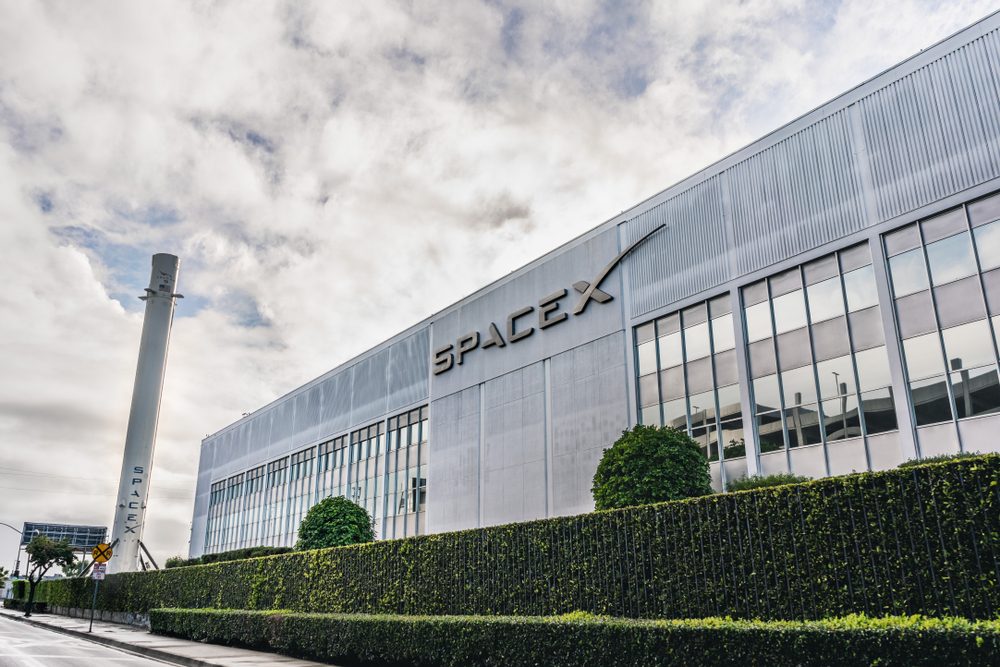
TradingKey - SpaceX (SPCX) may no longer be content to serve as a satellite partner to traditional telecom companies, seeking instead to directly enter the U.S. wireless communications market.
On November 6, speaking about SpaceX's communications business strategy at the Baron Investment Conference, Elon Musk said that if the company can utilize spectrum resources more efficiently than traditional carriers in the future, it does not rule out directly acquiring an established telecom company and boosting its spectrum efficiency tenfold, though Musk did not disclose any specific targets.
SpaceX is expanding Starlink from satellite broadband services to direct-to-cell, IoT, and mobile communications. If the company further acquires terrestrial networks, an existing subscriber base, and retail channels, AT&T (T), Verizon (VZ), and T-Mobile (TMUS) may see a new competitor emerge in the U.S. wireless market they have long dominated.
Why Acquiring a Telecom Carrier Could Benefit SpaceX?
SpaceX possesses low-Earth orbit satellites, rocket launch capabilities, and the Starlink network, but satellites alone are insufficient to develop into an integrated carrier covering everyday mobile communications.
Direct-to-cell technology is well-suited for eliminating coverage blind spots in remote areas, on highways, at sea, and during natural disasters, but in densely populated cities, terrestrial base stations still deliver higher capacity, lower latency, and more stable network performance. Meanwhile, mobile communications services also require billing systems, customer service teams, handset sales channels, number resources, roaming agreements, and large-scale subscriber management capabilities, none of which are strengths of SpaceX's existing business.
Acquiring an established carrier could help SpaceX quickly address these shortcomings. Ideally, users would connect to 5G base stations in cities and automatically switch to Starlink satellites once outside terrestrial network coverage, ultimately creating a communications platform that spans both space and ground. Such a network would not only reduce coverage blind spots, but also enable SpaceX to charge consumers directly, rather than merely providing satellite capacity to other carriers.
SpaceX has already made substantial investments in this direction. The company previously struck a deal with EchoStar to acquire spectrum resources, including AWS-4 and H Block, for approximately $17 billion. The U.S. Federal Communications Commission subsequently approved the transaction, granting SpaceX exclusive, contiguous nationwide spectrum for the first time and laying the groundwork for its next-generation direct-to-cell services.
SpaceX currently also partners with approximately 30 mobile operators worldwide, including T-Mobile in the U.S. Starlink satellites can function like 'cell towers in space,' enabling ordinary smartphones to send messages when terrestrial signals are unavailable, and gradually expanding to data and voice services.
However, this partnership model has its limitations, as SpaceX must rely on carriers for spectrum, customer access, and terrestrial networks, leaving its business model largely determined by partners. If the company seeks to gain pricing power and control customer relationships, acquiring a carrier or select telecom assets would make strategic sense.
Which Telecom Company Is SpaceX Most Likely to Acquire?
Judging from the contacts disclosed so far, Boost Mobile is one of the most noteworthy potential deal targets.
According to The Washington Post, SpaceX recently held talks with Boost Mobile parent EchoStar regarding the potential acquisition of the brand or access to its network. Elon Musk also met with EchoStar Chairman Charlie Ergen. The discussions may involve an outright acquisition of Boost Mobile or gaining network access through other arrangements, though no formal deal has been announced so far.
Boost Mobile's appeal lies in its ability to provide SpaceX with a turnkey entry point into the mobile communications business. Compared to acquiring a massive nationwide carrier, Boost Mobile has a relatively smaller operational scale, and its deal structure could more easily align with SpaceX's existing satellite communications operations.
As of the end of September 2026, EchoStar's Boost Mobile and Gen Mobile had a combined total of approximately 7.19 million wireless subscribers. However, Boost Mobile does not own an independent nationwide terrestrial network, and its service relies substantially on leasing network capacity from AT&T and T-Mobile.
This represents both Boost Mobile's core value and the greatest obstacle facing a potential transaction.
If SpaceX acquires Boost Mobile but cannot continue utilizing its existing network leasing agreements, the value of the subscriber base and brand channels could be significantly diminished. Whether these agreements can be transferred and whether they require consent from the host network operators could determine whether a deal can be completed.
The Washington Post previously reported that both AT&T and T-Mobile had rejected network access requests from SpaceX, and existing network leasing agreements may not automatically continue upon a change of control. For SpaceX, acquiring Boost Mobile does not necessarily guarantee smooth access to AT&T's and T-Mobile's network resources.
By contrast, Verizon could provide SpaceX with nationwide cell sites, spectrum, and a large base of high-value subscribers, but acquiring the entire company would present an overwhelming financial burden. As of the end of the third quarter of 2026, Verizon had approximately $123.7 billion in net unsecured debt. Beyond paying a massive acquisition consideration, SpaceX would also have to shoulder legacy telecom network maintenance, staffing infrastructure, and ongoing capital expenditures.
Therefore, purchasing a portion of Verizon's spectrum, securing network usage rights, or acquiring its non-core wireless assets would be far more realistic for SpaceX than an outright takeover of Verizon.
Technologically, T-Mobile may be the closest match, as the two companies have already rolled out direct-to-cell services, and T-Mobile's terrestrial network forms a relatively complete complement to Starlink's low Earth orbit satellites. However, precisely because the existing partnership achieves most strategic objectives, SpaceX has little need to pay a hefty premium for the entirety of T-Mobile. A full acquisition would also trigger excessive spectrum concentration and face rigorous antitrust, national security, and communications regulatory scrutiny.
The situation with AT&T is similar. As of the end of September 2026, AT&T had approximately $159.6 billion in total debt, alongside fiber optics, enterprise communications, and other complex assets. An outright acquisition would not only be exceptionally costly, but would also saddle SpaceX with numerous businesses of limited relevance to its satellite communications strategy.
How Will Valuations of the Three Major Telecom Operators Be Affected?
Regardless of whether SpaceX ultimately acquires a telecom carrier, its intent to enter the terrestrial wireless communications market could alter competitive expectations across the U.S. telecom industry.
In the past, AT&T, Verizon, and T-Mobile competed primarily around network coverage, spectrum assets, plan pricing, and customer experience, while investors generally viewed Starlink as a complement to rural broadband and legacy cellular networks. As SpaceX secures nationwide spectrum, expands its direct-to-cell services, and explores terrestrial networks, Starlink could gradually transition from a partner into a direct-to-consumer mobile communications brand.
If SpaceX were to acquire Boost, the most immediate shift would be the reemergence in the U.S. market of a carrier with millions of subscribers, proprietary satellite assets, and nationwide service ambitions. Even if it initially needs to lease network capacity from AT&T or T-Mobile, it could still compete for customers through lower pricing, satellite coverage, and bundled services, thereby putting pressure on industry pricing and churn rates.
Second, the value of spectrum and network access could regain attention. SpaceX's continuous spectrum acquisitions, pursuit of cell site access, and exploration of potential legacy carrier acquisitions demonstrate that spectrum resources and terrestrial networks remain essential prerequisites for delivering nationwide mobile services. This could prompt the market to reassess the value of spectrum licenses and infrastructure assets held by traditional carriers.
However, SpaceX's entry may not solely pose headwinds for incumbents. For telecom companies with established network resources, partnering with SpaceX to provide terrestrial network access, satellite communications, or other wholesale services could generate new revenue streams. Whichever player establishes these partnerships first could secure a more advantageous position in the future hybrid communications market.
Overall, the likelihood of SpaceX directly acquiring AT&T, Verizon, or T-Mobile in the near term is low; Boost Mobile, select spectrum assets, or network usage agreements represent far more realistic scenarios. For investors, Musk's remarks offer a fresh perspective on SpaceX's long-term business expansion, though an actual acquisition remains a distant prospect.
Yet even without a major acquisition, SpaceX's entry into the terrestrial mobile communications market is enough to compel AT&T, Verizon, and T-Mobile to reassess their network investments, service pricing, and satellite partnership strategies.
This content was translated using AI and reviewed for clarity. It is for informational purposes only.
Recommended Articles








Comments (0)
Click the $ button, enter the symbol, and select to link a stock, ETF, or other ticker.