


SpaceX’s First Lockup Passed Without a Crash — Is the Supply Overhang Behind SPCX?



AI Podcast


SpaceX’s stock demonstrated resilience on August 6, rising 2.6% despite the expiration of a significant lockup period that increased the tradable float by 911.5 million shares. While analysts from Morgan Stanley view the current $1.4 trillion valuation as an entry opportunity, retail sentiment remains cautious due to high cash burn from aggressive AI investments and pending tranches of share releases through year-end. With the stock trading below its $135 IPO price, market participants remain focused on future quarterly earnings, upcoming lockup expirations, and the company's ability to balance capital-intensive growth with long-term profitability.

TradingKey - August 6 was the big day, but the predicted market crash did not materialize. The first post-IPO lockup of SpaceX (SPCX) provided an opportunity for the public sale of approximately $100 billion of 911.5 million shares, which insiders wished to sell. This more than doubled the float. Trading opened with the stock already at an all-time low of $105, but shares were bought before closing, posting a gain of 2.6%. The current price of $114 is below the IPO price of $135 and also 50% below the stock's price of $135 in June. The trading of shares after an IPO is called a float, and SPCX shares have not collided with the market. The float has stabilized, but several more lockup periods are expected before this occurs again.
The Unlock That Didn’t Sink the Stock
The lockup period follows an IPO and restricts certain insiders from liquidating stock. Once that period expires insiders can sell stock, and that insider supply can flood the market. SpaceX's first lockup expiration was substantial. On August 6, 911.5 million SpaceX shares (20% of the total SpaceX restricted share supply) were eligible to be sold for the first time and the total number of shares available for trade increased to approximately 1.55 billion shares, an increase from 639 million shares. The unlock was historically significant, but the market did not seem to react.
The SpaceX stock dipped to an intraday low of $105 before the price improved to $111 and closed 2.6% higher. There are several reasons the market did not react to the unlock, but one substantial reason is that shares become eligible to be sold does not mean those shares actually will be sold.
Mizuho, a Japanese investment banking firm, for example, stated in their coverage of the unlock that many unlocked shares are not likely to trade. Even so, the public statement of one of the early SpaceX investors signaled that some limited new supply was expected. He stated that he plans to sell his total stake and realize his gains.
The Overhang Isn’t Over
A benign response does not indicate that the supply narrative is complete. August 6 was the start of a staggered release that will continue to distribute shares for months. Approximately another 319 million shares could be released as soon as August 12. More tranches are expected in September and October. A significant release is likely after the third-quarter earnings. More than 4 billion shares could be released by the end of the year. In addition, a different early release trigger that would’ve allowed more shares to be released had the stock traded 30 percent above its IPO price, did not occur, since SPCX traded below its offer price. The only large block that remains locked are Elon Musk’s 6.4 billion shares that will remain locked until mid-2027. The market passed the first test, but there are many tests to come before the supply overhang ends.
Why the Stock Fell in the First Place
The lockup is only part of the story. SpaceX shares fell sharply after their first earnings report as a public company. This quarter had good news to share. Revenue increased by 92% to $7.81 billion. Adjusted EBITDA increased by 191% to $3.54 billion. The net loss had also improved to $541 million. The company, however, had spent close to $18.4 billion in that quarter on projects, most of them artificial intelligence, and continued losing money, and most of the investors had focused on that. As a result, the stock fell by approximately 14% on August 5. Due to the continued decline from the June peak of $225.64, SPCX has lost a bit more than 50% of its value, and is trading about 15% below its $135 IPO price, which puts the valuation of the company at around $1.4 trillion.
The Bull and Bear Cases Now
The sell-off has prompted discussion regarding SpaceX's valuation following the first unlock. Morgan Stanley calls the sell-off an opportunity and has an Overweight rating on the stock with a $300 price target, saying the company has a unique position at the intersection of launch, connectivity, and AI. The firm has said it would assign a $0 valuation on the AI business and would be valuing the space and Starlink operations, if the stock fell to $100. The outlook of the retail investors differs, with many expecting the stock to go down to as low as $50, as shares of the insiders continue to unlock throughout the year.
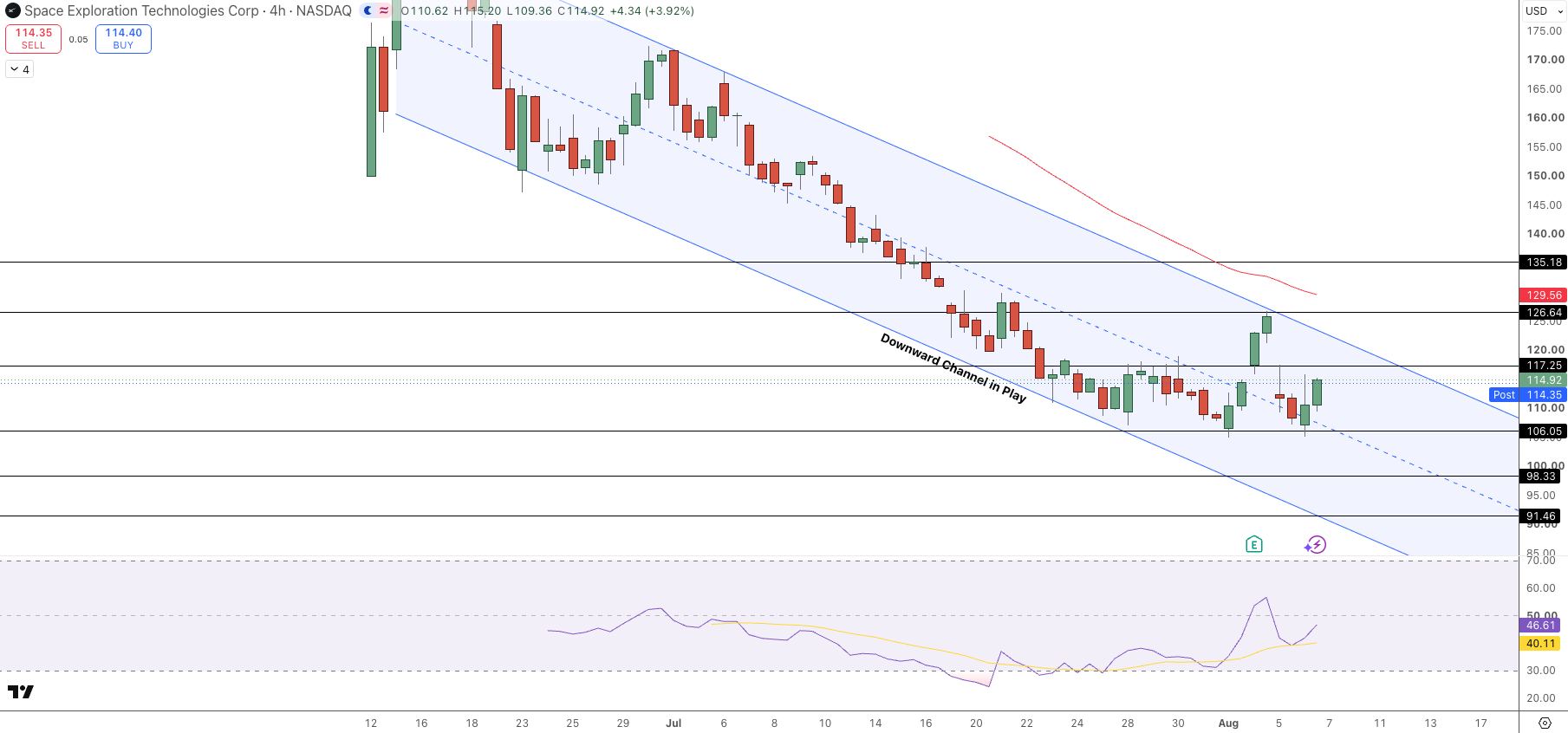
SpaceX Price Chart - Source: Tradingview
On the earnings call, Musk laid out a revenue goal of $1 trillion by 2030, with increasing odds of achieving the goal by 2029. Focus and efforts are being placed on rapid development of Starlink Next Gen and the Starship. Along with the Grok 4.5 AI developments. The main question remains, is SpaceX's vision and efforts justifiable, while burning cash, at a $1.4 trillion valuation?
Key Levels
- Resistance: $126.64 (channel), $129.60 (50 EMA), $135.18 (near IPO price)
- Support: $114.35, $106.05, $98.33
- Post IPO high: $225.64 (June 16)
- IPO Price: $135 (currently trades below)
- RSI: 47, recovering from oversold but still below the neutral 50 line
Did the SpaceX lockup crash the stock?
No. When the SpaceX first lock up happened on August 6, and 911.5 million insider shares were made available, the stock reached a new low of just under $105 but closed up by about 2.6%. The market was able to absorb this amount of shares with less of a price drop than many people were expecting. There will still be more unlocks in the future, so the balance of available stock will change even more.
Is SpaceX stock a buy after the drop?
It ultimately comes down to weighing the risk and reward with this specific stock. There is rapid growth in revenue, Starlink is profitable, and Morgan Stanley estimates the stock price is a good entry with a price target of $300. However, the company is bleeding cash, there will be constant stock release, and the current valuation of the company is around $1.4 trillion making the stock likely to remain highly volatile. This is not a recommendation.
Bottom Line
SpaceX passed a public company milestone with flying colors. The largest of its public company lockup expirations started, and rather than crashing, the stock either maintained or even increased in value throughout the day. This demonstrates that there is more demand for the stock than what the bearish position suggests. However, the circulation problem isn’t solved yet.
More unlocks are planned for the remainder of the calendar year. SPCX is especially sensitive to the upcoming U.S. jobs report due Friday, a report known to impact tech stocks. SPCX is also sensitive to the questions the last earnings report and call addressed, concerning the amount of capital SpaceX is funneling into AI, and the justification for a $1.4 trillion valuation. As of this writing, SPCX is trading for approximately $114 with resistance between $126 and $135, and support at $106 and $98.
Recommended Articles







Comments (0)
Click the $ button, enter the symbol, and select to link a stock, ETF, or other ticker.