


Nvidia Reportedly to Reduce Rubin Ultra Memory Specs Amid HBM Shortage



AI Podcast


Nvidia is exploring reduced memory configurations for its upcoming Rubin Ultra GPU to mitigate high-bandwidth memory (HBM) supply constraints. While this design shift may maintain performance through optimizations, it could increase infrastructure requirements for large-scale AI model deployment. Nvidia recently reclaimed the world’s largest market capitalization, with a 40% upside potential per analyst targets. Key focus areas remain the August 26 fiscal Q2 2027 results, specifically revenue guidance, Blackwell Ultra shipments, and gross margins. Investors should monitor supply chain stability, as potential bottlenecks in HBM and system integration pose risks to the transition toward the Rubin series.
TradingKey - According to a report by The Information, Nvidia ( NVDA) is considering an aggressive move to address the shortage of high-end high-bandwidth memory chips.
Nvidia is considering a lower-than-planned memory configuration for its next-generation graphics processor, Rubin Ultra. According to three people familiar with the testing efforts, Nvidia has tested at least three versions of the Rubin Ultra graphics cards over the past few weeks, with some versions having smaller memory capacities than originally announced by the company.
The three people said Nvidia is considering lower-memory versions partly because it may not be able to secure enough high-end memory to meet the supply demands of the original design. While reducing memory affects chip performance, Nvidia could compensate in other ways. However, if an artificial intelligence company uses this reduced-memory chip to run large AI models, it would need to deploy more chips than originally required.
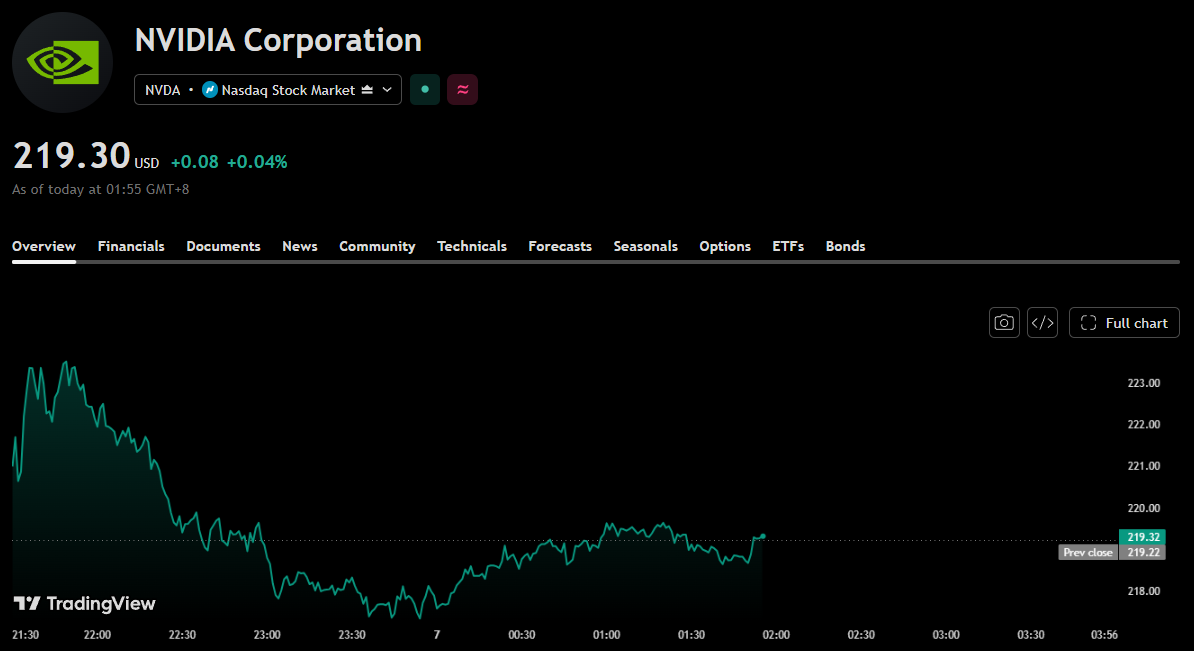
Source: TradingView
As of press time, Nvidia's stock price rose slightly by 0.04% to $219.3. During the five trading days from July 30 to August 5, Nvidia's stock rose for five consecutive days, with a five-day cumulative gain of 15.4%, hitting a new intraday high since June 3. It also surpassed Apple to regain the top spot globally in terms of market capitalization.
Currently, Wall Street's average price target for Nvidia is around $308, representing an upside of about 40% from its latest stock price of $219. The next key milestone is the release of its fiscal second-quarter 2027 financial results on August 26 (covering the quarter ending July 2026 in calendar year terms).
The market needs to confirm whether revenue can exceed the company's $91 billion guidance, whether Blackwell Ultra shipments are accelerating, and whether the gross margin can remain stable at around 75%.
Second is the pace of mass production and deployment of Rubin. As the new Rubin products enter mass production in the second half of the year, the company's product cycle will shift from the Blackwell series to the Rubin series. Any delays in the supply chain, packaging, HBM, or system integration could quickly impact earnings expectations.
This content was translated using AI and reviewed for clarity. It is for informational purposes only.
Recommended Articles










Comments (0)
Click the $ button, enter the symbol, and select to link a stock, ETF, or other ticker.